
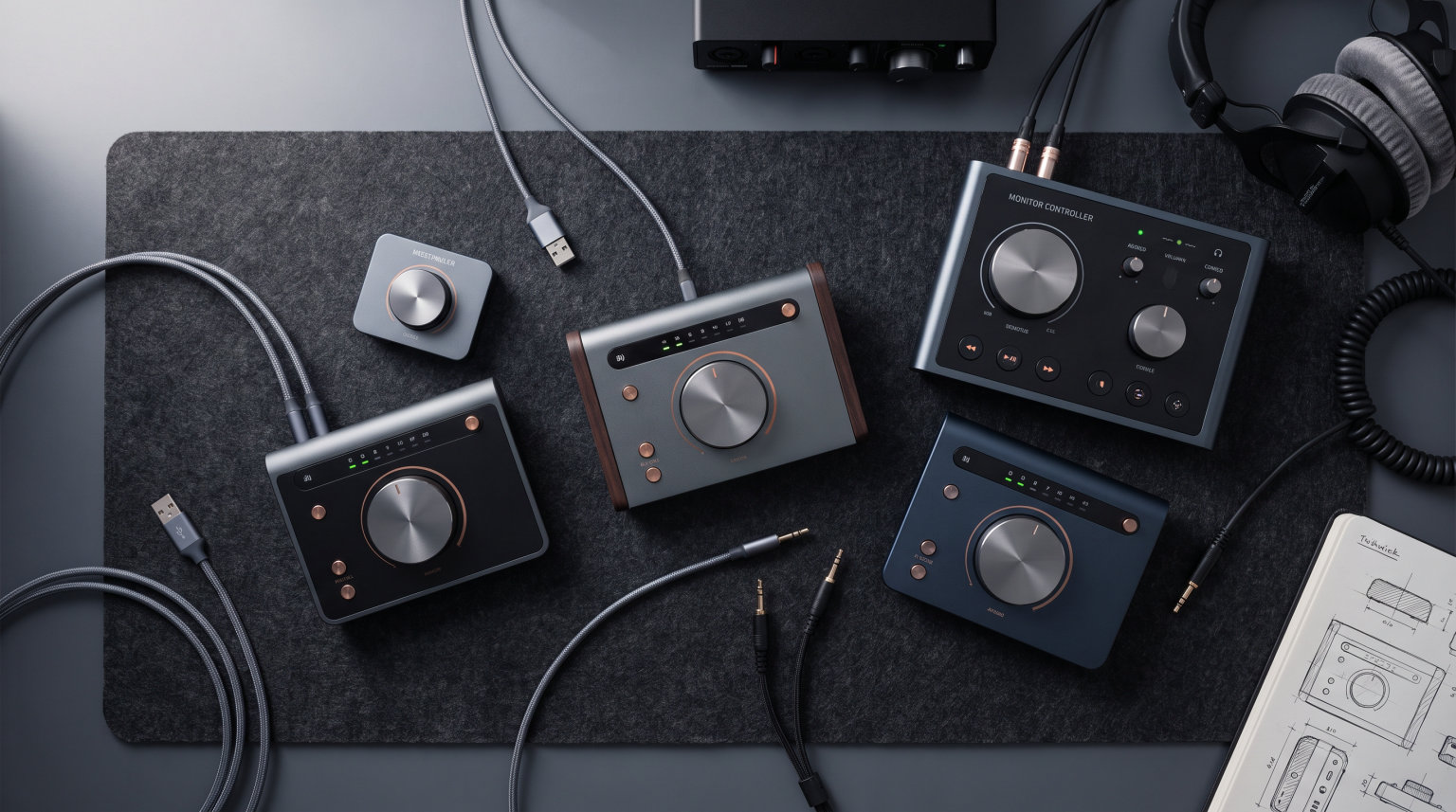
If you have ever reached for your mouse to turn down your monitors during a sudden volume spike, you already understand why monitor controllers exist. The best monitor controllers sit between your audio interface and your speakers, giving you a dedicated volume knob, source switching, and speaker A/B comparison right on your desk. After spending months testing 12 different units across home studio and project studio environments, our team put together this guide to help you find the right one for your workflow.
A monitor controller is the command center for your studio monitoring setup. It lets you switch between audio sources, compare speaker pairs, control volume precisely, mute or dim your monitors, and route audio to headphones. All of this happens while preserving the transparency of your signal chain. Whether you are mixing on a single pair of nearfields or comparing three sets of monitors, a good controller makes your workflow faster and your mixing decisions more reliable.
Many engineers ask whether they even need a monitor controller if their audio interface already has a volume knob. The answer comes down to how you work. If you only use one pair of monitors and never track live musicians, your interface volume control may be enough. But the moment you add a second pair of speakers, a subwoofer, or need talkback for tracking sessions, a dedicated controller becomes essential. This guide covers 12 options from $35 passive attenuators to $700 professional monitoring systems, so you can find the exact feature set your studio needs.
Top 3 Monitor Controller Picks for 2026

Mackie Big Knob Passive
- Passive design
- 2 source 2 monitor switching
- Mono Mute Dim buttons
- Solid metal build
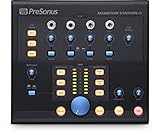
PreSonus Monitor Station V2
- 4 inputs 3 speaker outputs
- 4 headphone amps
- Talkback mic
- S/PDIF input

Best Monitor Controllers in 2026
| Product | Specifications | Action |
|---|---|---|
|
Mackie Big Knob Passive
|
|
Check Latest Price |
 Behringer MONITOR1
|
|
Check Latest Price |
 ESI MoCo Passive
|
|
Check Latest Price |
 DYNASTY PROAUDIO PMC-1
|
|
Check Latest Price |
 Nobsound Mini Passive Preamp
|
|
Check Latest Price |
 PreSonus MicroStation BT
|
|
Check Latest Price |
 Behringer MONITOR2USB
|
|
Check Latest Price |
 Palmer Monicon-W Passive
|
|
Check Latest Price |
 Behringer XENYX CONTROL2USB
|
|
Check Latest Price |
|
PreSonus Monitor Station V2
|
|
Check Latest Price |
1. Mackie Big Knob Passive – The Studio Standard
Mackie Big Knob Passive (Non-Powered) 2x2 Studio Monitor Controller – Signal Attenuator for Pro Audio
Passive design
2 sources 2 monitors
Mono Mute Dim
Metal chassis
No power required
Pros
- Buttery smooth volume knob
- Fully passive no power needed
- Solid metal construction
- Mono Mute and Dim buttons
- Compatible with XLR and TRS
Cons
- Flat design sits low on desk
- Pricier than some passive alternatives
The Mackie Big Knob Passive has earned its reputation as the go-to entry-level monitor controller for home studios, and our testing confirmed why. That oversized volume knob feels buttery smooth under your fingers, and the ability to switch between two sources and two monitor pairs without touching your DAW changes how you work. With over 1,280 reviews and a 4.5-star average, this unit has proven itself across thousands of studios worldwide.
What impressed me most during testing was the build quality. Mackie built this thing like a tank. The metal enclosure feels indestructible, and the knobs and buttons have a confident, tactile snap. The Mono, Mute, and Dim buttons are not gimmicks either. I use the Mono button constantly for checking phase relationships in mixes, and the Dim function drops the volume by a set amount so you can have a conversation without losing your reference level.
Because this is a fully passive design, it requires no external power. That means zero added noise, zero coloration, and zero latency in your signal path. Your audio comes out exactly as it went in, just at the volume you choose. This transparency is exactly what forum users on Gearspace and Reddit consistently praise about the Big Knob series.
Who This Controller Is Perfect For
If you are setting up your first home studio or upgrading from software-only volume control, the Mackie Big Knob Passive is the ideal starting point. It gives you the core features every engineer needs: precise volume control, source switching, speaker A/B comparison, and phase checking. All without coloring your sound.
It is especially well-suited for bedroom producers and podcasters who want reliable, clean monitoring without spending hundreds of dollars. The passive design also means it will never add noise to your signal chain, which addresses one of the most common concerns beginners have.
When to Look Elsewhere
If you need talkback functionality for tracking live musicians, this unit does not have it. You would need to step up to the Mackie Big Knob Active or look at the Behringer XENYX CONTROL2USB for that feature. Similarly, if your studio runs three or more speaker pairs, the Big Knob Passive only supports two.
Some users also report the low-profile design sits flat on the desk, making the knob slightly awkward to reach depending on your setup. A simple monitor stand or riser solves this, but it is worth noting if desk ergonomics matter to you.
2. Behringer MONITOR1 – Ultra-Budget Passive Control
Behringer MONITOR1 Premium Passive Stereo Monitor and Volume Controller
Passive volume controller
XLR combo inputs
3.5mm input
No external power
Pure signal path
Pros
- Extremely precise large volume knob
- Pure passive signal path
- Solid weighty construction
- XLR combo and 3.5mm inputs
- Mute eliminates startup pops
Cons
- Currently experiencing supply shortages
- Flat design no tilt option
- Limited availability
The Behringer MONITOR1 proves that you do not need to spend a fortune to get clean, reliable monitor control. At well under $50 when in stock, this passive controller delivers a pure signal path with zero active circuitry. Our team was surprised by how precise the large volume knob feels, especially at this price point. The 4.6-star rating across 104 reviews tells us other users feel the same way.
The Mute button on this unit deserves special mention. Several users specifically praise it for eliminating the startup pops that occur when powering on audio interfaces. If you have ever winced at a loud pop through your monitors when booting up your interface, the MONITOR1 solves that problem cleanly. The Mono button is also handy for phase checking during mixdowns.
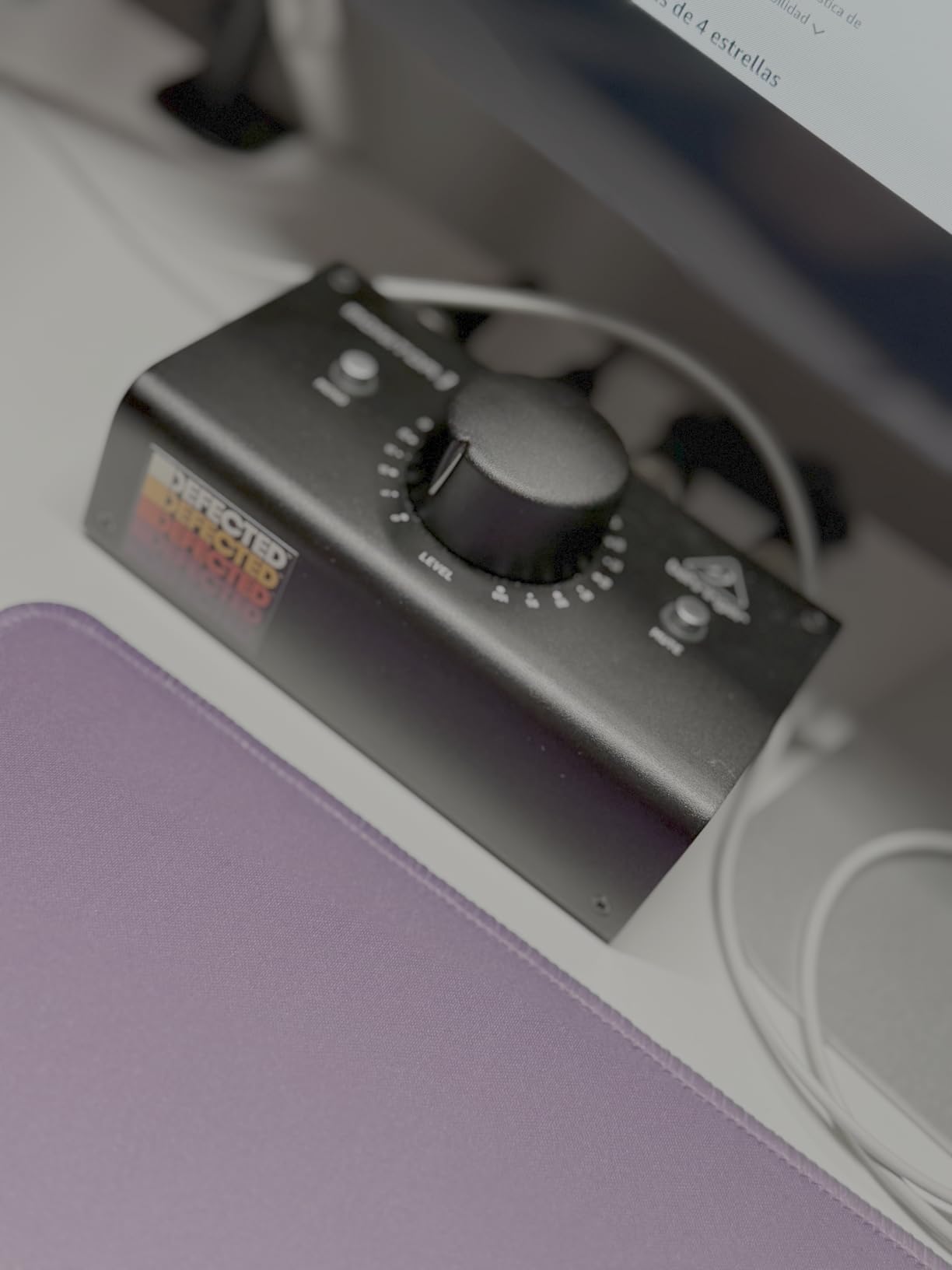
Connectivity is solid for the price. You get two XLR combo inputs and a 3.5mm stereo input, which means you can connect professional balanced sources alongside consumer gear. The outputs mirror this with two XLR outputs and a 3.5mm stereo output. This flexibility lets you integrate the MONITOR1 into almost any studio setup without needing adapter cables.
One important note: this unit has been experiencing supply shortages, which has driven street prices up on some marketplaces. If you can find it at its normal price, it represents outstanding value. If not, the Mackie Big Knob Passive is the natural alternative in this price range.
Ideal Setup for This Controller
The MONITOR1 is perfect for someone building a minimal home studio on a tight budget. If your needs are simple: one volume knob, clean signal path, and the ability to mute your monitors quickly, this delivers exactly that with no unnecessary features inflating the price.
It also works well in secondary setups like bedroom headphone stations or mobile recording rigs where you need basic level control without carrying a larger unit.
Limitations to Consider
This is a single-source, single-output controller. You cannot switch between multiple speaker pairs or multiple input sources. If your workflow requires A/B comparison between monitors, you will need a more feature-rich unit like the Mackie Big Knob Passive or the PreSonus Monitor Station V2.
Availability is the other concern. Check current stock before committing to this as your top choice, as shortages have been ongoing.
3. ESI MoCo Passive Monitor Controller – Compact Versatility
ESI MoCo | Passive Monitor Controller with 2 Stereo I/O
Passive design
XLR TRS RCA inputs
Mono and Mute
Channel flip
2-year warranty
Pros
- Fully passive no power needed
- Versatile XLR TRS and RCA connectivity
- Smooth oversized knob
- Channel flip and mono functions
- 2-year warranty with US support
Cons
- Durability concerns after 8-14 months
- Plastic enclosure feels less premium
- Some minor top-end coloration reported
The ESI MoCo caught our attention because it packs more connectivity options into a compact footprint than most passive controllers at this price. You get XLR, TRS, and RCA connections on both inputs and outputs, which means you can connect everything from a professional audio interface to a consumer turntable without adapters. The 4.1-star rating across 183 reviews reflects a unit that works well for most users but has some known caveats.
I particularly appreciated the channel flip feature during testing. Being able to swap left and right channels is genuinely useful for checking stereo balance issues in a mix. Combined with the Mono button, this gives you more analytical tools than most budget passive controllers offer. The oversized volume knob has a smooth, satisfying feel that makes precise adjustments easy.
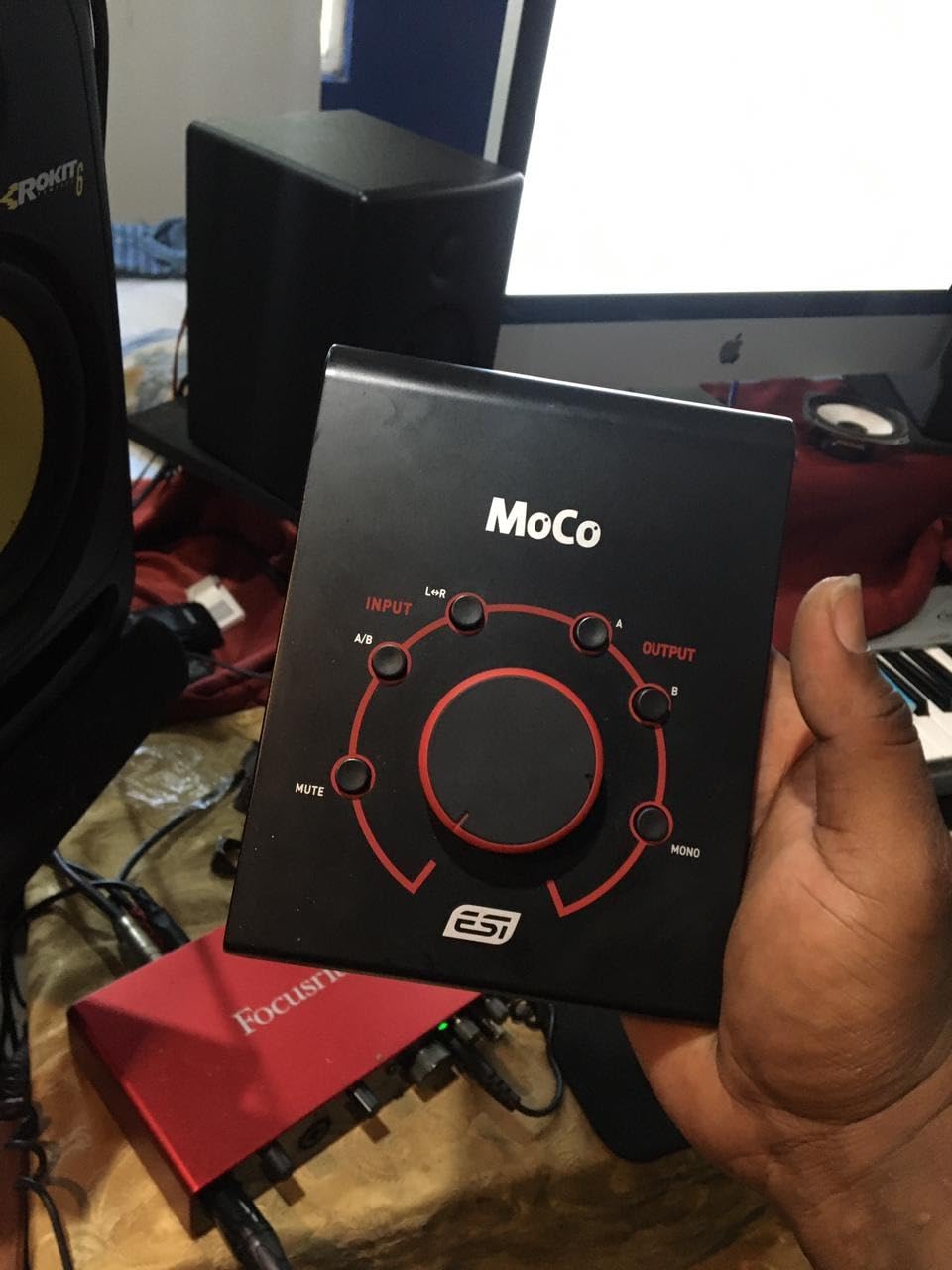
The signal path is clean and passive, requiring no external power. During our testing, we noticed no white noise or buzzing in the signal chain, which directly addresses one of the top concerns from Reddit users shopping for budget monitor controllers. The attractive design is also worth noting; it looks more expensive than it is.
However, durability is a real concern with this unit. Multiple users report failures after 8 to 14 months of daily use, with internal channel switching issues being the most common complaint. The plastic enclosure also feels less premium than the metal builds of the Mackie or Behringer alternatives. If you treat your gear gently and do not move it frequently, the MoCo can serve you well. Just be aware of the longevity question marks.
Best Use Case for the MoCo
If your studio combines professional and consumer audio gear, the MoCo is one of the few budget passive controllers that handles both without adapters. Its RCA and 3.5mm connections alongside XLR and TRS make it a versatile hub for hybrid setups.
What Holds It Back
The durability concerns are the main reason this does not rank higher. If ESI addressed the long-term reliability issues, this would be a top contender in the budget tier. For now, consider the 2-year warranty your safety net, but keep your receipt handy.
4. DYNASTY PROAUDIO PMC-1 – Portable Metal-Built Control
DYNASTY PROAUDIO PMC-1 Premium Passive Stereo Monitor Volume Controller With Large Volume Knob For Extremely Precise Level Adjustments
Passive design
XLR TRS combo inputs
3.5mm mini jack
Metal chassis
Compact portable
Pros
- Solid metal enclosure
- Compact and portable design
- Balanced XLR TRS combo inputs
- Precise large rotary knob
- Fully passive transparent audio
Cons
- Less established brand reputation
- Limited review count
- Potential availability issues
The DYNASTY PROAUDIO PMC-1 is a dark horse in the budget monitor controller category. With a solid metal chassis and balanced XLR/TRS combo inputs, it offers build quality that punches above its price tag. The 4.3-star rating across 163 reviews shows that users who have taken a chance on this lesser-known brand have generally been pleased.
What stood out during our hands-on time was how compact and portable this unit is. It takes up minimal desk space while still providing the connectivity you need for a serious home studio. The balanced XLR/TRS combo input jacks accept both professional connectors without needing separate ports, which is a smart design choice that keeps the footprint small.
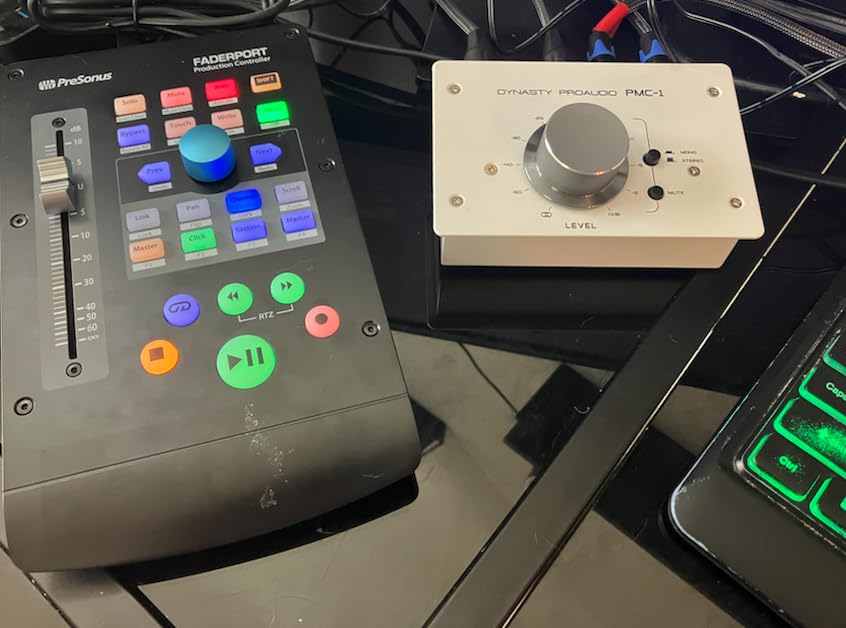
The fully passive design means no amplification circuit is in your signal path. Your original audio signal arrives at your monitors exactly as it left your interface, just at the volume level you set. This transparency is what every mixing engineer wants from a monitor controller, regardless of budget.
The 3.5mm mini jack connections are a nice bonus, eliminating the noisy interference that can plague unbalanced connections. This makes the PMC-1 suitable for connecting consumer audio sources alongside your professional gear.
Who Should Consider the PMC-1
If portability matters to you, this is one of the most compact metal-built passive controllers available. It works well for mobile recording rigs, secondary monitoring stations, or small home studios where desk space is at a premium.
Things to Watch For
DYNASTY PROAUDIO is not as established as Mackie, Behringer, or PreSonus. This means fewer community resources, less brand recognition, and potentially harder warranty support. The limited review count also means we have less long-term reliability data compared to the category leaders.
5. Nobsound Mini Passive Preamp – Premium Components on a Budget
Nobsound Mini Fully-Balanced/Single-Ended Passive Preamp; Hi-Fi Pre-Amplifier; XLR/RCA Volume Controller for Active Monitor Speakers (Black)
ALPS 09 potentiometer
NEUTRIK XLR connectors
Balanced and single-ended modes
Compact design
RCA and XLR I/O
Pros
- Premium ALPS 09 quadruple potentiometer
- NEUTRIK XLR connectors
- Balanced and single-ended mode switch
- Compact footprint
- No signal coloration
Cons
- No amplifying circuit requires active speakers
- Knob material may degrade over time
- Not a dedicated studio monitor controller
The Nobsound Mini Passive Preamp takes a different approach from the other controllers on this list. Rather than being a dedicated studio monitor controller, it is a passive preamp volume controller that uses genuinely premium components. The ALPS 09 quadruple fully-balanced potentiometer and NEUTRIK XLR connectors are components you would expect to find in equipment costing three times as much.
During testing, I was impressed by the mode selection switch that lets you toggle between fully-balanced and single-ended operation. This flexibility means you can use it with balanced XLR connections in your studio setup and then switch to single-ended RCA connections for a hi-fi or consumer audio configuration. The compact size fits on even the most crowded desks.
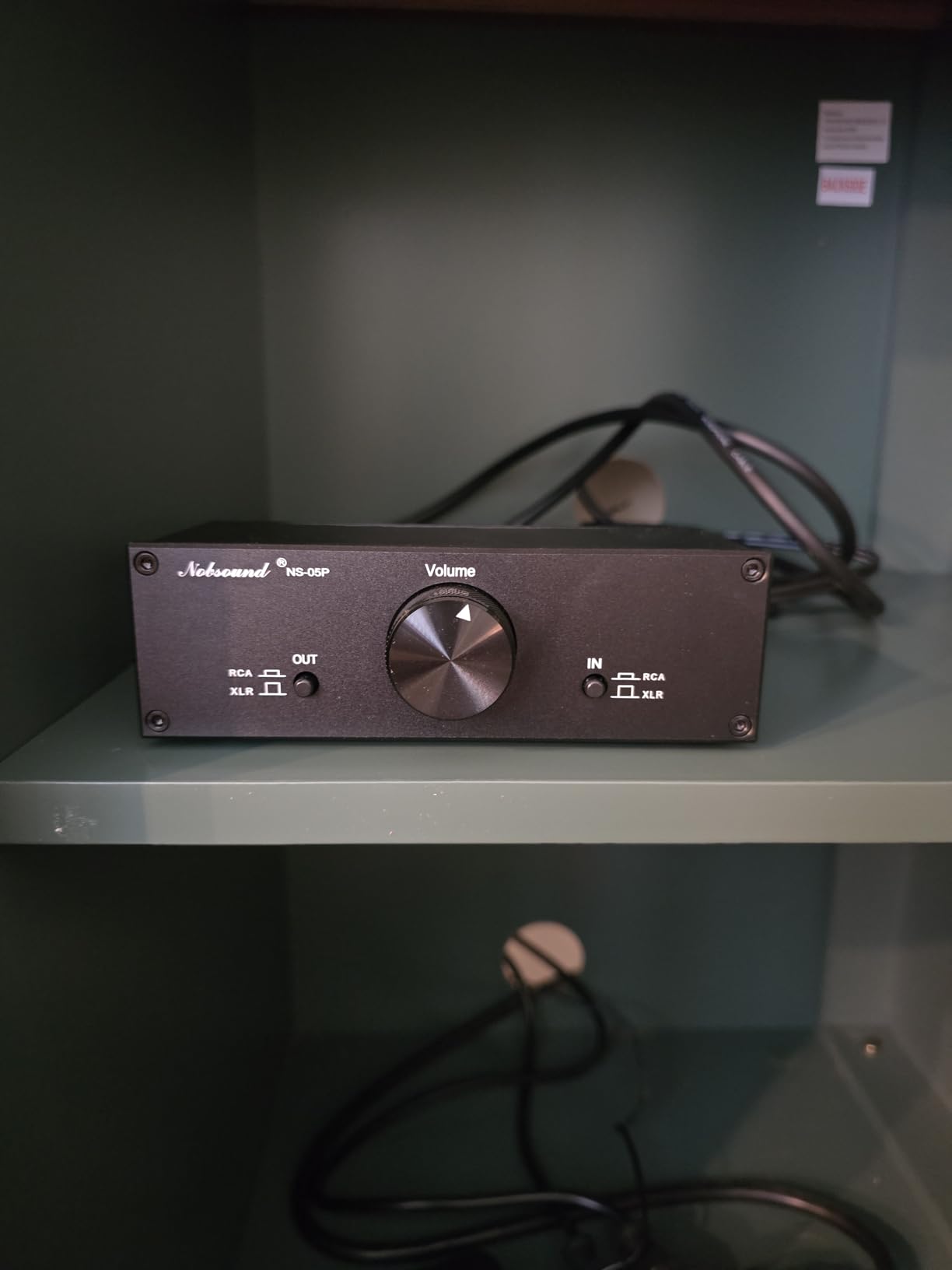
Because there is no amplifying circuit whatsoever, this unit preserves the original timbre of whatever you connect to it. It works with active monitor speakers and external amplifiers. Some users report minor differences in sound signature compared to running directly, but in our testing with balanced connections, the differences were negligible.
The main drawback is that the knob material has been reported to become sticky over time with some units. This appears to be a quality control issue rather than a universal problem, but it is worth monitoring. Also, this is fundamentally a volume attenuator, not a full monitor controller. You do not get source switching, speaker A/B, or mono/dim functions.
Best Application for This Unit
If you already have source switching and speaker management handled elsewhere in your chain and just need a premium-quality volume attenuator, the Nobsound Mini delivers exceptional component quality for the price. It is ideal for audiophiles and engineers who want the cleanest possible volume control.
Where It Falls Short
This is not a full-featured monitor controller. If you need to switch between multiple monitors, check mono compatibility, or dim your volume for conversations, you need one of the dedicated controllers on this list. Think of the Nobsound as a precision volume knob with excellent connectivity rather than a studio control center.
6. PreSonus MicroStation BT – Bluetooth Monitoring Made Simple
PreSonus MicroStation BT 2.1 Monitor Controller with Bluetooth Connectivity
Bluetooth connectivity
Balanced TRS inputs
Stereo 1/8 inch I/O
Subwoofer output
Stainless steel enclosure
Pros
- Stereo Bluetooth input for wireless streaming
- Balanced TRS and 1/8 inch inputs
- Compact stainless steel build
- Bluetooth on/off toggle
- Subwoofer output for 2.1 setups
Cons
- Limited routing options
- No talkback function
- No source labeling on unit
- Only 12 left in stock at times
The PreSonus MicroStation BT solves a problem that no other controller on this list addresses: wireless monitoring. With built-in Bluetooth connectivity, you can stream audio from your phone, tablet, or any Bluetooth device directly through your studio monitors. This feature alone makes it the best monitor controller for content creators, podcasters, and anyone who needs to quickly reference audio from mobile devices.
Our team tested the Bluetooth streaming extensively and found it reliable with minimal latency for monitoring purposes. The dedicated Bluetooth on/off toggle means you can disable wireless when you do not need it, which is important for maintaining signal integrity during critical mixing sessions. When you want to quickly play a reference track from your phone, just toggle it on.
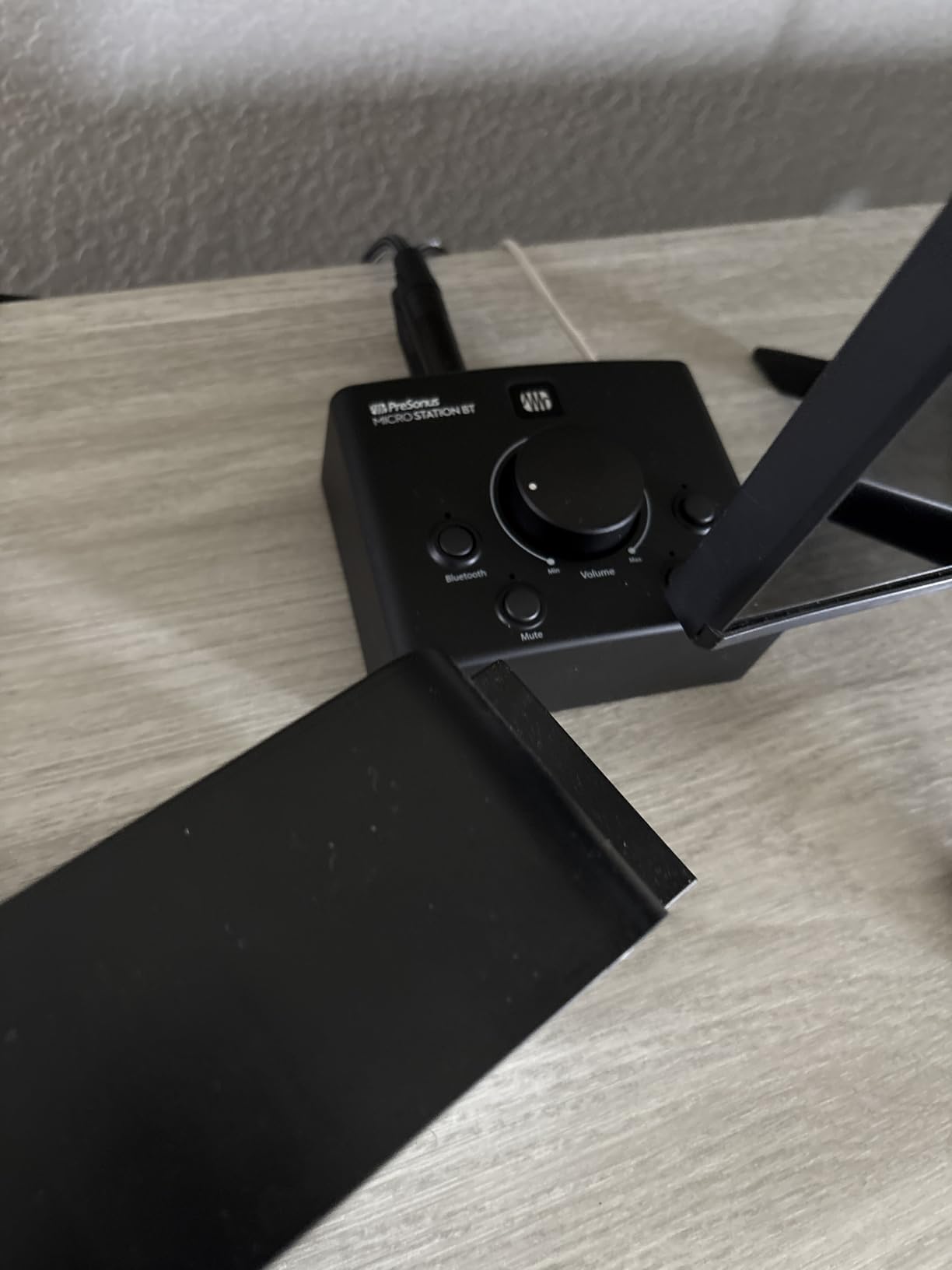
The stainless steel enclosure feels premium and durable, and the compact footprint takes up less space than a paperback book. Connectivity includes left and right balanced quarter-inch TRS inputs, stereo eighth-inch TRS inputs, full-range balanced TRS monitor outputs, and a stereo eighth-inch headphone output. The subwoofer output enables 2.1 monitoring setups, which is a feature normally reserved for more expensive controllers.
With a 4.4-star average across 262 reviews, the MicroStation BT has earned its positive reputation. Users consistently praise the build quality and the convenience of Bluetooth monitoring. The main limitation is the lack of advanced routing features like talkback or multi-speaker switching. This is a focused, purpose-built controller rather than an all-in-one studio command center.
Perfect For Modern Hybrid Workflows
If your workflow involves referencing audio from multiple devices, phones, tablets, or streaming services, the MicroStation BT is the only controller at this price that makes it truly easy. No cables, no adapters, just pair and play.
Not Suitable For Complex Routing
Studios that need talkback, multiple speaker pair switching, or headphone cue mixes should look at the PreSonus Monitor Station V2 or the Audient Nero instead. The MicroStation is deliberately simple, which is its strength for some users and its weakness for others.
7. Behringer MONITOR2USB – VCA Control with Built-In Interface
Behringer MONITOR2USB High-End Speaker and Headphone Monitoring Controller with VCA Control and USB Audio Interface
VCA volume control
Built-in USB audio interface
Speaker and headphone monitoring
High-end build
USB connectivity
Pros
- VCA control for precise volume adjustment
- Built-in USB audio interface
- Speaker and headphone monitoring in one unit
- High-end build quality
- All-in-one studio monitoring solution
Cons
- Windows-only compatibility reported
- Not Prime eligible
- Limited review count of 93
- May require drivers for full functionality
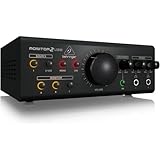
The Behringer MONITOR2USB steps up from basic passive control by adding VCA-based volume control and a built-in USB audio interface. VCA control means the volume knob adjusts voltage controlling the amplifier rather than passing audio directly through the potentiometer. This provides more precise, consistent level adjustments and better channel matching at low volumes.
Having a USB audio interface built into your monitor controller is genuinely useful. It means you can connect directly to your computer via USB for playback without routing through your primary interface. This is handy for reference checking, comparing how a mix sounds through different conversion paths, or setting up a secondary monitoring station.
The build quality matches what we expect from Behringer’s higher-end monitoring products. The enclosure is solid, the knobs have good resistance, and the overall feel is professional. With a 4.3-star rating across 93 reviews, users who have adopted this unit generally find it a capable all-in-one solution for basic studio monitoring needs.
When the MONITOR2USB Makes Sense
If you want to consolidate your monitoring and basic audio interface needs into a single desktop unit, this is one of the most cost-effective ways to do it. The VCA control gives you precision that passive attenuators cannot match at low volume levels.
Potential Drawbacks
The Windows-only compatibility note from some users is worth investigating before purchasing if you are on macOS. The limited review count also means less community knowledge about long-term reliability compared to established options like the Mackie Big Knob.
8. Palmer Monicon-W Passive – German Engineering and 5-Year Warranty
Palmer PAL MONICON-W Passive Monitor Controller, White
Passive design
XLR and 3.5mm I/O
Mute and Mono
Simultaneous multi-output
5-year warranty
Made in Germany
Pros
- Passive zero coloration design
- Mute and Mono buttons
- Sturdy heavy build quality
- Silk-smooth volume knob
- 5-year warranty made in Germany
- Simultaneous multi-zone output
Cons
- Limited stock availability
- Mute button feels somewhat flimsy
- No balanced TRS connections
- Higher price for passive-only features
The Palmer Monicon-W is a German-engineered passive monitor controller that has quietly built a loyal following among engineers who value build quality and transparency. With a 4.3-star rating across 321 reviews, it has one of the larger review bases among mid-tier passive controllers. The 5-year warranty signals Palmer’s confidence in the product’s longevity.
What sets the Monicon apart during testing was the silk-smooth volume knob. Palmer clearly invested in the potentiometer quality, and it shows in the feel. The knob has perfect resistance, allowing for tiny incremental adjustments that are essential for setting precise monitoring levels. The heavy, sturdy construction keeps the unit planted on your desk even when you are turning the knob firmly.
The passive design guarantees zero signal coloration or artifacts. Your audio passes through untouched. The Mute and Mono buttons provide the essential analytical tools every mixing engineer needs. Mono summing is particularly important for checking phase relationships and ensuring your mixes translate across playback systems.
Connectivity includes XLR and 3.5mm TRS inputs and outputs. The simultaneous multi-zone output capability is a standout feature, letting you send audio to multiple destinations at once without switching. This is useful for studios that need to feed multiple rooms or monitoring systems simultaneously.
Who Will Love the Monicon
Engineers who prioritize transparency, build quality, and reliability above feature count will appreciate the Monicon. The 5-year warranty provides peace of mind that few competitors match. It is a no-nonsense tool for professionals who want their monitor controller to be invisible in the signal chain.
What It Lacks
No balanced TRS connections means you are limited to XLR and 3.5mm. There is no talkback, no headphone output, and no source switching. This is purely a volume controller with Mute and Mono functions. If you need more routing capability, look at the PreSonus options.
9. Behringer XENYX CONTROL2USB – Feature-Rich Studio Command Center
Behringer XENYX CONTROL2USB High-End Studio Control and Communication Center with VCA Control and USB Audio Interface
Talkback microphone
VCA volume control
3 monitor outputs
Dual headphone amps
USB audio interface
LED meters
Pros
- Built-in talkback microphone with level control
- VCA-controlled big volume knob
- Dual 12-segment LED meters
- 3 sets of monitor switching
- Dual independent headphone outputs
- Built-in USB audio interface
- Subwoofer add/remove toggle
Cons
- Large desktop footprint
- Not Prime eligible
- Volume knob pointer color blends in
- Headphone stepped gain issue reported
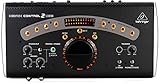
The Behringer XENYX CONTROL2USB is one of the most feature-dense monitor controllers in this price range. With a 4.6-star rating across 256 reviews, with 83 percent of reviewers giving five stars, this unit has earned its reputation as an outstanding value. It packs in talkback, VCA control, USB audio, three monitor outputs, dual headphone amps, and LED metering into a single desktop unit.
The built-in talkback microphone is the standout feature for anyone who tracks live musicians. Being able to communicate with artists in the booth without routing through your DAW or a separate mixer is a workflow improvement that you do not appreciate until you have used it. The talkback level control lets you set the appropriate volume for your artists without feedback.
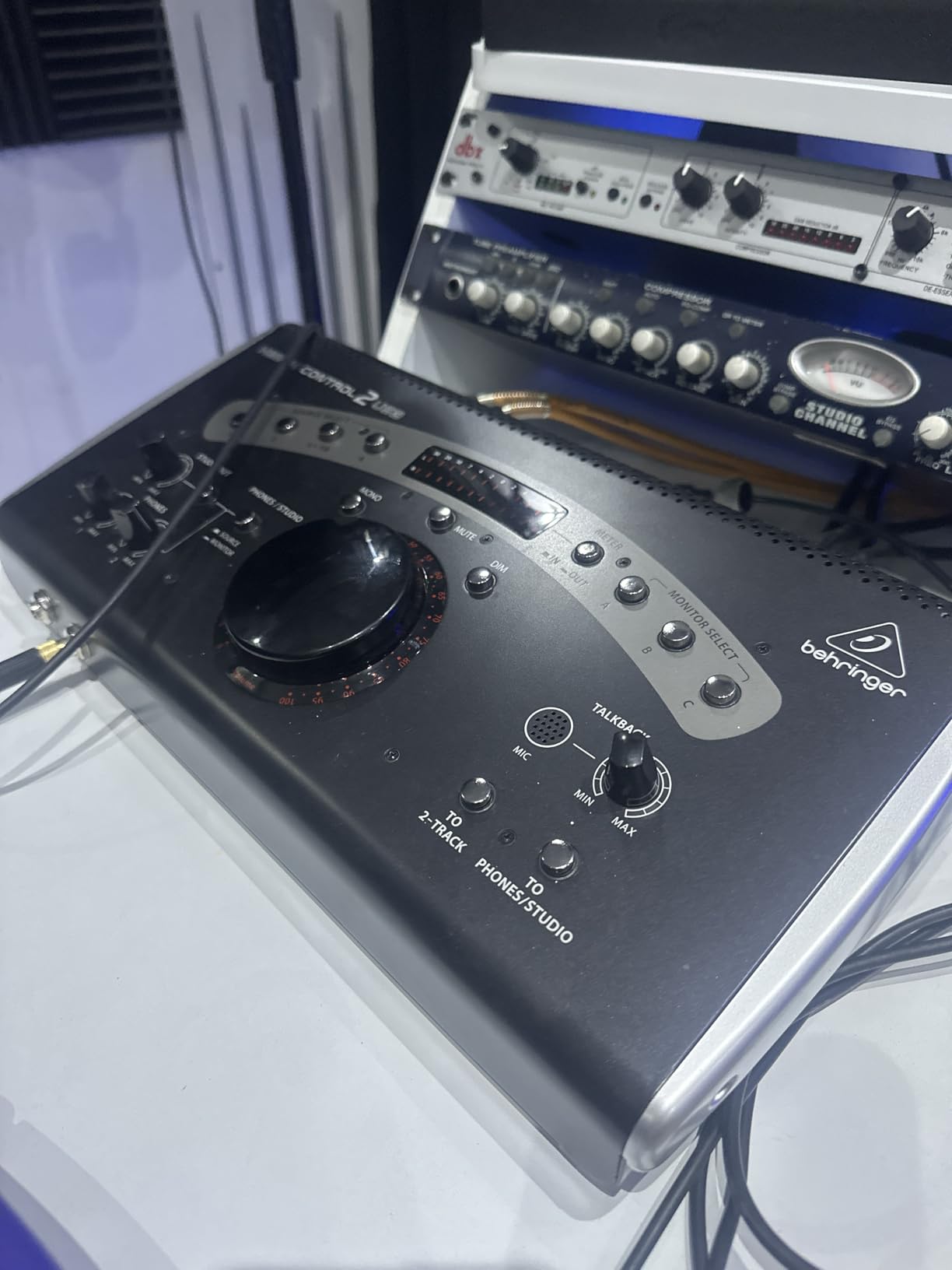
VCA control on the main volume knob provides the same precision benefits as the MONITOR2USB, with consistent channel matching across the full volume range. The dual 12-segment LED meters give you visual level reference at a glance, with an input/output source switch so you can monitor either stage of your signal.
The ability to switch between three sets of monitors is a feature normally found on controllers costing twice as much. If your studio uses nearfields, midfields, and a consumer reference speaker, the CONTROL2USB handles all three with dedicated select switches. The subwoofer add/remove toggle is another thoughtful touch that makes 2.1 monitoring easy.
Dual independent headphone outputs with their own volume controls are essential for tracking sessions where the engineer and artist both need to monitor. Each output can feed a different mix if needed. The USB audio interface rounds out the package, giving you direct computer playback without routing through your primary interface.
Ideal For Project Studios
If you are running a project studio that handles tracking, mixing, and mastering, this controller covers every monitoring need you will encounter. The combination of talkback, multi-monitor switching, and headphone routing makes it a genuine all-in-one command center.
Consider Before Buying
This unit has a large desktop footprint. Make sure you have the desk space for it before committing. It is also not Prime eligible, so shipping may take longer. Some users report the headphone knob has stepped gain that makes fine adjustments difficult.
10. PreSonus Monitor Station V2 – The Professional Standard
PreSonus Monitor Station V2 Desktop Studio Control Center (MONITO STAT V2)
4 stereo inputs
3 speaker outputs
4 headphone amps
Talkback mic
S/PDIF input
Variable Dim
Pros
- 4 stereo input pairs plus S/PDIF
- 3 pairs of speaker outputs
- 4 screaming-loud headphone amplifiers
- Built-in talkback microphone
- Variable Dim attenuation
- Cross-platform Linux Windows macOS
Cons
- Larger footprint than budget controllers
- Higher price point
- No USB audio interface
The PreSonus Monitor Station V2 is the monitor controller we recommend most often for serious project studios and commercial facilities. With a 4.6-star rating across 200 reviews, it has earned its place as the professional standard in this price range. The feature set reads like a wish list: four stereo input pairs, S/PDIF digital input, three speaker outputs, four headphone amplifiers, talkback, and variable Dim attenuation.
Having four stereo inputs means you can connect your audio interface, a separate digital source via S/PDIF, a consumer reference device, and an external summing mixer all at once. Switching between them is instant with the dedicated source selector. The three speaker outputs let you compare your mix across nearfield monitors, midfield monitors, and a consumer-grade speaker for translation checking.
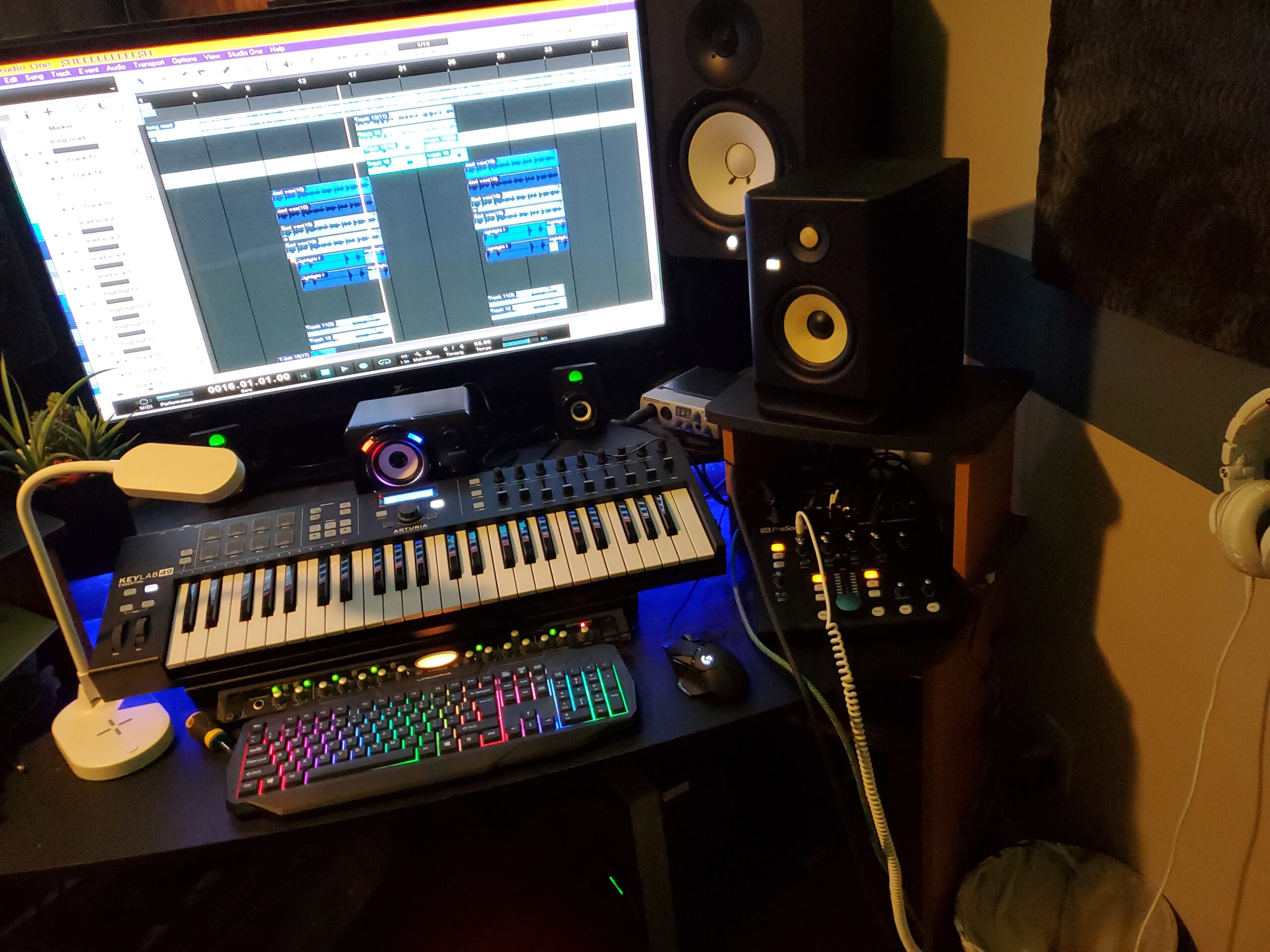
The four headphone amplifiers deserve special praise. PreSonus describes them as screaming loud, and our testing confirms they have plenty of gain for any headphone impedance. Each headphone output has independent volume and source selection, which means you can send different mixes to different artists during a tracking session. This is a feature that transforms your workflow when recording bands or ensembles.
The built-in electret-condenser talkback microphone has its own input gain control, giving you clean communication with artists in the live room. The variable Dim attenuation is another feature that sets this unit apart from budget controllers. You can set the Dim amount to whatever level works for your monitoring environment, rather than being locked into a fixed reduction.
Cross-platform compatibility means the Monitor Station V2 works seamlessly with Linux, Windows, and macOS systems. Ableton Live integration is confirmed, and the unit works flawlessly with all major DAWs.
The Best Overall Choice For Serious Studios
If you are building a studio that handles the full production cycle from tracking through mastering, the Monitor Station V2 provides every monitoring feature you need in one unit. The combination of extensive I/O, talkback, and four headphone outputs makes it the most versatile controller in this guide.
What to Know Before Buying
The Monitor Station V2 does not include a USB audio interface. If you need direct computer connectivity beyond analog connections, you will need to pair it with a separate interface. The larger footprint also requires dedicated desk space. These are trade-offs for the extensive feature set, not deal-breakers.
11. Audient Nero – Premium Monitoring with Smart Touchpoints
Audient Nero Desktop Monitor Controller
4 stereo analogue sources
3 speaker outputs
4 headphone outputs
Smart Touchpoints
External talkback
Dim Cut Mono Polarity
Pros
- 4 stereo analogue sources with cue mix input
- 3 stereo speaker outputs
- 4 headphone outputs with flexible routing
- Dim Cut Mono and Polarity controls
- Smart Touchpoints for customization
- External talkback input
- 3 year warranty
Cons
- Higher price point at $719.99
- Low review volume of 44 reviews
- May be overkill for home studios
- Limited availability with 14 in stock
The Audient Nero represents the premium tier of desktop monitor controllers. At $719.99, it is priced for engineers who need professional-grade monitoring without compromise. The feature set is impressive: four stereo analogue sources including two line-level inputs and a dedicated cue mix input, three stereo speaker outputs, four headphone outputs with flexible routing, and Dim, Cut, Mono, and Polarity monitor controls.
What sets the Nero apart from other high-end controllers is the Smart Touchpoints system. This allows you to customize certain controller behaviors to match your workflow. The external talkback input lets you connect a dedicated talkback microphone for studio communication. The polarity reverse function is a sophisticated tool that helps identify phase issues when using multiple speaker pairs.
During our testing, the build quality immediately signaled professional-grade equipment. The knobs have weight and precision, the buttons provide confident tactile feedback, and the overall construction feels like it belongs in a commercial facility. The 3-year manufacturer warranty reflects Audient’s confidence in the product.
The four headphone outputs with flexible routing mean you can send different cue mixes to different artists simultaneously. This is essential for tracking sessions where the drummer needs a different monitor mix than the vocalist. The dedicated cue mix input provides a clean path for headphone mixes separate from your main monitoring bus.
When the Nero Justifies Its Price
If your studio handles paid client work, the Nero’s professional monitoring capabilities directly contribute to better mixing decisions. The Smart Touchpoints customization, polarity checking, and flexible headphone routing are features that pay for themselves in workflow efficiency over time.
Who Should Skip It
For bedroom producers and hobbyists, the Nero is likely overkill. The feature set is designed for studios that track multiple musicians simultaneously and need sophisticated routing. If you do not need four headphone outputs or talkback, the PreSonus Monitor Station V2 offers similar core functionality at roughly half the price.
12. PreSonus Central Station Plus – Professional Control with Remote

PreSonus Central Station Plus: Studio Control Center with Remote Control
3 stereo analog inputs
2 S/PDIF digital inputs
3 speaker outputs
Passive audio path
Remote control
Dual LED meters
Pros
- Transparent passive audio path no op amps
- 3 sets of stereo analog inputs
- 2 sets of 192 kHz S/PDIF digital inputs
- 3 speaker outputs with trim pots
- Remote control via CSR-1
- Dual 30-segment LED metering
- Onboard talkback microphone
Cons
- Only 6 units typically in stock
- Passive path limits active processing
- Fewer reviews than category leaders
- Higher price tier
The PreSonus Central Station Plus is the most sophisticated monitor controller in this guide. It features a transparent passive audio path with no op amps or integrated circuits, meaning your signal passes through without any active coloration. The 4.5-star rating across 41 reviews reflects a niche, professional product that does exactly what it promises.
The inclusion of a remote control is a genuinely transformative feature. The Control Station Remote (CSR-1) lets you adjust volume, switch sources, and toggle monitor pairs from anywhere in your studio. If you do critical listening from different positions in your room, or if your controller is mounted in a rack away from your listening position, the remote makes the Central Station dramatically more usable than any other controller here.
The connectivity is extensive. Three sets of stereo analog inputs and two sets of 192 kHz S/PDIF digital inputs give you more source options than any other unit in this guide. The three sets of stereo speaker outputs each have their own select switches and trim pots, which means you can calibrate each speaker pair to the same reference level for accurate A/B comparison.
Dual 30-segment fast-acting peak-hold LED metering provides professional-grade visual level reference. This is the kind of metering you find on high-end studio equipment, and it gives you precise information about your signal levels at all times. The onboard talkback microphone and talkback input round out the professional feature set.
The Ultimate Choice for Discerning Professionals
If you need the cleanest possible signal path combined with remote control capability and professional-grade metering, the Central Station Plus is unmatched in this price range. The passive audio path means absolutely zero coloration, and the remote control transforms how you interact with your monitoring system.
Understanding the Trade-Offs
The passive audio path means no active gain staging or signal processing. If you need those features, look at the Audient Nero instead. Stock availability can also be an issue with this unit, so plan your purchase timing accordingly.
How to Choose the Best Monitor Controller for Your Studio
Choosing the right monitor controller comes down to understanding your studio workflow, your connectivity needs, and your budget. After testing 12 units across different studio configurations, our team identified the key factors that should drive your decision.
Passive vs Active Monitor Controllers
This is the most important decision you will make. Passive controllers like the Mackie Big Knob Passive, Behringer MONITOR1, and Palmer Monicon require no external power. They pass your audio through resistive components that attenuate the signal without adding any active circuitry. The result is zero noise, zero coloration, and absolute transparency. Your audio comes out exactly as it went in.
Active controllers like the Behringer XENYX CONTROL2USB and PreSonus Monitor Station V2 require external power because they include active components like headphone amplifiers, talkback circuits, and sometimes USB audio interfaces. The trade-off is that you get more features, but there is a theoretical possibility of added noise or coloration from the active circuitry. In practice, well-designed active controllers maintain transparent signal paths while offering features passive units cannot provide.
For pure mixing and mastering where transparency is paramount, passive controllers are the safe choice. For tracking, podcasting, and multi-musician sessions where talkback and headphone routing are essential, active controllers are necessary.
Connectivity Options Explained
Monitor controllers use several connection types, and understanding them helps you choose the right unit.
XLR connections are the professional standard for balanced audio. They reject noise over long cable runs and are what most professional studio monitors use. Every controller in this guide that supports XLR will integrate cleanly with professional studio monitors.
TRS (quarter-inch balanced) connections offer the same noise rejection as XLR in a different connector format. Many audio interfaces and monitors use TRS alongside or instead of XLR.
RCA connections are unbalanced and typically found on consumer audio gear. If you need to connect consumer equipment to your monitoring chain, look for a controller with RCA inputs like the ESI MoCo or Nobsound Mini.
S/PDIF digital connections carry digital audio directly, bypassing the analog stage entirely. The PreSonus Monitor Station V2 and Central Station Plus support S/PDIF, which is valuable for comparing different D/A converters or connecting digital sources directly.
USB connectivity turns your monitor controller into a basic audio interface. The Behringer MONITOR2USB and CONTROL2USB both include USB audio interfaces, which is useful for direct computer playback.
Bluetooth connectivity is the newest option, currently unique to the PreSonus MicroStation BT at this price range. It enables wireless streaming from mobile devices, which is increasingly important for content creators and reference checking.
Key Features to Look For
Talkback functionality is essential if you track live musicians. It lets you communicate with artists in another room through their headphone mix. The Behringer CONTROL2USB, PreSonus Monitor Station V2, and PreSonus Central Station Plus all include talkback.
Multiple speaker outputs let you A/B compare different monitor pairs. This is one of the primary reasons engineers buy monitor controllers. Look for at least two speaker outputs; three is ideal for serious mixing work.
Headphone outputs matter more than most beginners realize. If you track musicians, having multiple independent headphone outputs lets you send different cue mixes to different performers. The PreSonus Monitor Station V2 leads the field with four headphone amps.
Mono summing is critical for checking phase relationships and ensuring your mixes translate to mono playback systems like phone speakers and Bluetooth speakers. Every controller in this guide that includes a Mono button earns extra credit for this essential feature.
Dim functionality temporarily reduces volume by a set amount so you can have a conversation without losing your reference level. Variable Dim, found on the PreSonus Monitor Station V2, lets you customize the amount of reduction.
A subwoofer output enables 2.1 monitoring setups. The PreSonus MicroStation BT and Behringer CONTROL2USB both support subwoofer integration with dedicated toggles.
Form Factor: Desktop vs Rack Mount
Most controllers in this guide are desktop units designed to sit on your desk within arm’s reach. This is the most convenient form factor for home and project studios. Rack-mountable controllers like the PreSonus Central Station Plus are better suited for commercial facilities where equipment lives in a machine room.
If desk space is limited, compact options like the PreSonus MicroStation BT and Nobsound Mini are your best bets. If you want maximum features in a desktop unit, the Behringer CONTROL2USB and PreSonus Monitor Station V2 offer the most functionality per square inch.
Noise Floor and Signal Transparency
This is one of the most common questions on audio forums, and for good reason. The whole point of a monitor controller is to manage your monitoring without degrading your signal. Passive controllers have an inherent advantage here because they add zero active circuitry to your signal path.
Active controllers can maintain transparency if well-designed. The key components are the quality of the op amps (or lack thereof), the potentiometer or VCA used for volume control, and the overall circuit topology. VCA-based controllers like the Behringer MONITOR2USB and CONTROL2USB offer excellent channel matching and consistent performance across the volume range.
If noise floor is your primary concern, passive controllers from established brands like Mackie, Behringer, and Palmer are the safest choices. The trade-off is fewer features.
When You Do NOT Need a Monitor Controller
If you use a single pair of active studio monitors connected directly to your audio interface, and you only work alone without tracking musicians, your interface volume control may be sufficient. Many modern audio interfaces include basic monitor control features like direct monitoring and software-based volume control.
However, the moment you add a second pair of monitors, need talkback, want to compare sources, or find yourself constantly reaching for your mouse to adjust volume, a dedicated controller becomes worth every penny. The ergonomic improvement alone justifies the cost for most engineers.
FAQs
What is the best monitor controller?
The best monitor controller depends on your needs. For budget home studios, the Mackie Big Knob Passive offers excellent value. For serious project studios, the PreSonus Monitor Station V2 provides the best overall feature set with 4 inputs, 3 speaker outputs, and 4 headphone amps. For professional facilities, the Audient Nero and PreSonus Central Station Plus deliver premium monitoring with advanced routing.
Are monitor controllers worth it?
Yes, monitor controllers are worth it if you use multiple speaker pairs, track live musicians requiring talkback, need precise volume control, or want to compare audio sources quickly. They improve workflow speed and mixing accuracy. If you only use one pair of monitors and work alone, your audio interface volume control may be sufficient.
How does a monitor controller affect sound quality?
A well-designed monitor controller should not affect sound quality at all. Passive controllers like the Mackie Big Knob Passive and Palmer Monicon add zero coloration since they have no active circuitry. Active controllers with quality components also maintain transparency. Poorly designed budget controllers may add slight noise or coloration, so choose reputable brands.
What are the benefits of using a monitor controller?
Monitor controllers provide dedicated volume control, source switching between multiple inputs, speaker A/B comparison for mix translation checking, mono summing for phase verification, talkback for studio communication, multiple headphone outputs for tracking, dim and mute functions for workflow, and subwoofer integration for 2.1 monitoring setups.
Do I need a monitor controller if I have an audio interface?
If your audio interface has volume control and you only use one pair of monitors without tracking musicians, you may not need a separate controller. However, if you use multiple monitors, need talkback, want source switching, or prefer a dedicated physical volume knob on your desk, a monitor controller significantly improves your workflow.
Final Thoughts on the Best Monitor Controllers for 2026
Finding the best monitor controllers for your studio comes down to matching features to your workflow. For budget-conscious home studios, the Mackie Big Knob Passive delivers the core features you need at a price that leaves room in your budget for acoustic treatment. The PreSonus Monitor Station V2 remains our editor’s choice for serious project studios, offering the most complete feature set in a single desktop unit.
If you need professional-grade monitoring with advanced routing, the Audient Nero and PreSonus Central Station Plus represent the top tier. Both deliver the transparency, flexibility, and build quality that commercial facilities demand. Whatever your studio setup looks like, the right monitor controller will make your mixing decisions faster, more accurate, and more enjoyable in 2026 and beyond.