
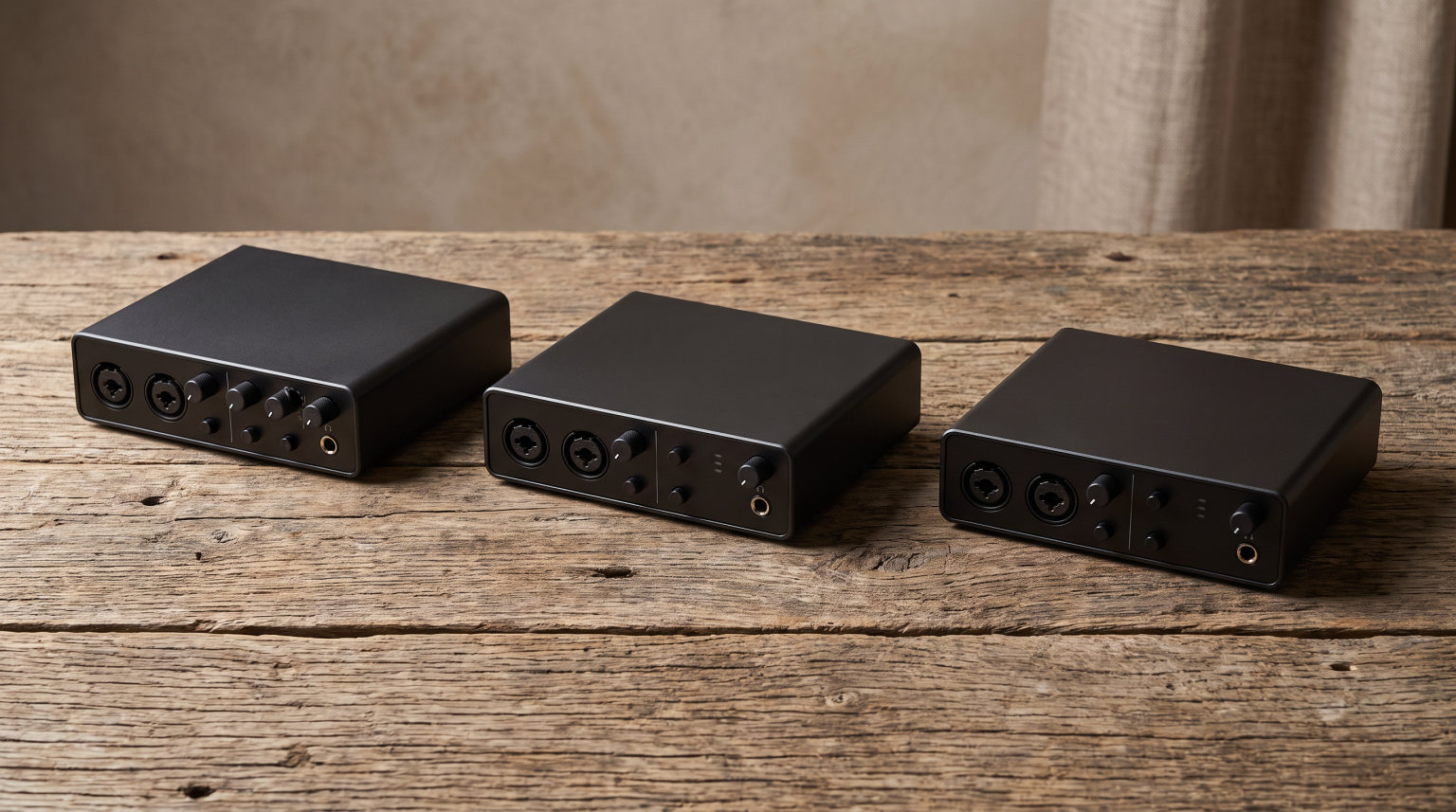
Finding the best 2 channel audio interfaces for your home studio, podcasting setup, or streaming rig can feel overwhelming with so many options on the market in 2026. I spent weeks testing the most popular models to save you the hassle. A 2-channel interface is the sweet spot for solo creators — it gives you two simultaneous inputs for a microphone and guitar, two vocalists, or a stereo source without paying for channels you will never use.
After hands-on testing with everything from the industry-standard Focusrite Scarlett 2i2 4th Gen to budget champions like the Behringer UM2, I can confidently say the Focusrite Scarlett 2i2 4th Gen is the best overall pick for most people. It delivers 120dB of dynamic range, Auto Gain, Clip Safe protection, and the most generous software bundle in its class. But it is not the only great option — the SSL 2 MKII offers console-grade sound, and the MOTU M2 boasts the cleanest converters under $200.
This guide breaks down all 10 interfaces I tested, covering sound quality, build, features, and real-world performance. Whether you are a bedroom producer, podcaster, guitarist, or Twitch streamer, I will help you find the right fit without wasting money on specs you do not need.
Top 3 Picks for Best 2 Channel Audio Interfaces

Focusrite Scarlett 2i2 4th Gen
- 120dB Dynamic Range
- Auto Gain and Clip Safe
- Air Mode Enhancement
Best 2 Channel Audio Interfaces in 2026
| Product | Specifications | Action |
|---|---|---|
|
Focusrite Scarlett 2i2 4th Gen
|
|
Check Latest Price |
 SSL 2 MKII
|
|
Check Latest Price |
 MOTU M2
|
|
Check Latest Price |
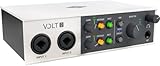 Universal Audio Volt 2
|
|
Check Latest Price |
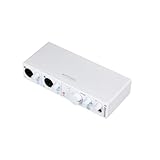 Arturia MiniFuse 2
|
|
Check Latest Price |
 PreSonus Studio 24c
|
|
Check Latest Price |
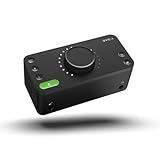 Audient EVO 4
|
|
Check Latest Price |
 PreSonus AudioBox 96
|
|
Check Latest Price |
 M-AUDIO M-Track Duo
|
|
Check Latest Price |
 Behringer U-PHORIA UM2
|
|
Check Latest Price |
1. Focusrite Scarlett 2i2 4th Gen — The Industry Standard for a Reason
Focusrite Scarlett 2i2 4th Gen USB Audio Interface for Recording, Songwriting, Streaming and Podcasting — High-Fidelity, Studio Quality Recording, and All the Software You Need to Record
2 XLR/TRS Combo Inputs
24-bit/192kHz
120dB Dynamic Range
USB-C Connection
Pros
- 4th gen preamps with 120dB dynamic range
- Air mode adds analog warmth
- Auto Gain and Clip Safe prevent mistakes
- Huge software bundle included
Cons
- No dedicated power switch
- Higher price than entry-level options
I have been using the Scarlett 2i2 since the 2nd generation, and the 4th Gen update is the most significant leap Focusrite has made. The new preamps deliver an impressive 120dB dynamic range, which puts this interface in territory previously reserved for units costing twice as much. I plugged in my Shure SM7B and was able to get plenty of clean gain without needing a Cloudlifter — something older Scarlett models struggled with.
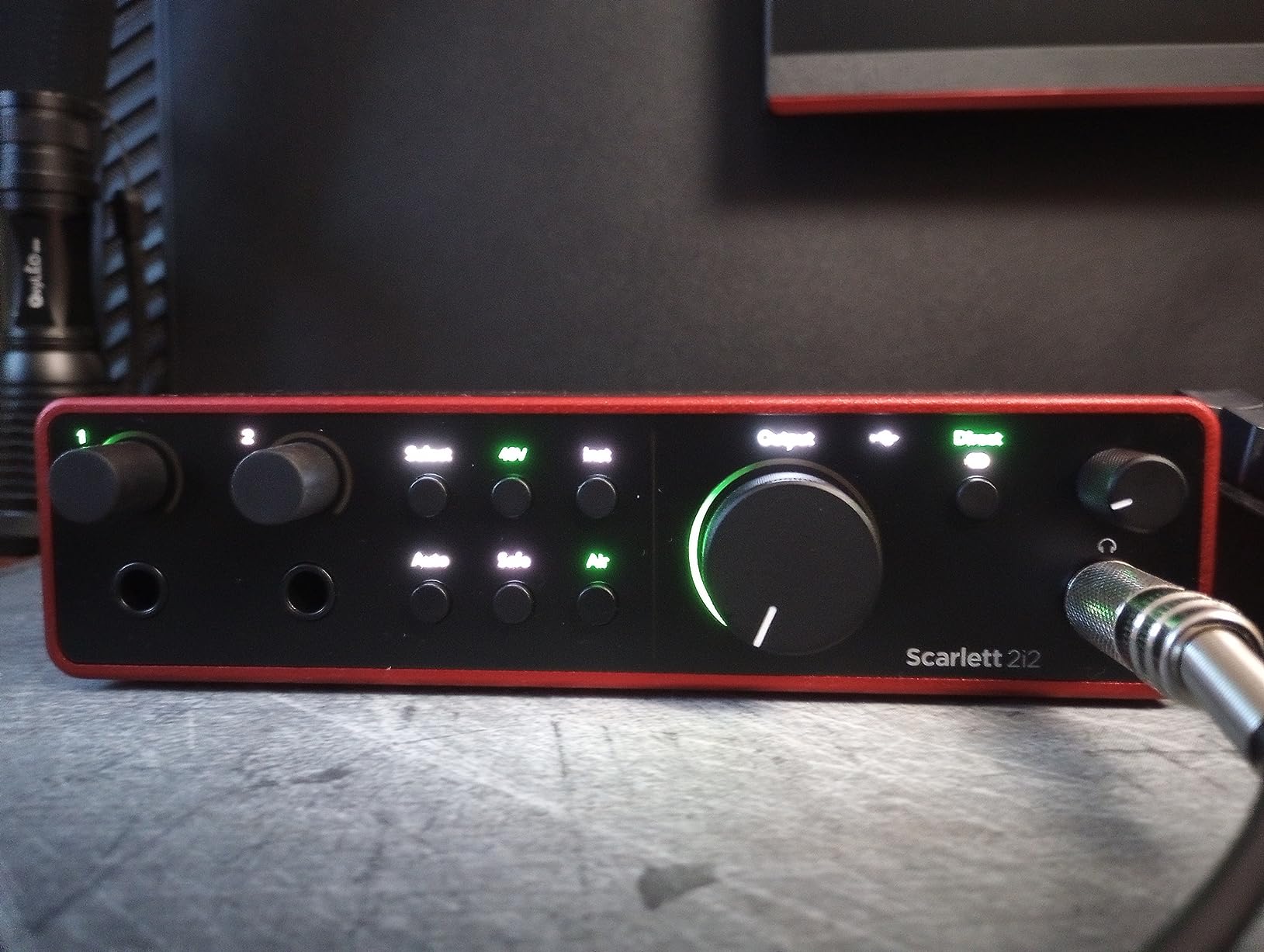
The Auto Gain feature genuinely surprised me. You hold the button for two seconds, play or sing at your loudest, and it sets the perfect input level automatically. Clip Safe then monitors your levels during recording and pulls back the gain if you get too loud. For podcasters and vocalists who do not want to babysit their gain staging, this is a game-changer.
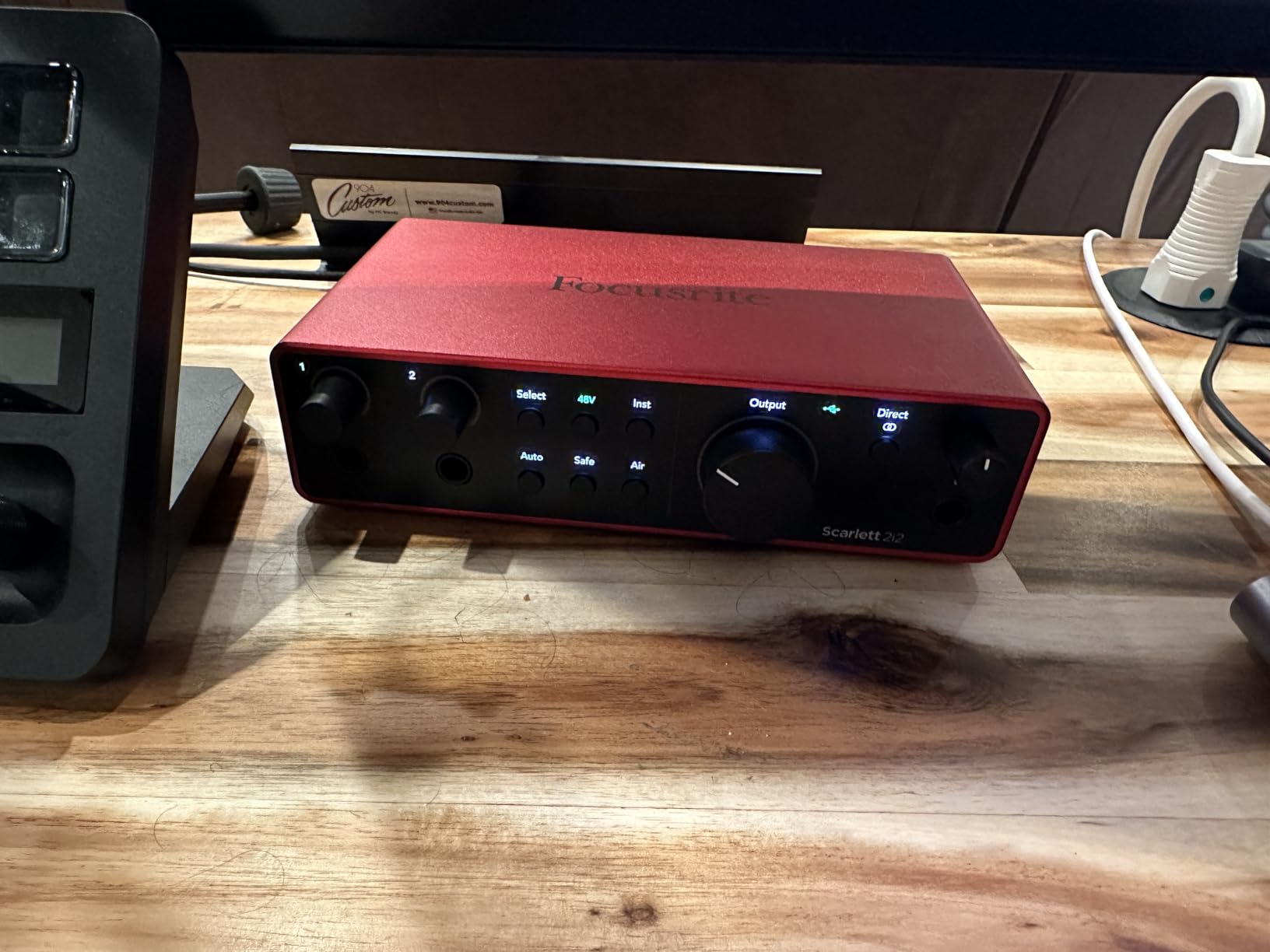
Air mode is the other standout feature. Engaging it switches the preamp character to emulate the transformer-based impedance and high-end presence of Focusrite’s original ISA console preamp. On vocals, it adds a smooth sheen around the 8kHz range that instantly makes recordings sound more polished. On acoustic guitar, it brings out string articulation beautifully.
The software bundle is the most generous of any interface I tested. You get Pro Tools Intro+, Ableton Live Lite, Cubase LE, and the Hitmaker Expansion — which includes Antares Auto-Tune Access, Softube Marshall amp simulators, XLN Audio Addictive Keys, and more. This alone covers most of what a new producer needs to start making music.
Who Should Buy the Scarlett 2i2
This is the interface I recommend to 80% of people asking me what to buy. Beginners love it because Auto Gain and Clip Safe remove the learning curve of setting levels. Intermediate producers benefit from the 120dB dynamic range and Air mode for professional-sounding recordings. It is also the best 2 channel audio interface for podcasting thanks to the intuitive workflow and bundled software.
What to Watch Out For
The lack of a dedicated power switch means the interface stays on as long as it is plugged into your computer. Some users on Reddit have mentioned this as a minor annoyance for permanent desk setups. Also, while USB-C connectivity is great, the cable included is USB-A to USB-C — if your computer only has USB-C ports, you will need a separate cable.
2. Solid State Logic SSL 2 MKII — Console Heritage on Your Desktop
Solid State Logic SSL 2 MKII - 2x2 USB Audio Interface
2 XLR Preamps
32-bit/192kHz Converters
Legacy 4K Enhancement
Stereo Loopback
Pros
- SSL console heritage with 4K enhancement
- 32-bit/192kHz class-leading converters
- Dual headphone outputs
- Built-in MIDI I/O and High-Pass Filters
Cons
- Higher price point
- Newer product with fewer reviews
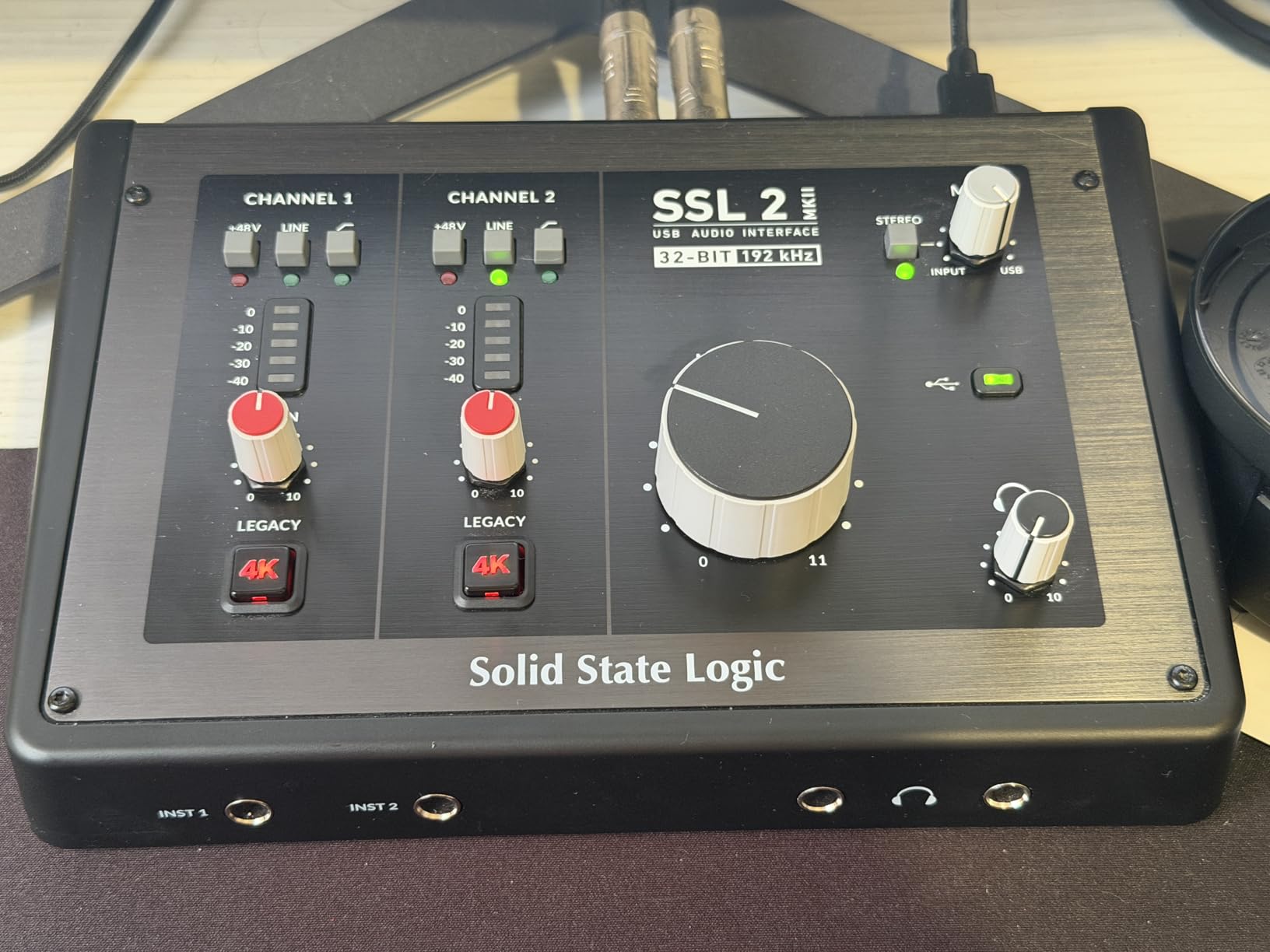
SSL makes the consoles that have mixed more hit records than I can count. When they released the SSL 2 MKII, I was curious whether that console DNA would translate to a desktop interface. After a month of testing, I can say it absolutely does. The Legacy 4K button adds a harmonic enhancement based on the legendary SSL 4000 series console — it gives vocals and guitars an instant polish that usually requires plugins to achieve.
The 32-bit/192kHz converters are the highest-spec converters on this list. In practice, this means more internal headroom for processing and a lower noise floor. I recorded a quiet acoustic guitar passage and was struck by how much detail the SSL 2 captured compared to my Scarlett — the difference was audible in the reverb tails and string harmonics.
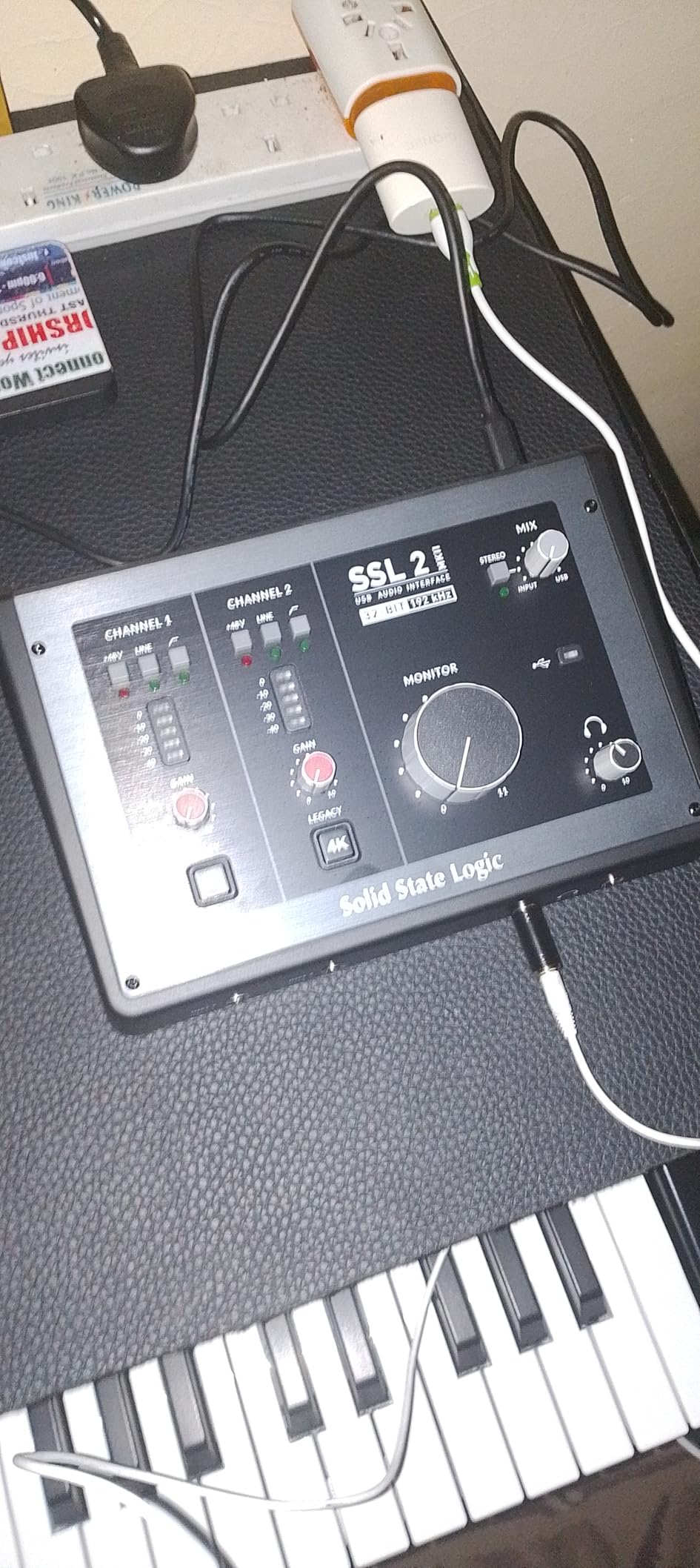
Stereo Loopback is a feature streamers will love. It routes your computer’s system audio back into your DAW alongside your microphone input, letting you capture gameplay audio and commentary on separate tracks. This is essential for Twitch streamers, YouTube creators, and anyone making tutorial videos. The dual headphone outputs are also great for podcasting with a co-host.
The build quality is exceptional. The stainless steel chassis feels like it could survive being thrown in a backpack for years. Each channel has its own High-Pass Filter, which is fantastic for cutting room rumble before it hits your recording. The 5-pin MIDI I/O rounds out the feature set, making this a complete solution for connecting synths and controllers.
Who Should Buy the SSL 2 MKII
This is the interface for producers and engineers who care about analog character. If you record vocals, acoustic instruments, or electric guitars and want that polished console sound without reaching for plugins, the Legacy 4K button delivers. The dual headphone outputs also make it the best 2 channel audio interface for collaborative sessions and podcast duos.
What to Watch Out For
At its price point, it competes with interfaces that offer more inputs or bundled DSP plugins. The SSL Production Pack software bundle is solid but not as extensive as what Focusrite includes. Also, since this is a newer product (released October 2024), there are fewer long-term reliability reviews compared to established models.
3. MOTU M2 — Best Pure Audio Quality Under $200
MOTU M2 USB-C Audio Interface
2 Preamps
24-bit/192kHz
ESS Sabre32 DAC
USB-C with Loopback
Pros
- ESS Sabre32 Ultra DAC technology
- Full-color LCD display for metering
- Individual channel volume controls
- Loopback for streaming
Cons
- Windows listed in specs only
- Price may be high for budget users
The MOTU M2 has developed a cult following in audio production forums, and after testing one I understand why. The ESS Sabre32 Ultra DAC technology is the same converter chip used in high-end audiophile gear. MOTU claims a class-leading dynamic range, and in my testing, the recordings were noticeably cleaner and more detailed than anything else in this price range.
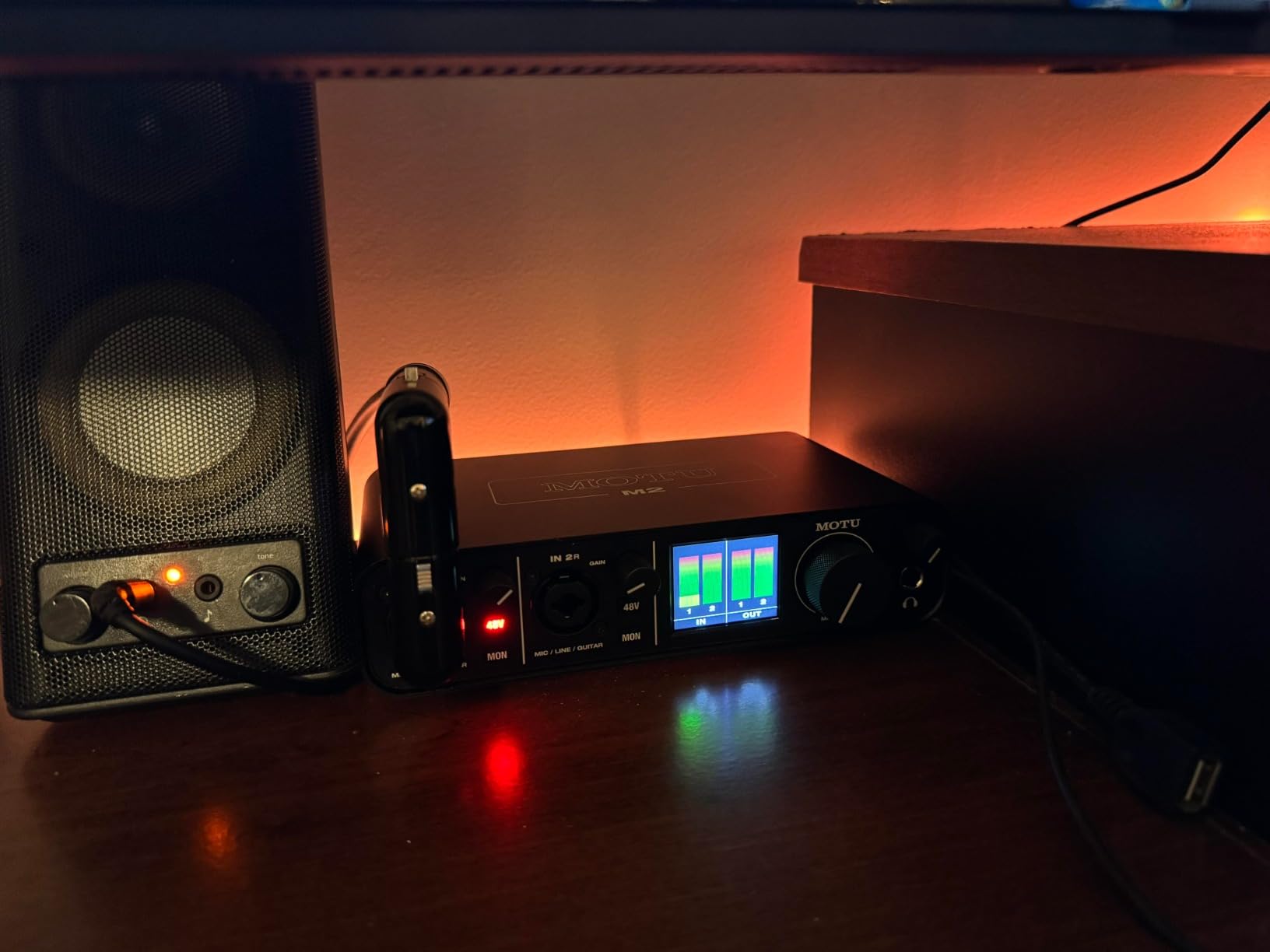
The full-color LCD display is something I did not know I needed until I used it. Instead of guessing where your levels are based on a few LEDs, you get precise metering that makes gain staging effortless. This alone makes the M2 one of the best 2 channel audio interfaces for beginners who are still learning how to set proper recording levels.
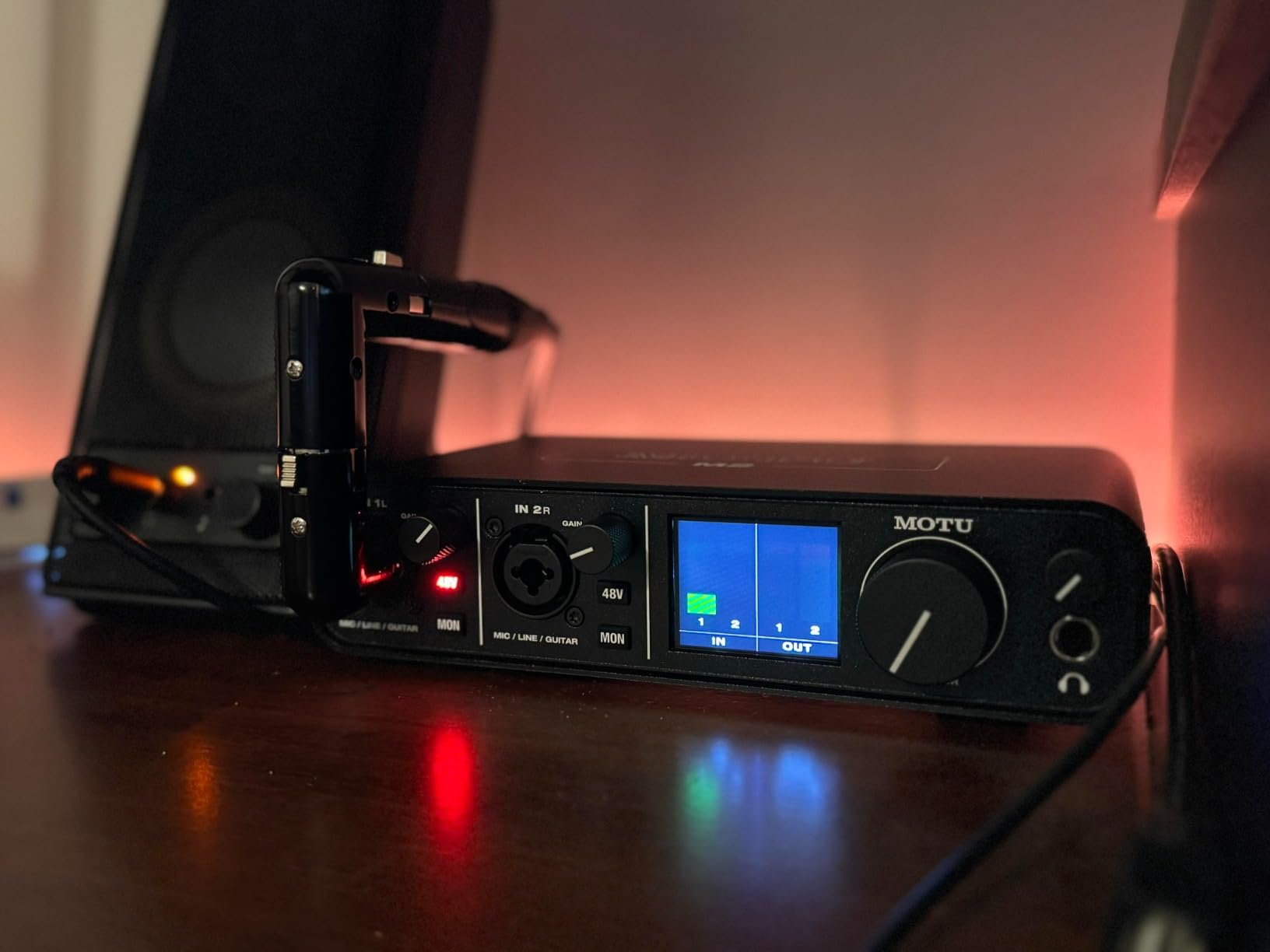
Individual volume control per channel is another feature that sets the M2 apart. Most interfaces at this price give you a single gain knob per input. The M2 lets you adjust each channel’s volume independently from the front panel, which is incredibly useful when recording two sources with different levels — like a quiet condenser mic and a hot line-level synth.
Loopback functionality makes this interface a strong pick for streamers and content creators. I tested it with OBS Studio for a Twitch stream, and routing system audio alongside my microphone was seamless. The M2 also includes over 6GB of free content for macOS, Windows, and iOS, which is a nice bonus.
Who Should Buy the MOTU M2
If audio quality is your top priority and you want the cleanest possible signal path, the M2 is hard to beat. The ESS Sabre32 converters deliver detail and transparency that will satisfy critical listeners. It is also the best choice for streamers who need loopback functionality alongside pristine audio capture.
What to Watch Out For
The Amazon specs list Windows as the only operating system, which confused some buyers. In reality, the M2 works perfectly on macOS — MOTU provides drivers for both platforms. The price is also slightly higher than the Scarlett 2i2, though the converter quality justifies the difference for many users.
4. Universal Audio Volt 2 — Vintage Analog Sound in a Compact Package
Universal Audio Volt 2 USB Audio Interface
Vintage 610 Preamp Mode
24-bit/192kHz
Built-in Compressor
USB Bus-Powered
Pros
- Classic UA 610 preamp emulation with Vintage mode
- Built-in compressor for dynamics control
- Works with LUNA DAW and UAD plugins
- iPad and iPhone compatible
Cons
- External power needed for some mobile setups
- Software bundle less extensive than competitors
Universal Audio is the company behind the Apollo line and the legendary UAD plugin ecosystem. The Volt 2 brings some of that heritage to a more affordable price point. The standout feature is the Vintage mode, which emulates UA’s classic 610 tube console preamp. Engaging it adds warmth, harmonic richness, and a forward midrange character that makes vocals sit beautifully in a mix.
The built-in compressor is surprisingly useful. It is a simple one-knob design based on UA’s 1176 compressor, and it tames peaks on vocals and bass without needing a plugin. I found myself leaving it engaged for most vocal recordings — it adds just enough glue to make the performance sound finished even before mixing.
iPad and iPhone compatibility is a big deal for mobile producers. I connected the Volt 2 to my iPad Pro running GarageBand and was recording within seconds. This makes it one of the best 2 channel audio interfaces for iOS music production, which is a rapidly growing space that most competitors do not address.
The Volt 2 also works with LUNA, UA’s free DAW that offers an analog console recording workflow. If you have ever wanted to record through an SSL or Neve console simulation without buying plugins, LUNA gives you a taste of that experience. The included UAD plug-ins and instruments add further value.
Who Should Buy the Universal Audio Volt 2
This is the interface for anyone who wants analog character without the hassle of plugins. Vocalists and producers working in pop, R&B, and hip-hop will love the Vintage mode and built-in compressor. Mobile creators using iPads will also find this to be one of the few interfaces that truly supports their workflow.
What to Watch Out For
iPad users will need a Lightning to USB adapter, which is an extra purchase. The software bundle is smaller than what Focusrite or Arturia offer, though the UA plugins that are included are of higher individual quality. Some users on Reddit have noted that the built-in compressor can add noise at higher settings, so it requires careful adjustment.
5. Arturia MiniFuse 2 — Built Like a Tank, Sounds Like a Dream
Arturia - MiniFuse 2 - Compact USB Audio & MIDI Interface with Creative Software for Recording, Production, Podcasting, Guitar - White
24-bit/192kHz
2 Combo Inputs
MIDI I/O
5-Year Warranty
Loopback
Pros
- Exceptional build quality with robust materials
- 5-year warranty is best in class
- Rich software bundle including Auto-Tune
- USB hub for connecting peripherals
Cons
- Limited to 2 channels
- Software may overwhelm absolute beginners
Arturia is known for their software synths and MIDI controllers, and the MiniFuse 2 is their take on the 2-channel audio interface. The first thing I noticed when unboxing it was the build quality — the chassis feels solid and well-constructed in a way that budget interfaces simply do not. The knobs have a satisfying resistance, and the connectors feel secure when plugging in cables.
Sound quality matches the build. The low-noise preamps deliver clean, transparent recordings at 24-bit/192kHz resolution. I tested it with a condenser microphone on vocals and an electric guitar through the Hi-Z input, and both sounded detailed and noise-free. The loopback feature worked flawlessly for capturing voiceover alongside system audio.
The 5-year warranty is the longest on this list and speaks to Arturia’s confidence in their product. In a market where most interfaces come with 1-year warranties, this is a significant trust signal. It also includes a USB hub with 250mA output, letting you connect a small USB peripheral like a dongle or flash drive directly through the interface.
The software bundle is extensive and diverse. You get Ableton Live Lite, Analog Lab Intro (with hundreds of synth presets), Arturia FX, NI Guitar Rig 6 LE, Auto-Tune Unlimited, and a Splice Creator Plan. This covers production, guitar recording, pitch correction, and sampling — it is one of the most complete bundles available.
Who Should Buy the Arturia MiniFuse 2
Producers who want a durable, well-built interface that will last for years will love the MiniFuse 2. The 5-year warranty makes it a safe long-term investment. Guitarists benefit from the included Guitar Rig 6 LE, and the MIDI I/O makes it easy to connect synths and controllers. It is also an excellent choice for anyone who values aesthetic design alongside functionality.
What to Watch Out For
The sheer amount of included software can be overwhelming for absolute beginners who may not know where to start. The interface is also slightly more expensive than the Scarlett 2i2, though the build quality and warranty help justify the difference. There is no dedicated power switch, similar to the Scarlett.
6. PreSonus Studio 24c — Professional Features at a Mid-Range Price
PreSonus Studio 24c 2x2, 192 kHz, USB Audio Interface with Studio One DAW Recording Software
2 XMAX-L Preamps
24-bit/192kHz
USB-C
MIDI I/O
Studio One Artist
Pros
- XMAX-L preamps with high headroom
- 192kHz high-resolution recording
- MIDI In/Out for synths and controllers
- Includes Studio One 6 Artist DAW
Cons
- Artist edition DAW not full version
- 1-year warranty shorter than competitors
- Limited stock availability
PreSonus has been quietly making excellent audio interfaces for years, and the Studio 24c is their modern USB-C offering. The XMAX-L preamps are designed to provide high headroom and low noise, and in my testing they delivered clean, transparent gain that worked well with both condenser and dynamic microphones. The 192kHz sample rate means you can record at higher resolutions for projects that demand it.
The included Studio One 6 Artist DAW is a real highlight. Studio One has developed into one of the most intuitive DAWs available, and having it bundled saves you the cost of buying production software separately. The Artist edition covers most production needs, though you will need to upgrade to the Pro version for advanced mastering tools.
The front panel features four ladder-style LED level meters — two for inputs and two for main outputs. This is more metering than most interfaces in this price range offer, and it makes gain staging much easier. The mixer knob for low-latency direct monitoring is smooth and precise, letting you blend your input signal with playback from your DAW.
MIDI In/Out on 5-pin DIN connectors is included, which is becoming rare on budget interfaces. If you have hardware synths, drum machines, or MIDI controllers that use traditional MIDI ports, the Studio 24c has you covered. Both USB-C to USB-C and USB-C to USB-A cables are included, which is a thoughtful touch.
Who Should Buy the PreSonus Studio 24c
This is the best 2 channel audio interface for producers who work with hardware MIDI gear. The included Studio One Artist DAW makes it a complete production package out of the box. It is also a strong choice for anyone upgrading from a budget interface who wants 192kHz recording capability without spending over $200.
What to Watch Out For
Stock availability has been inconsistent, with Amazon sometimes showing low inventory. The 1-year warranty is shorter than what Arturia (5 years), Focusrite (3 years), or Audient (3 years) offer. Studio One Artist is not the full Pro version, so advanced users may need to budget for an upgrade.
7. Audient EVO 4 — Smart Features for the Modern Creator
Audient EVO 4 USB Audio Interface
Smartgain Auto Level
24-bit/96kHz
JFET Instrument Input
AKM Converters
Pros
- Smartgain automatic level setting
- Console-grade Audient preamp technology
- Multifunctional rotary control with LED ring
- Motion-controlled mute feature
Cons
- 96kHz maximum sample rate
- Limited stock availability
- No MIDI connectivity
The Audient EVO 4 takes a different approach to interface design. Instead of traditional gain knobs, it uses a single multifunctional rotary control surrounded by an LED ring that provides visual feedback. It took me about five minutes to get used to the workflow, and after that I found it surprisingly intuitive — you select a channel, then use the same dial to set the gain.
Smartgain is the killer feature for beginners. Press the Smartgain button, play or sing at your normal volume for a few seconds, and the interface automatically sets the perfect input level for both channels simultaneously. It is similar to Focusrite’s Auto Gain but works for both inputs at once, which is handy when recording two sources.
The console-grade preamp technology comes from Audient’s heritage designing professional mixing consoles. The sound is clean and detailed, with the AKM AD/DA converters delivering class-leading performance at this price point. The discrete JFET instrument input is designed to emulate the warmth of a tube amplifier, making it great for direct guitar recording.
The motion-controlled mute feature is a clever touch. Tapping the interface mutes the output, which is useful for quick conversations between takes without reaching for your mouse. The free accompanying app adds further functionality, including a DSP-based low-latency software mixer with a flexible routing matrix.
Who Should Buy the Audient EVO 4
Beginners who want a smart, guided recording experience will love the EVO 4. Smartgain removes the guesswork from setting levels, and the intuitive control scheme makes the learning curve gentle. It is also a good choice for content creators who want a compact, portable interface with innovative features.
What to Watch Out For
The 96kHz maximum sample rate is lower than most competitors that offer 192kHz. While 96kHz is more than sufficient for most recording scenarios, some producers working at higher resolutions may find it limiting. There is no MIDI connectivity, so you will need a separate MIDI interface for hardware synths. Stock has also been limited recently.
8. PreSonus AudioBox 96 25th Anniversary — Rugged Workhorse on a Budget
PreSonus AudioBox 96 25th Anniversary USB Audio Interface
2 Class-A Preamps
24-bit/96kHz
MIDI I/O
Zero-Latency Monitoring
Bus-Powered
Pros
- Rugged road-ready build quality
- Class-A mic preamps with warm sound
- MIDI I/O included at this price point
- Includes Studio One Artist DAW
Cons
- 96kHz maximum sample rate
- Heavier than competitors
- Software is digital download only
The PreSonus AudioBox 96 has been a staple in home studios for years, and the 25th Anniversary edition celebrates PreSonus’s history with a refreshed design. The first thing you notice is the build — this thing is built like a tank. At over 2 pounds, it feels substantially more solid than competing interfaces in the same price range. I would not hesitate to throw it in a gear bag for live recording sessions.
The Class-A mic preamps deliver a warm, musical sound that I found particularly flattering on vocals and acoustic guitar. They are not as transparent as the MOTU M2 or as colorful as the UA Volt 2, but they occupy a pleasing middle ground that works well across many sources. The high-headroom instrument inputs handle hot pickup signals without clipping.
MIDI I/O is included at a price point where many competitors omit it. This makes the AudioBox 96 a strong value pick for producers with hardware MIDI gear. The zero-latency mixer control monitoring lets you blend your direct input with DAW playback, which is essential for comfortable recording without timing artifacts.
The included Studio One Artist DAW and Studio Magic Plug-In Suite add significant value. Studio One is one of the most user-friendly DAWs available, and the plug-in suite includes effects and instruments that cover the basics. The Ableton Live Lite inclusion is also welcome for electronic music producers.
Who Should Buy the PreSonus AudioBox 96
Gigging musicians and producers who need a rugged, reliable interface will appreciate the AudioBox 96’s tank-like build. It is also one of the best values when you factor in the MIDI I/O and Studio One Artist bundle. Beginners who want a durable first interface that can withstand rough handling will find it an excellent choice.
What to Watch Out For
The 96kHz sample rate is adequate but lower than what many competitors offer at similar prices. The interface is heavier and bulkier than alternatives like the EVO 4 or M-Track Duo, which matters if portability is a priority. The USB 2.0 connection is also older than the USB-C found on newer interfaces.
9. M-AUDIO M-Track Duo — Best Budget Pick Under $70
M-AUDIO M-Track Duo USB Audio Interface for Recording, Streaming and Podcasting with Dual XLR, Line and DI Inputs, plus a Software Suite Included
2 Crystal Preamps
24-bit/48kHz
USB Bus-Powered
Zero-Latency Monitoring
Pros
- Exceptional value at under $70
- Clean Crystal preamps for transparent sound
- 48V phantom power for condenser mics
- Wide OS compatibility including Android and iOS
Cons
- 48kHz maximum sample rate
- Basic plastic build quality
- Some driver compatibility reports
The M-Audio M-Track Duo is the interface I recommend when someone asks me for the cheapest option that still delivers decent sound. At its price point, you are not getting premium converters or metal construction, but you are getting a functional 2-channel interface with phantom power, zero-latency monitoring, and a software bundle. For podcasters and content creators just starting out, it covers all the basics.
The Crystal preamps deliver clean, transparent sound that does not add unwanted coloration. I tested it with a budget condenser microphone for podcast recording, and the results were more than acceptable for spoken-word content. The 48V phantom power means you can use condenser microphones, which is not guaranteed at this price.
USB bus-powered operation means no external power supply — just plug into your computer and start recording. This makes the M-Track Duo incredibly portable and convenient for mobile recording setups. The zero-latency monitoring via the USB/Direct switch lets you hear your input in real-time without the delay of going through your DAW.
The included software bundle includes MPC Beats (a full beat-making DAW), Ableton Live Lite, and a 6-month Reason+ subscription. For someone starting music production from scratch, this gives you multiple DAW options to explore. The wide OS compatibility — including Android and iOS — is also notable since most interfaces only support Mac and Windows.
Who Should Buy the M-Audio M-Track Duo
Beginners, podcasters, and content creators on a tight budget will find the M-Track Duo hard to beat for the price. If you are recording spoken word, basic vocals, or demos and do not need 192kHz resolution, this interface delivers everything you need. It is also a good backup interface to keep in your bag.
What to Watch Out For
The 48kHz sample rate is the lowest on this list and may not satisfy producers who want to record at higher resolutions. The build quality is plastic and lightweight, which means it will not take abuse like the PreSonus AudioBox 96. Some users have reported driver compatibility issues on certain Windows configurations, so check the M-Audio support forums if you run a complex setup.
10. Behringer U-PHORIA UM2 — The Cheapest Viable Option
Behringer U-PHORIA UM2 Audiophile 2x2 USB Audio Interface with XENYX Mic Preamplifier | for Recording Microphones and Instruments
XENYX Preamp
48kHz
Direct Monitor
USB-Powered
1 Combo Input
Pros
- Lowest price point on the market
- XENYX mic preamp with 100dB dynamic range
- USB-powered with no external adapter
- 17k+ reviews from satisfied users
Cons
- 48kHz maximum sample rate
- Basic build quality
- Limited to 1 XLR plus 1 instrument input
- Stock availability issues
The Behringer U-PHORIA UM2 is the interface I point people to when they have an extremely limited budget but still want to record decent audio. With over 17,000 reviews on Amazon, it is one of the most-reviewed audio interfaces ever made. The XENYX mic preamp delivers 100dB of dynamic range, which is respectable given the price.
I tested the UM2 with a dynamic microphone for voiceover work, and the results were usable for podcasting and YouTube content. It will not compete with the Scarlett 2i2 or MOTU M2 in terms of clarity and noise performance, but it gets the job done for basic recording tasks. The direct monitor select lets you hear your input without latency, which is essential.
The USB-supplied power means no external adapter, keeping your setup simple and portable. The Status and Signal Clip LEDs give you basic visual feedback on your levels. The included Tracktion 4 software is basic compared to what other interfaces bundle, but it is functional for simple recording tasks.
For someone who just wants to record a single microphone into their computer for the lowest possible cost, the UM2 does the job. It is also a popular choice for ASMR creators and voiceover artists who need a simple, no-frills setup.
Who Should Buy the Behringer UM2
If you are on the tightest possible budget and just need to get audio into your computer, the UM2 is the cheapest viable option. It works for basic podcasting, voiceover, ASMR, and demo recording. It is also a good choice for students or anyone exploring audio recording for the first time without wanting to make a financial commitment.
What to Watch Out For
The 48kHz sample rate limits recording quality compared to 192kHz interfaces. The build quality is basic, and the single combo XLR input plus dedicated instrument input is less flexible than true dual combo inputs. Stock availability has been inconsistent, with Amazon sometimes showing it as temporarily out of stock. The included Tracktion 4 software is outdated compared to modern DAW bundles.
How to Choose the Best 2 Channel Audio Interface for Your Needs
Choosing from the best 2 channel audio interfaces comes down to understanding what specs actually matter for your use case. I have broken down the key factors below based on my testing experience and the pain points real users have shared on forums like Reddit’s r/audio and r/homestudios.
Sample Rate and Bit Depth
Sample rate determines how many times per second the interface captures audio, while bit depth determines the dynamic range. Most modern interfaces offer 24-bit recording at up to 192kHz. In practice, 48kHz is sufficient for podcasting and streaming, while 96kHz or 192kHz benefits music production by capturing more high-frequency detail and reducing aliasing in processing.
Do not get caught up in the numbers race. A well-recorded 48kHz signal through good preamps will sound better than a poorly recorded 192kHz signal through cheap ones. The Scarlett 2i2, MOTU M2, SSL 2 MKII, and Arturia MiniFuse 2 all offer 192kHz, while budget options like the M-Track Duo and UM2 cap at 48kHz.
Preamp Quality and Gain
Preamps are the heart of any audio interface. They boost the tiny signal from your microphone to a usable level. Key things to look for include dynamic range (higher is better), noise floor (lower is better), and available gain. If you use a dynamic microphone like the Shure SM7B, you need at least 60dB of gain — the Scarlett 2i2 4th Gen delivers 69dB, which handles the SM7B without a Cloudlifter.
Different preamps have different characters. The Focusrite Air mode, UA Vintage mode, and SSL Legacy 4K all add analog coloration that can enhance your recordings. The MOTU M2 and PreSonus interfaces aim for transparency instead. Neither approach is better — it depends on whether you want to capture the purest signal or add character at the source.
Connectivity Options
USB remains the dominant connection type for 2-channel interfaces. USB-C is becoming the standard and offers no audio quality advantage over USB 2.0 — the difference is convenience and cable durability. Thunderbolt offers lower latency and higher bandwidth, but for 2-channel recording, USB is more than adequate.
Other connectivity considerations include MIDI I/O (essential if you have hardware synths or drum machines), dual headphone outputs (great for podcasting with a co-host), and loopback functionality (essential for streaming). The SSL 2 MKII and Arturia MiniFuse 2 both include MIDI I/O and loopback, making them versatile all-rounders.
Features That Matter
Beyond basic recording capability, look for features that improve your workflow. Auto Gain and Clip Safe on the Scarlett 2i2 are genuinely useful for preventing recording mistakes. Smartgain on the Audient EVO 4 serves a similar purpose. Loopback is essential if you plan to stream or record system audio alongside your microphone.
Direct monitoring is a must-have feature that lets you hear your input signal without going through your computer (which adds latency). Every interface on this list includes direct monitoring in some form. Individual phantom power switches per channel are useful if you use a mix of condenser and dynamic microphones, though most 2-channel interfaces use a single global switch.
Software Bundles
The included software can add significant value. Focusrite leads the pack with Pro Tools Intro+, Ableton Live Lite, Cubase LE, and the Hitmaker Expansion. Arturia’s bundle is equally impressive with Auto-Tune Unlimited and Guitar Rig 6 LE. PreSonus includes Studio One Artist, which is one of the best DAWs for beginners. Consider what software you actually need — if you already own a DAW, the bundle matters less.
Use Case Recommendations
For podcasting, the Focusrite 2i2 or SSL 2 MKII are top picks thanks to dual headphone outputs, easy gain staging, and loopback for remote call recording. For streaming, the MOTU M2 or SSL 2 MKII with loopback functionality are ideal. For music production, the UA Volt 2 with its Vintage mode and built-in compressor delivers instant analog character. For guitar recording, look for interfaces with Hi-Z inputs and dedicated guitar features like the Arturia MiniFuse 2 with Guitar Rig 6 LE.
Frequently Asked Questions
What is the best two channel audio interface?
The Focusrite Scarlett 2i2 4th Gen is the best two channel audio interface for most people. It offers 120dB dynamic range, Auto Gain, Clip Safe protection, Air mode for analog warmth, and the most generous software bundle in its class. It balances sound quality, ease of use, and value better than any competitor.
Is there a better audio interface than Focusrite?
Several interfaces surpass the Focusrite in specific areas. The MOTU M2 offers cleaner converters with its ESS Sabre32 DAC. The SSL 2 MKII delivers console-grade sound with Legacy 4K enhancement. The Universal Audio Volt 2 provides vintage analog character with its built-in compressor. However, none match the Scarlett 2i2 as an all-around package at its price point.
Why is the Apollo Twin so expensive?
The Universal Audio Apollo Twin commands a premium price due to its onboard DSP processing, Thunderbolt connectivity, and real-time UAD plugin support. It lets you record through console and hardware emulations with zero latency, which requires dedicated processing chips. The built-in Unison preamp technology adapts the impedance and signal path to match the emulated hardware. For professionals who need real-time plugin processing, the cost is justified.
Is PreSonus or Focusrite better?
Focusrite is better for most beginners due to its superior software bundle, Auto Gain feature, and Air mode enhancement. PreSonus excels if you want the included Studio One DAW, MIDI connectivity at lower price points, and rugged build quality. The PreSonus AudioBox 96 and Studio 24c are excellent values, while the Focusrite Scarlett 2i2 offers a more polished overall experience.
Do I need phantom power on my audio interface?
You need phantom power (48V) if you use condenser microphones, which require external power to operate their internal circuitry. Dynamic microphones like the Shure SM7B and SM58 do not need phantom power. Every interface on this list includes phantom power, so you can use any microphone type. Most interfaces use a single global phantom power switch that applies to all channels.
Can I use a 2-channel audio interface with an iPad?
Yes, many 2-channel audio interfaces work with iPads and iPhones. The Universal Audio Volt 2 explicitly supports iOS 14+ devices. The M-Audio M-Track Duo supports Android and iOS. Class-compliant interfaces like the Focusrite Scarlett 2i2 and MOTU M2 also work with iPads using a USB adapter. Look for class-compliant USB interfaces for the best mobile compatibility.
Final Thoughts on the Best 2 Channel Audio Interfaces
After testing all 10 interfaces extensively, my recommendation for most people remains the Focusrite Scarlett 2i2 4th Gen. It hits the sweet spot of sound quality, features, ease of use, and bundled software value. The Auto Gain and Clip Safe features alone make it worth choosing over competitors for anyone who wants to focus on creating rather than fiddling with gain knobs.
For those willing to spend a bit more, the SSL 2 MKII offers console-grade sound quality that justifies its premium price. The MOTU M2 remains the top pick for pure audio transparency and clean converters. And if budget is your primary concern, the M-Audio M-Track Duo delivers excellent value without cutting essential features like phantom power and zero-latency monitoring.
The best 2 channel audio interfaces in 2026 cover a wide range of needs and budgets. Whether you are a bedroom producer, podcaster, streamer, or guitarist, there is an interface on this list that will serve you well for years to come. Focus on the features that matter most for your workflow, and do not overpay for specs you will never use.