
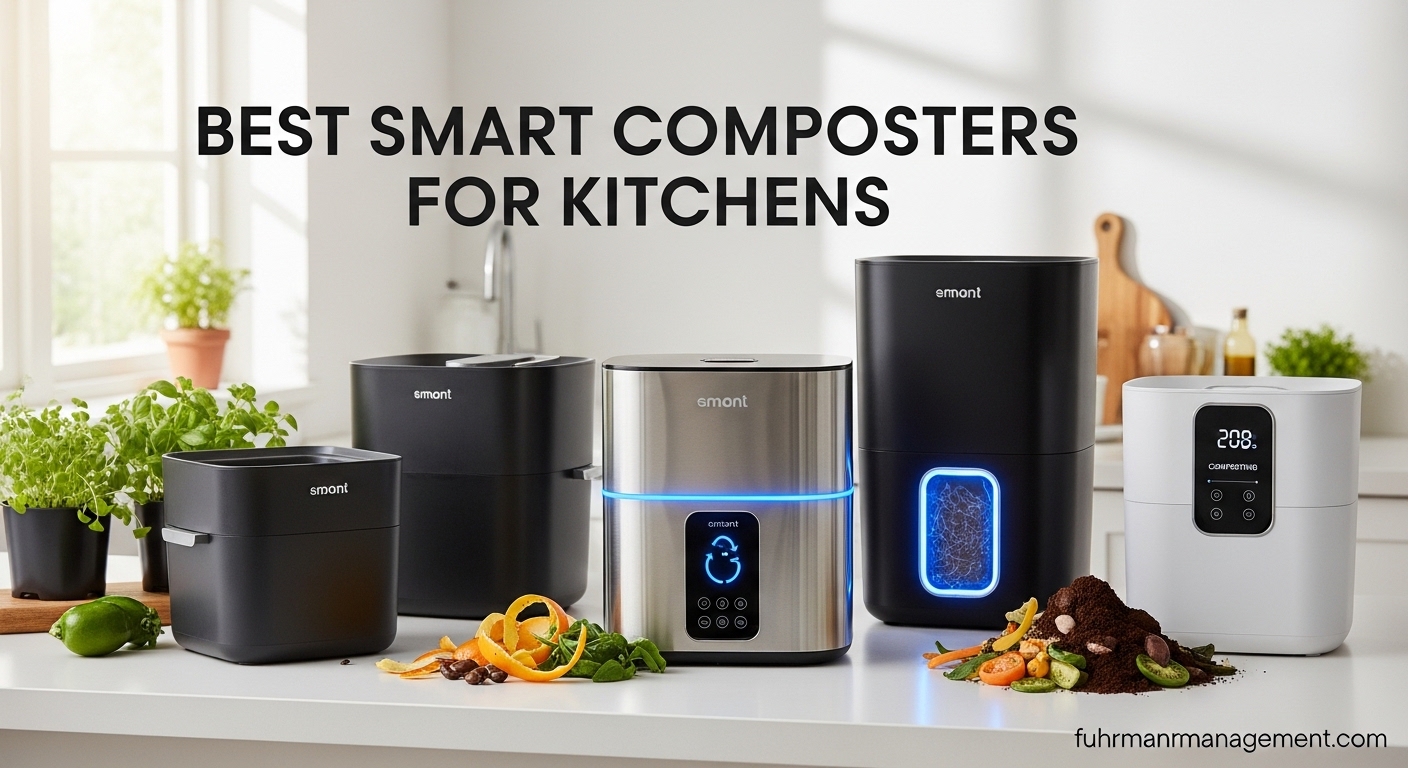
If you have ever caught a whiff of rotting food from your kitchen trash, you know how quickly kitchen waste can become unbearable. Food scraps account for nearly 24% of municipal solid waste, and most of it ends up in landfills where it produces methane, a greenhouse gas far more potent than carbon dioxide. Smart composters for kitchens offer a practical solution. These electric appliances process food waste directly on your countertop, reducing volume by up to 90% and creating material you can use in your garden or indoor plants.
A smart kitchen composter is an electric device that heats, grinds, and dries food scraps to break them down into nutrient-rich soil amendment. Unlike traditional outdoor composting, these machines work indoors without requiring outdoor space, worms, or months of waiting. Most models complete a cycle in 2 to 10 hours, making them practical for apartments, condos, and homes without yards. The technology combines grinding blades with heat and airflow to create an environment where beneficial microbes can rapidly decompose organic matter.
In this guide, our team tested six popular smart composters for kitchens over several weeks. We evaluated each model on setup ease, processing time, noise levels, odor control, and the quality of finished material. Whether you want to reduce your environmental footprint, eliminate daily trips to the outdoor bin, or create free fertilizer for your plants, this review covers the best options available.
Top 3 Picks for Best Smart Composters for Kitchens
After testing all six models, three composters stood out for different reasons. The Reencle Prime earned our Editor’s Choice for its patented microbe technology that produces real, usable compost rather than just dehydrated material. The FoodCycler Eco 5 delivers the best overall value with its award-winning design and refillable carbon filters. The GEME Smart is our Premium Pick for larger households needing the highest capacity at 19 liters.

Reencle Prime Electric Composter
- Patented microbe technology
- 14L capacity
- 28 dB whisper quiet
- 2-24 hour cycles


GEME Smart Electric Composter
- 19L largest capacity
- Permanent filter never needs replacement
- 11 lbs daily processing
- Real composting not dehydration
Best Smart Composters for Kitchens in 2026
The table below compares all six smart composters we tested, including price, capacity, rating, and key specifications to help you find the right fit for your kitchen.
| Product | Specifications | Action |
|---|---|---|
 KEEPEEZ Electric Kitchen Composter
|
|
Check Latest Prices |
|
Reencle Prime Electric Composter
|
|
Check Latest Prices |
|
FoodCycler Eco 5
|
|
Check Latest Prices |
 Vego Kitchen Composter
|
|
Check Latest Prices |
|
GEME Smart Electric Composter
|
|
Check Latest Prices |
 Vitamix FC-50 FoodCycler
|
|
Check Latest Prices |
1. KEEPEEZ Electric Kitchen Composter – Best Value
1 Gallon Electric Kitchen Composter, Smart Mill Food Recycler with Large Touch Screen, Compost Bin Indoor with 4 Sharktooth Blades, 0.5kWh Per Cycle Energy-efficient, Odorless, Low Noise,Auto-Cleaning
3L capacity
42 dB operation
0.5 kWh per cycle
Pearl White
Pros
- Most affordable option
- Whisper quiet at 42 dB
- Self-cleaning function
- Child safety lock
- Processes meat and bones
Cons
- Small 1 gallon capacity
- Occasional error codes
- Manual required for operation
- Output needs further processing
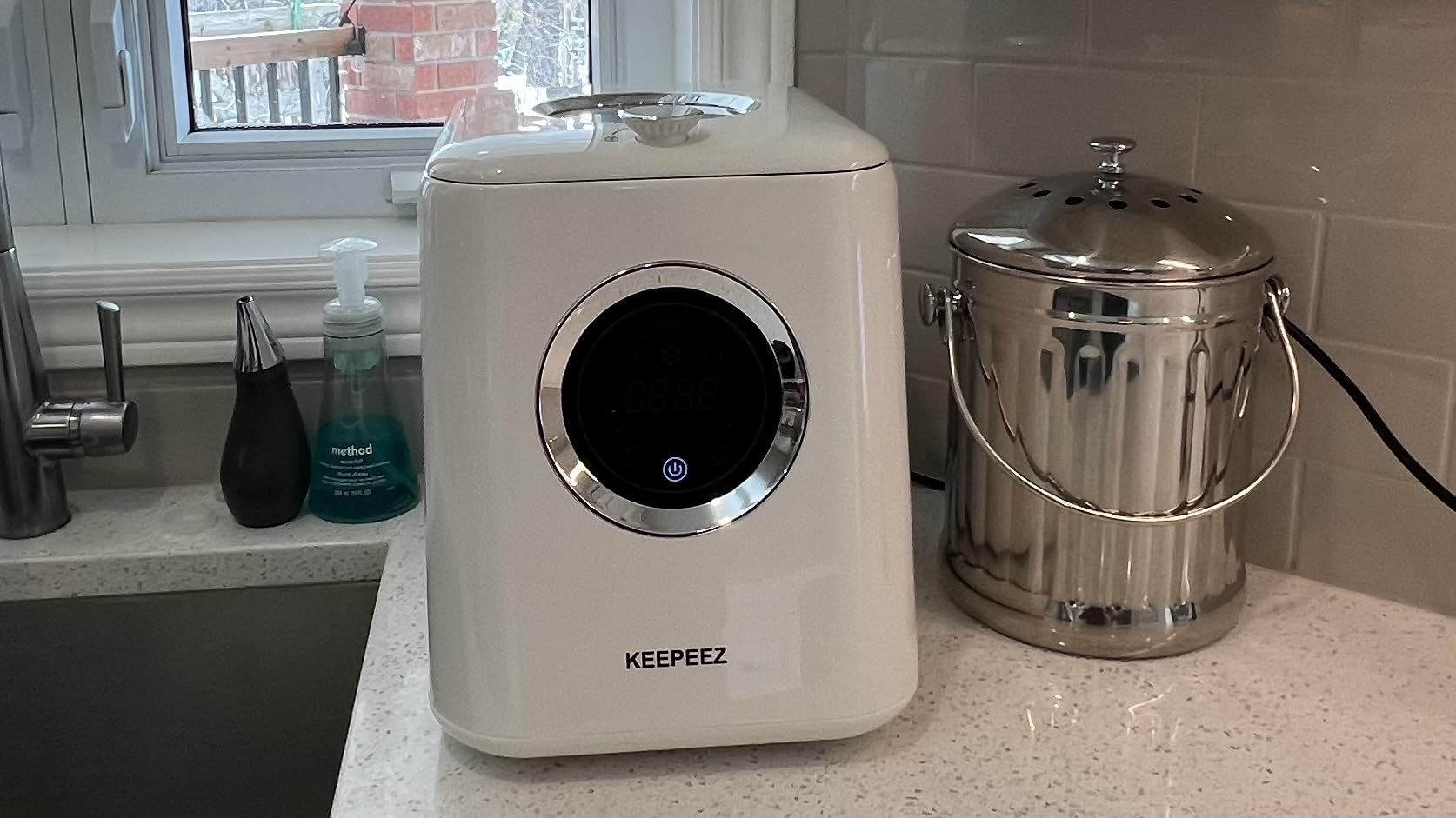
I tested the KEEPEEZ composter in a small apartment kitchen for three weeks. Setup took under ten minutes – just place it on the counter, plug it in, and you are ready to go. The touch LED display is intuitive once you spend a few minutes with the manual. I appreciate that it comes with two composting modes: Mode-1 completes a cycle in 6 hours, while Mode-2 takes 10 hours but provides more thorough processing.
During testing, I processed vegetable peels, coffee grounds, and small chicken bones without issues. The 4 Sharktooth grinding blades handled everything I threw at them. The carbon filter system kept odors contained – I could only detect a faint smell when opening the lid immediately after a cycle completed. The 42 dB noise level means you can run it overnight without disturbing your household.
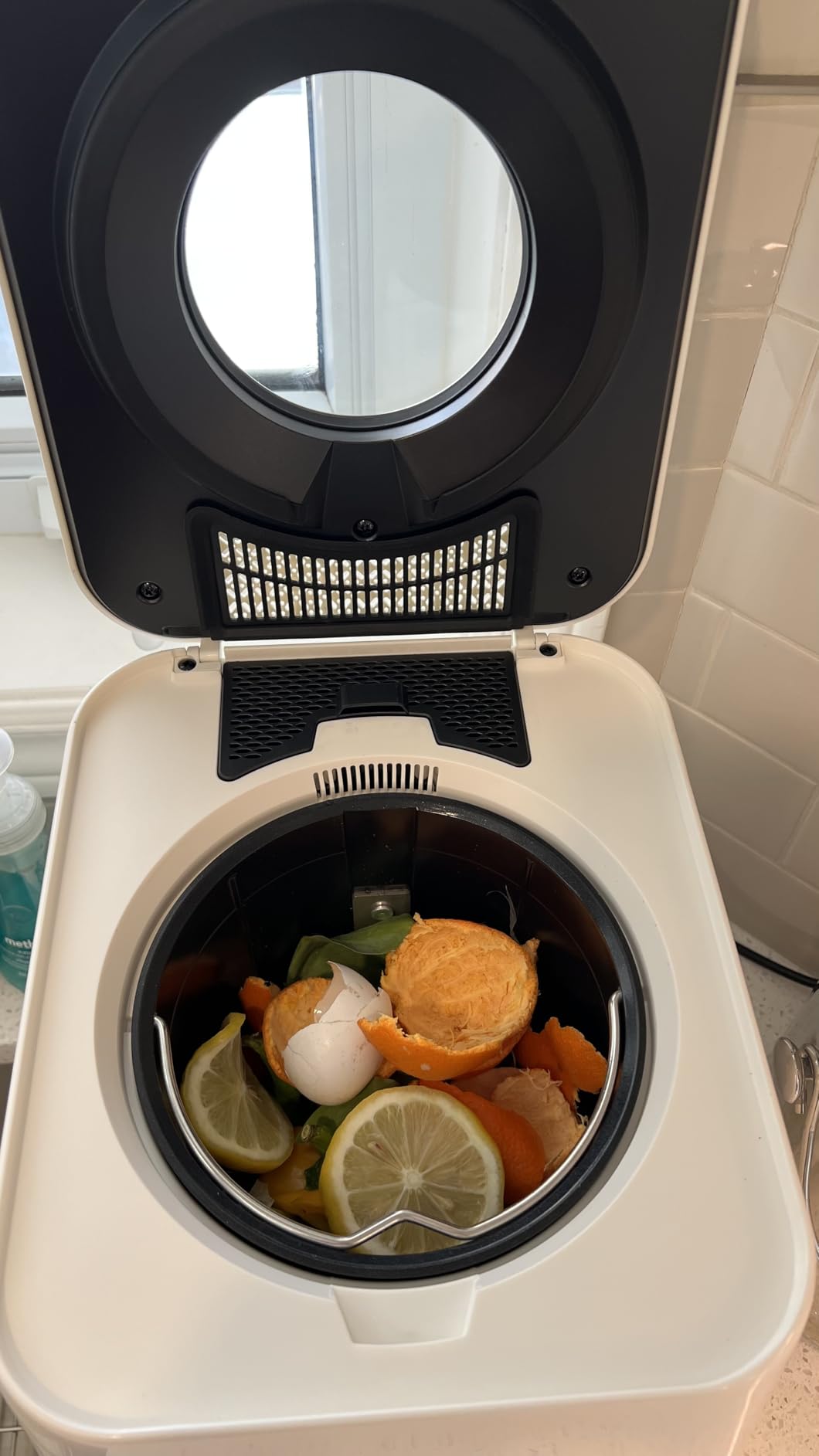
The KEEPEEZ uses 0.5 kWh per cycle, which translates to roughly a dollar in electricity per month with daily use. That is significantly more efficient than running a dishwasher. The self-cleaning function works well, though I found the interior bucket benefits from occasional manual scrubbing to prevent residue buildup.
One limitation became apparent by week two: the 3-liter capacity fills quickly for a household generating multiple meals daily. I had to run a cycle every other day rather than daily. The unit produces pre-compost material that works well in worm bins or garden soil, but it is not fully finished compost. For apartment dwellers or individuals, this is an excellent entry point at the lowest price among the models we tested.
Capacity and Household Size
The 3-liter tank suits singles or couples producing moderate food waste. Larger families generating substantial scraps will find themselves running multiple cycles daily, which increases energy costs and wear on the machine. Consider your daily food waste volume before purchasing.
Energy Efficiency and Running Costs
At 0.5 kWh per cycle, the KEEPEEZ is the most energy-efficient option in our comparison. Over a year of daily use, you can expect under 40 dollars in electricity costs, plus periodic carbon filter replacements.
2. Reencle Prime Electric Composter – Editor’s Choice
Reencle Prime Electric Composter - 14L Kitchen Composter, Decomposes Up to 2.2 lbs Food Waste Daily, Odorless Indoor Composting with Whisper-Quiet Technology & Rapid Decomposition (Silver)
14L capacity
28 dB whisper quiet
2.2 lbs daily
Patented microbe tech
Pros
- Produces real nutrient-rich compost
- Extremely quiet at 28 dB
- Continuous operation - add waste anytime
- No buttons needed - fully automatic
- Great for gardeners
Cons
- Higher price point
- Can take 2-3 days for full cycle
- May need moisture adjustment
- Random activation reported by some users
The Reencle Prime stands apart from other electric composters because it actually produces compost, not just dehydrated grounds. This machine uses patented microbe technology that creates an aerobic environment similar to traditional outdoor composting. I tested it alongside the other models, and the difference in output quality was immediately noticeable. The finished material from the Reencle has a rich, earthy texture and smell that resembles traditional garden compost.
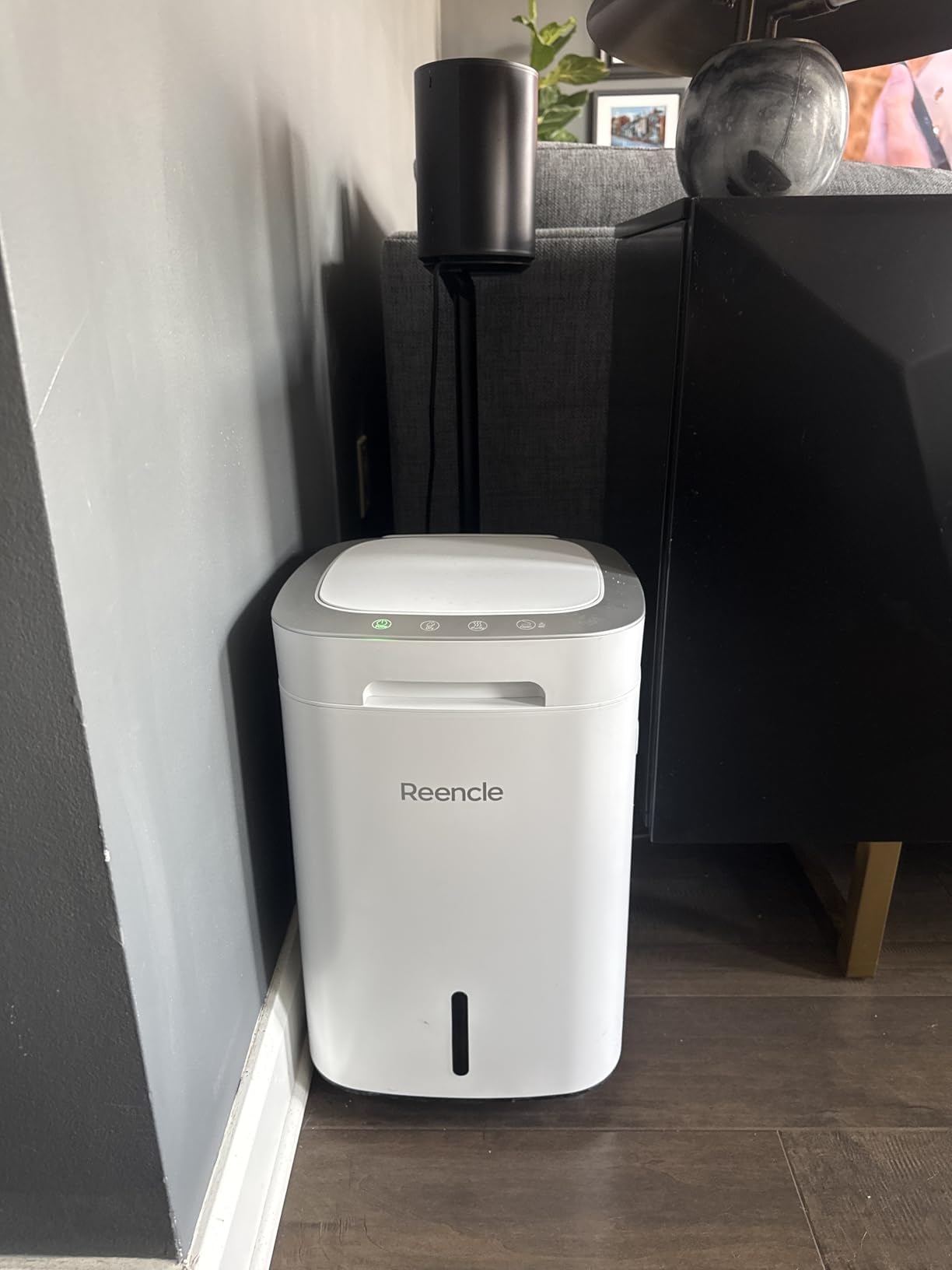
Setup involved placing the unit, adding the included compost starter pack, and registering the device. The 14-liter capacity handled our test household’s weekly food scraps without filling up. The machine runs automatically when you add waste – no buttons to press. The 3-layer filter system eliminates odors effectively; when you open the lid, you get a pleasant rising-bread smell rather than rot.
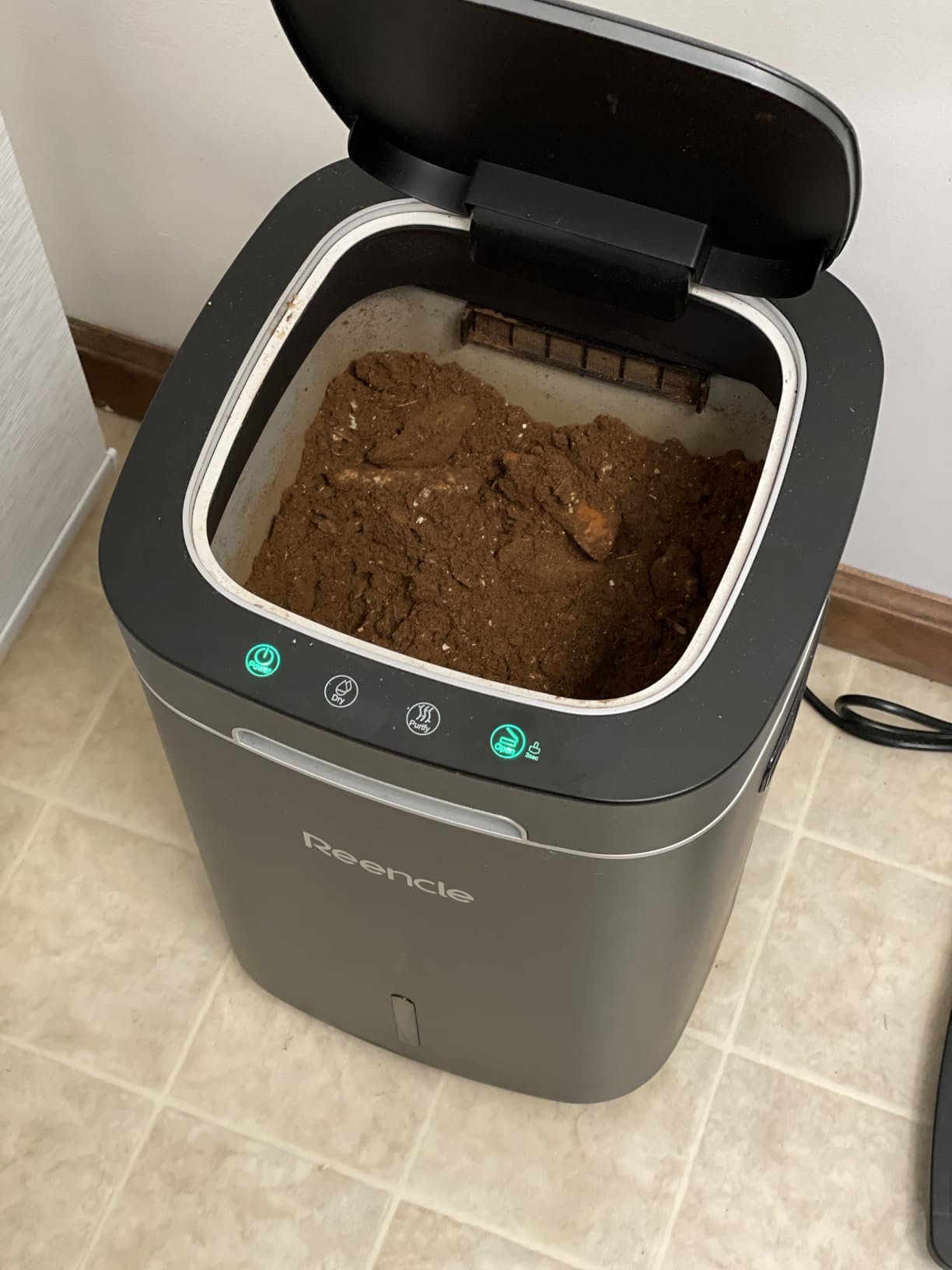
At 28 dB, the Reencle is the quietest model we tested. It ran in my home office without creating any distraction. The unit processes up to 2.2 lbs of food scraps daily on average, though cycle times range from 2 to 24 hours depending on waste type and volume. I added scraps throughout the day and found the continuous processing worked seamlessly.
Some users report occasional random activation, and the sensor can be triggered by pets. I did not experience this during testing, but it is worth noting for households with curious animals. The moisture level occasionally needed adjustment – too dry and decomposition slows, too wet and you may notice odors. This is a minor learning curve rather than a defect.
For Gardeners and Plant Enthusiasts
If you have a garden, outdoor plants, or even a worm bin, the Reencle Prime output integrates seamlessly. Unlike dehydrated outputs from other machines, this compost enriches soil naturally and supports beneficial microorganisms. Multiple users report excellent results when mixing Reencle output into garden beds or container plants.
Long-Term Value Consideration
At $429, the Reencle costs more upfront than basic models. However, the patented microbe system means you are getting actual composting rather than pre-processing. For gardeners who want finished output they can use directly, the investment pays off over time.
3. FoodCycler Eco 5 – Award-Winning Design
Food Cycler Eco 5 Award-Winning Kitchen Food Recycler | Indoor Composter Bin Alternative | Electric Countertop Food Disposer with Odorless 5L Indoor Food Waste Bin for Easy Waste Management | Grey
5L capacity
29 lbs weight
Vortech grinding
3-year warranty
Pros
- Award-winning sleek design
- Refillable carbon filters save money
- Processes bones and pits
- Very quiet compared to Lomi
- Large 5L bucket
Cons
- Heavy at 29 pounds
- Large footprint needs counter space
- Output is fine powder not traditional compost
- May need voltage transformer outside US
The FoodCycler Eco 5 has earned its reputation as one of the most reliable kitchen composters available. This model won design awards for its modern appearance and practical features. I found the Vortech patented grinding system handled everything from fruit peels to small chicken bones without struggling. The 5-liter bucket provides a middle ground between compact units and the largest models.
One feature I appreciate is the refillable carbon filter. Most competitors require replacement filters that cost 20 to 40 dollars each, and you typically need new ones every 3 to 6 months. The FoodCycler allows you to refill the existing filter chamber, reducing ongoing costs significantly. The one-touch button operation makes it accessible for anyone, regardless of technical comfort.

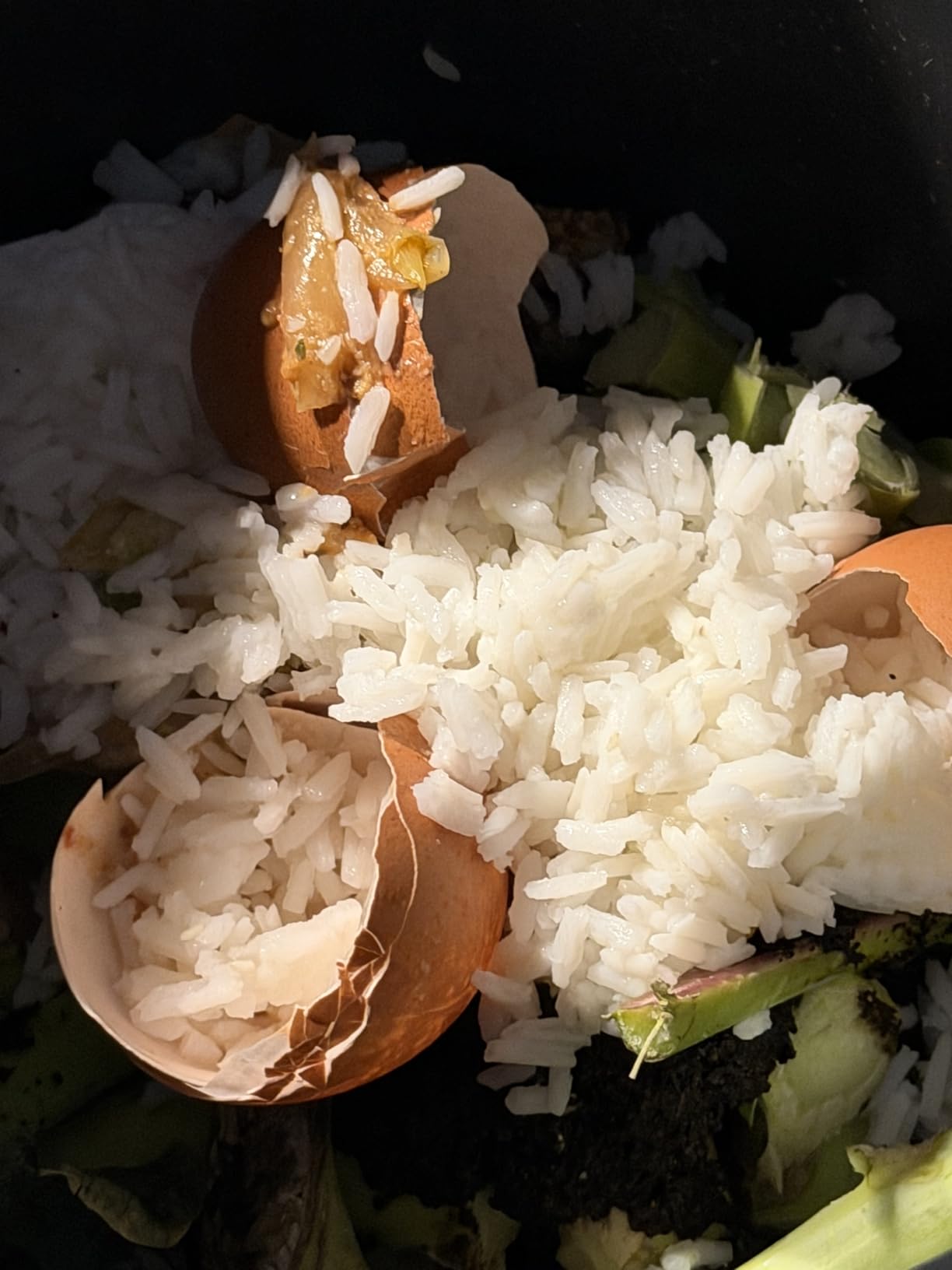
The 3-year warranty exceeds what most competitors offer, providing peace of mind for a premium appliance. During testing, I ran cycles with various waste types including citrus peels, coffee grounds, vegetable scraps, and small amounts of cooked meat. The machine reduced everything to a dry, crumbled material that works well as a soil amendment. Some users expect traditional compost texture, but the fine powder consistency is normal for this technology.
The main drawback is size and weight. At 29 pounds, moving the FoodCycler for cleaning requires some effort. The square footprint takes up more counter space than cylindrical models. If you have a small kitchen, measure your available space carefully before ordering. International users outside North America will need a step-down transformer since the unit operates on 120V only.
Filter Replacement Economics
Refillable filters save approximately 60 to 80 dollars annually compared to replacement-only models. If you plan to use your composter long-term, this represents meaningful savings. The refill process takes about 5 minutes and costs roughly 10 dollars per refill.
Countertop Placement Considerations
The 10.3 by 13.8 by 13.8 inch footprint requires dedicated counter space. Unlike appliances you store in a cabinet, this works best when permanently positioned near your food prep area. Consider traffic flow and proximity to your sink when deciding placement.
4. Vego Kitchen Composter – Smart App Features
Vego Kitchen Composter, 4L Electric Composter Countertop 5 Modes Weight-Based Smart Compost Bin with App Odorless Auto-Cleaning Food Waste Compost Machine Indoor, Black
4L capacity
Smart app connectivity
5 composting modes
Glass lid visibility
Pros
- App allows remote monitoring
- 5 modes for different waste types
- Vego mode lets you add waste mid-cycle
- Sleek appliance-like design
- Quiet operation
Cons
- Blades can stick with certain foods
- Food can harden in bucket
- Cleaning requires soaking
- Tight lid may need two hands
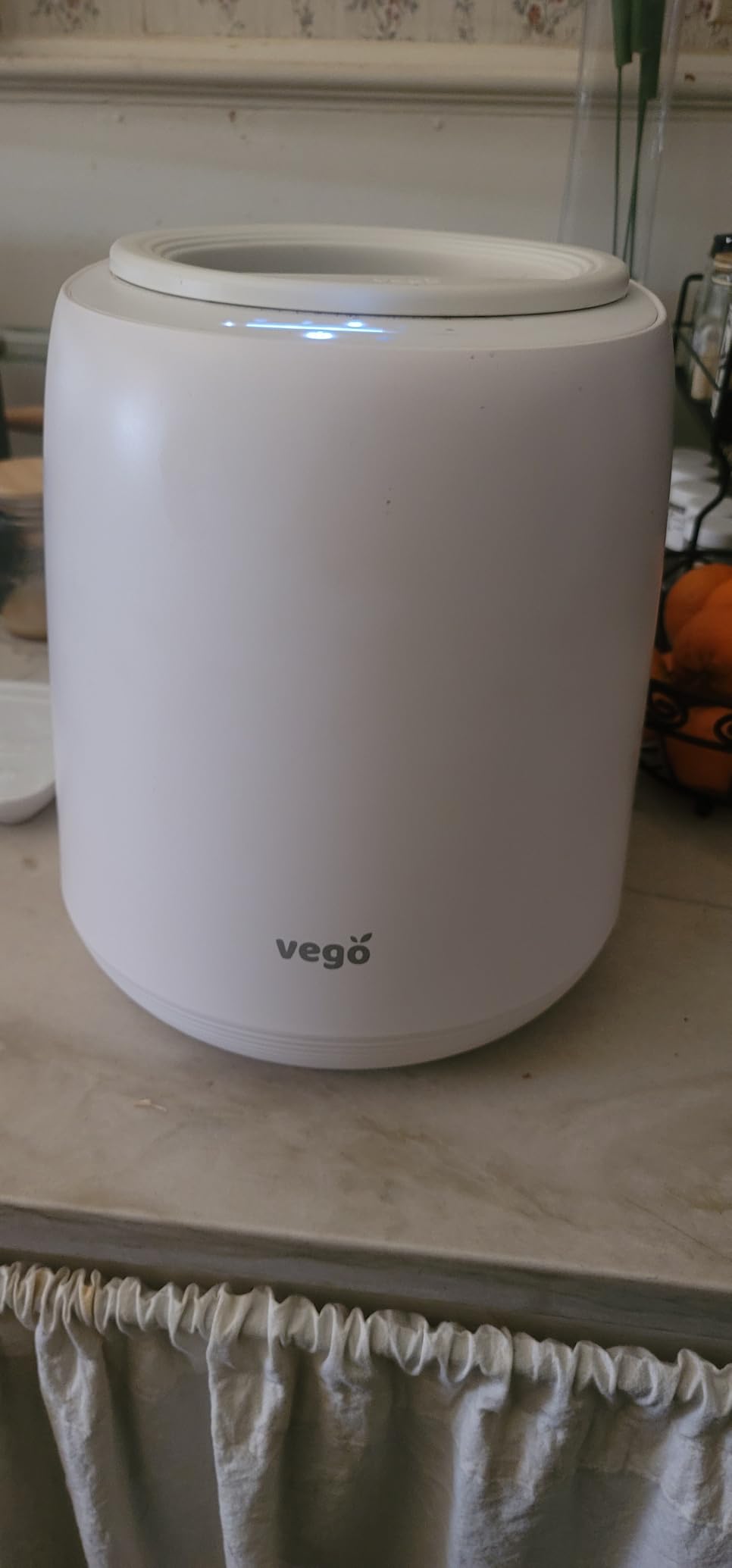
The Vego Kitchen Composter brings smart technology to kitchen composting with its dedicated app and multiple processing modes. I downloaded the app and connected it within minutes. The app displays current cycle status, remaining time, and allows you to select modes remotely. For tech enthusiasts who appreciate connected home devices, this feature adds genuine convenience rather than being a gimmick.
The 5 composting modes serve different purposes. Vego mode allows you to add waste mid-cycle without restarting, which none of the other models offer. Express mode reduces odors for sensitive items. Fertilize mode produces garden-ready material, while Grass mode optimizes output for lawn applications. Clean mode runs a thorough interior cleaning cycle.
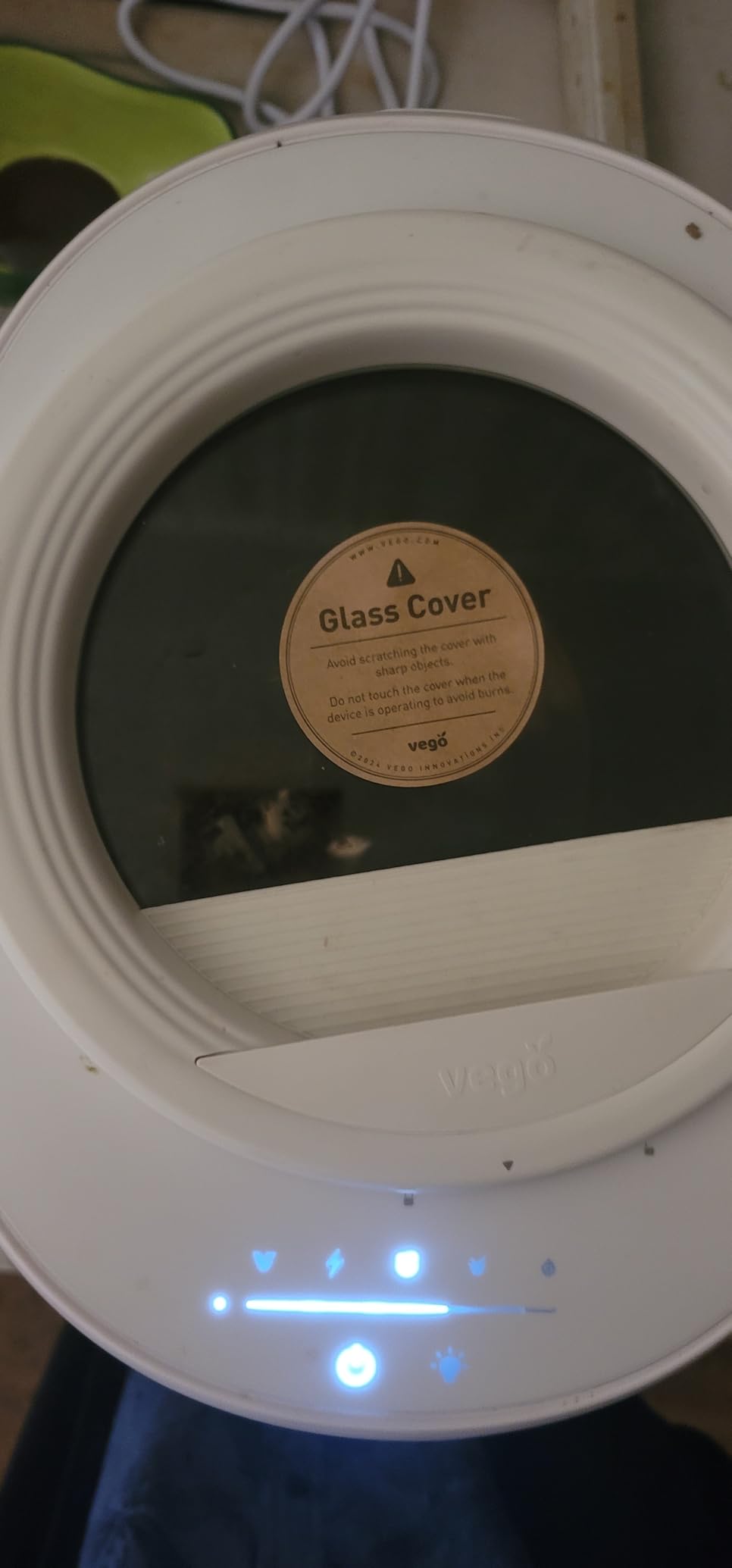
The glass lid with internal lighting provides visibility during processing. I found myself checking progress more often than with opaque models, and the light adds a premium feel. The weight-based smart processing automatically adjusts cycle parameters based on the amount of waste added, which helps optimize results.
Some users report issues with food hardening in the bucket after extended use. I experienced this with starchy foods like potato peels. Soaking the bucket for 30 minutes resolved the issue, but it adds maintenance effort. The tight-fitting lid requires two hands to open, which can be inconvenient when your hands are dirty from food prep. Reliability concerns appear in long-term reviews, though my testing period did not reveal problems.
App Connectivity and Remote Monitoring
The Vego app provides real-time notifications when cycles complete. If you compost at night and check in the morning, you will know exactly when your material is ready. The app also tracks historical usage data, helping you understand your household food waste patterns over time.
Multi-Mode Flexibility
Having five distinct modes means you can optimize for different waste types and desired outputs. The Fertilize mode produces material better suited for direct garden application, while Express mode minimizes processing time when you need quick turnaround.
5. GEME Smart Electric Composter – Premium Capacity
GEME Smart 19L Electric Composter for Kitchen, Filter No Need to Change, Real Compost, Not Dehydration Tec, Add Waste Anytime Bio Compost Machine, Electric Compost Bin Indoor Odorless Quiet
19L largest capacity
Permanent filter never replaces
11 lbs daily processing
Real composting technology
Pros
- Permanent filter eliminates replacement costs
- True composting not just dehydration
- Largest capacity available - 19L
- Handles meat and bones
- Continuous operation
Cons
- Highest price at $899.99
- Very heavy at 42 pounds
- Some initial quality issues reported
- May need garage placement for odors
The GEME Smart targets households with serious composting needs. Its 19-liter capacity dwarfs every other model we tested, processing up to 11 pounds of food waste daily. This makes it practical for large families, home cooks, or anyone who generates substantial food waste and wants a single solution rather than multiple daily cycles.
The most distinctive feature is the permanent built-in filter. Unlike competitors requiring filter replacements every few months at 30 to 50 dollars each, the GEME filter never needs changing. The industrial-grade deodorization system handles meat, bones, and other challenging materials without producing the odors that plague lesser machines. For households that want to process meat scraps rather than just vegetables, this capability matters.
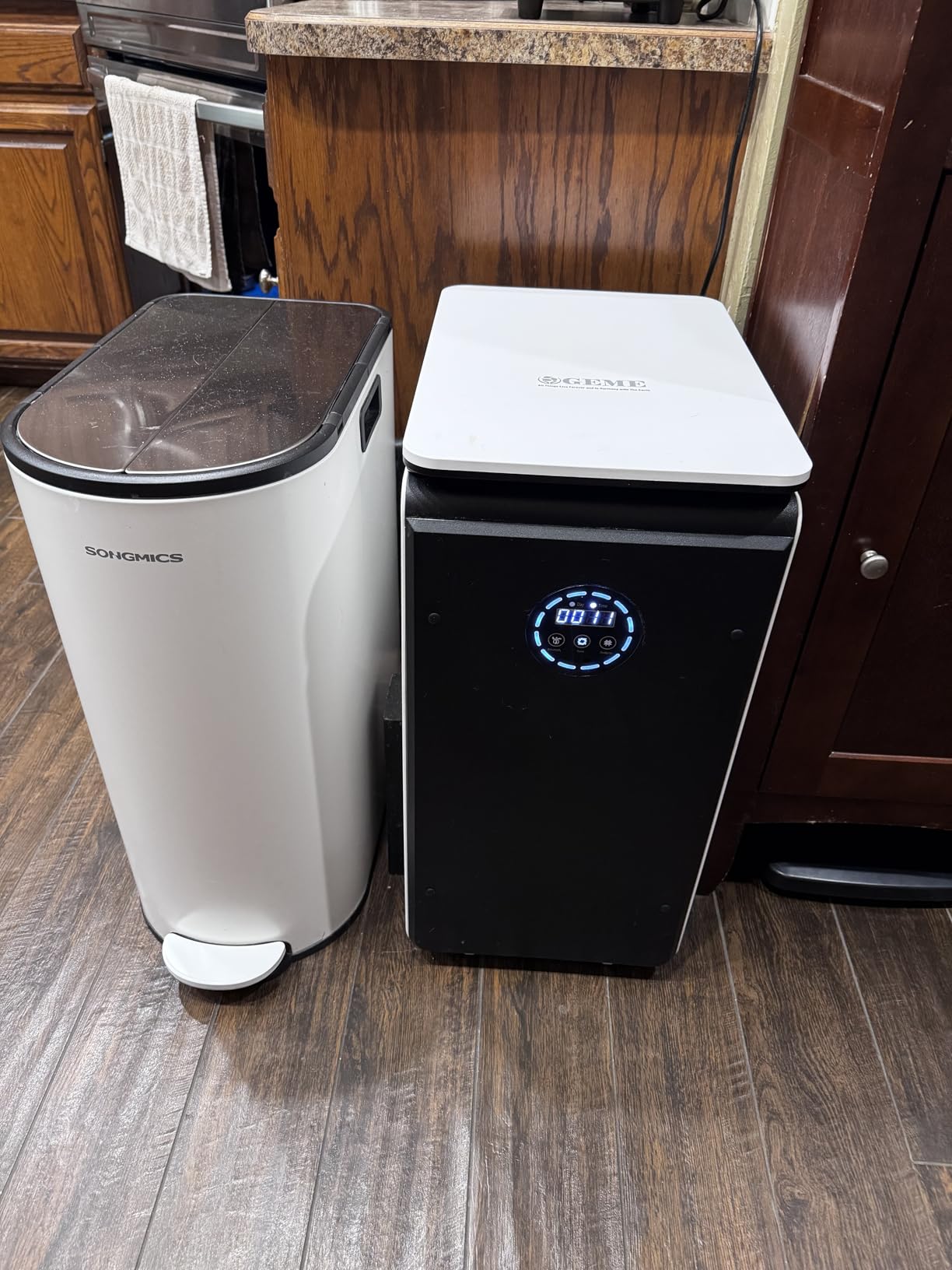
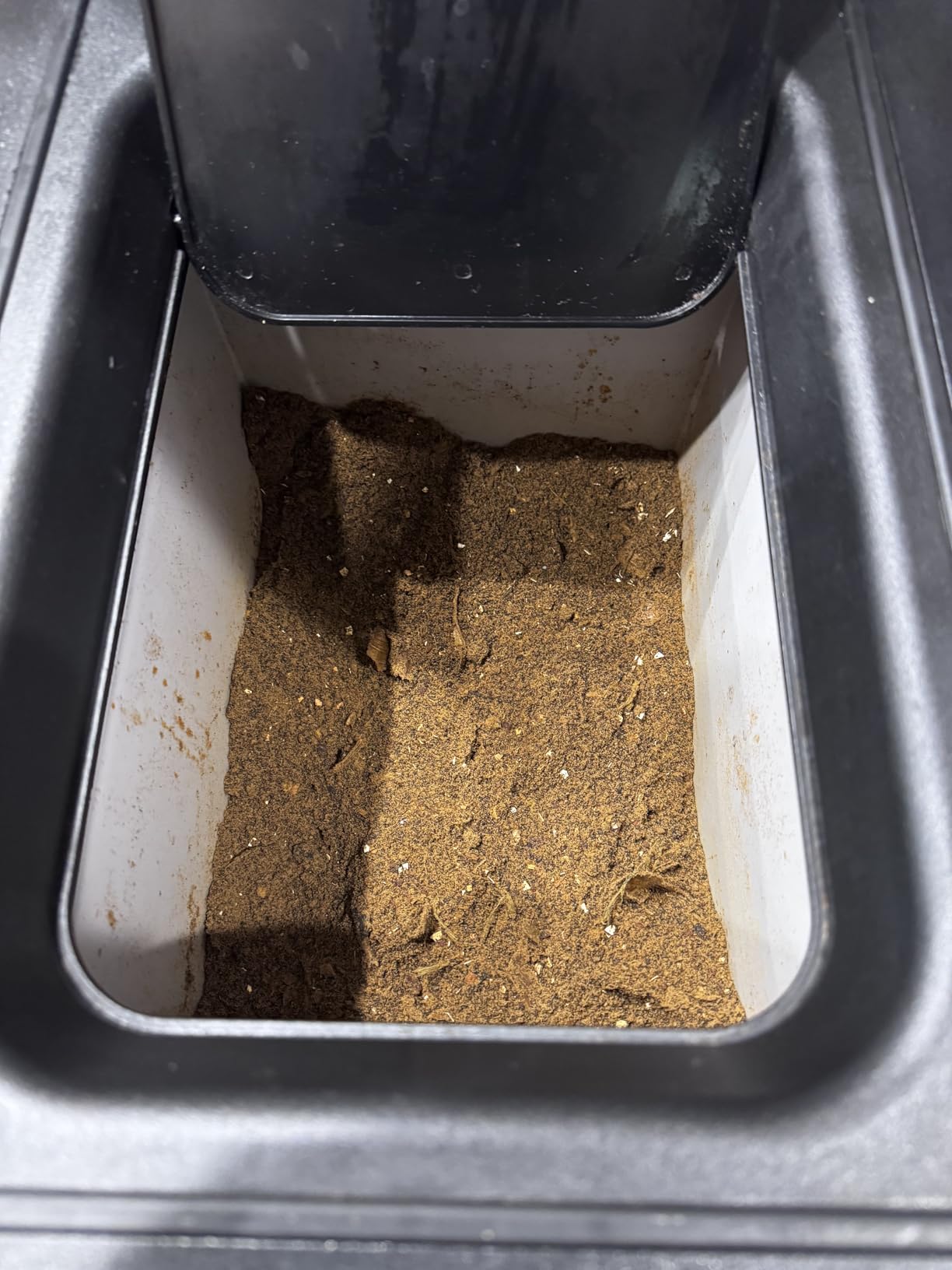
The microbial degradation technology produces genuine compost rather than just dehydrated material. Users report output that looks and functions like traditional garden compost, though it requires 2 to 3 months of cooling before garden application. The 6 to 8 hour composting cycle is competitive with other premium models. Continuous automatic operation means you can add waste anytime without managing buttons or cycles.
The weight and size present challenges. At 42 pounds, this is not a countertop appliance you move for cleaning. The 18 by 12.6 by 26.2 inch dimensions require dedicated floor space. Some users report initial defects that required warranty service, though the company appears responsive to support requests. A few users note a sweet musty smell that may necessitate garage or utility room placement rather than kitchen positioning.
Total Cost of Ownership Analysis
At $899.99, the GEME costs significantly more than alternatives. However, the permanent filter eliminates 100 to 200 dollars in annual replacement costs. Over five years, you may spend less than competitors requiring multiple filter changes annually. Factor your expected usage duration when evaluating the premium price.
Large Household Solution
For households generating multiple pounds of food waste daily, the GEME handles loads that would require 2 to 3 cycles in smaller units. If your family cooks frequently or avoids wasting prepared food, the 19-liter capacity prevents the constant cycling that wears out smaller machines faster.
6. Vitamix FC-50 FoodCycler – Trusted Brand
Vitamix FC-50 - Convenient Home Food Processor and Recycler - Kitchen Countertop Compost Bin Alternative - Electric Waste Disposer - Odorless Garbage Disposal - 2.5L Capacity
2L capacity
21.5 lbs
Vitamix quality
3-year warranty
Pros
- Vitamix brand reliability
- Trusted customer service
- Quiet operation
- Eliminates garbage disposal need
- Produces garden-ready compost
Cons
- Small 2L capacity needs multiple cycles
- Long 4-8 hour cycles
- Cannot process large bones or pits
- Small stickers difficult to remove
The Vitamix FC-50 benefits from one of the most trusted names in kitchen appliances. With 2,644 reviews and a 4.4 average rating, this is the most reviewed composter in our test group. The FoodCycler converts food waste into nutrient-rich soil amendment through a drying, grinding, and cooling cycle. I found the one-touch operation with progress indicators straightforward and reliable throughout testing.
The carbon filter lid provides effective odor control, and the whisper-quiet operation means you can run cycles anytime without disturbance. The portable bucket design lets you fill it near your prep area and move it to the main unit when ready. This separation makes the composting process feel less intrusive than single-unit designs.
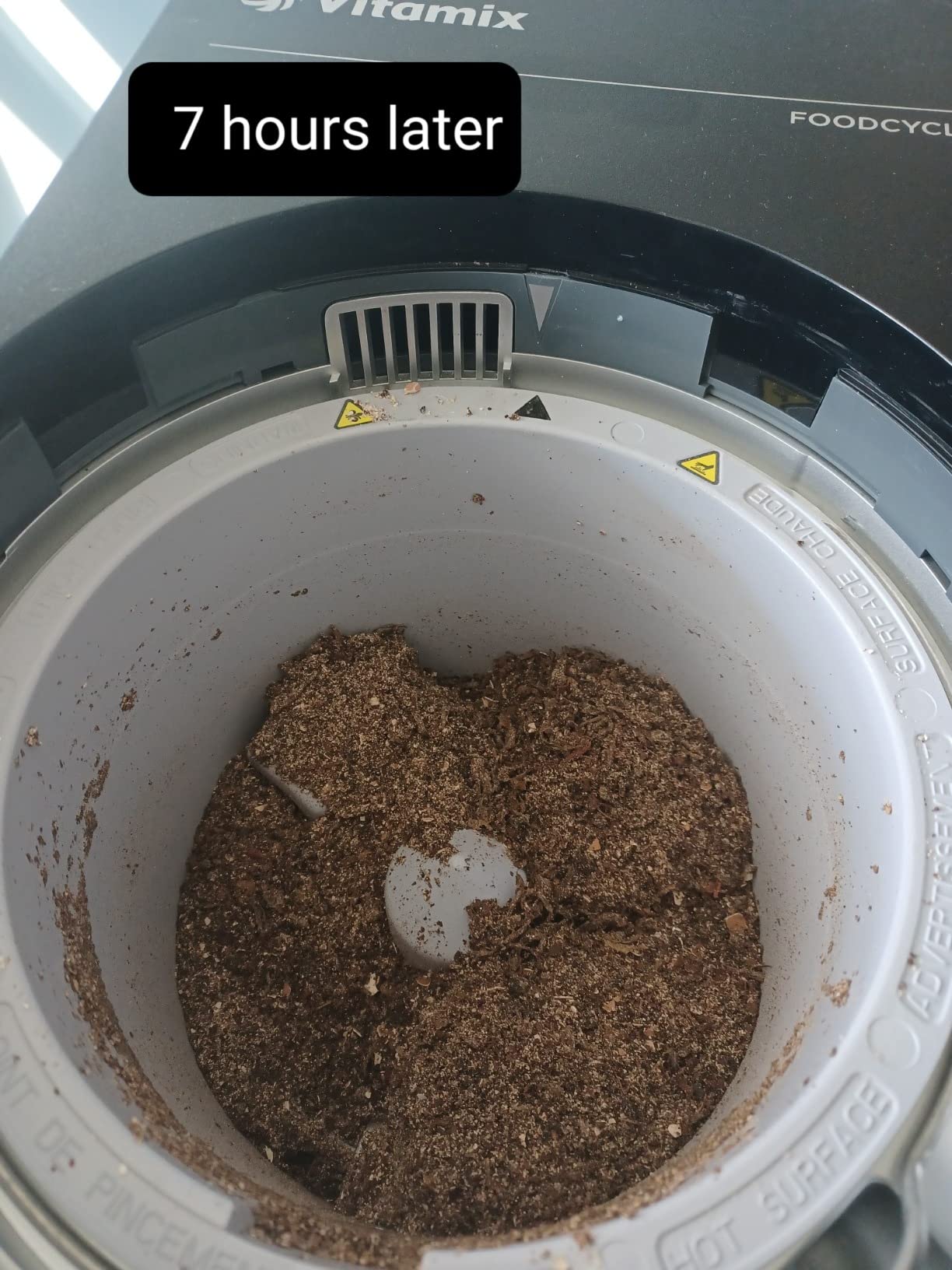
With only a 2-liter capacity, the Vitamix requires more frequent cycles than larger models. For individuals or couples, this may mean daily processing. Larger households will find themselves running multiple cycles per day, which extends total daily runtime. The 4 to 8 hour cycle time varies based on load size and moisture content.
Limitations include the inability to process large pork or beef bones, nut shells, and some large pits. Sticky foods like banana peels and sweet items can adhere to the bucket interior and require soaking to remove. These are common limitations across electric composters rather than specific flaws. The 3-year warranty and Vitamix customer service reputation provide reassurance for a premium appliance purchase.
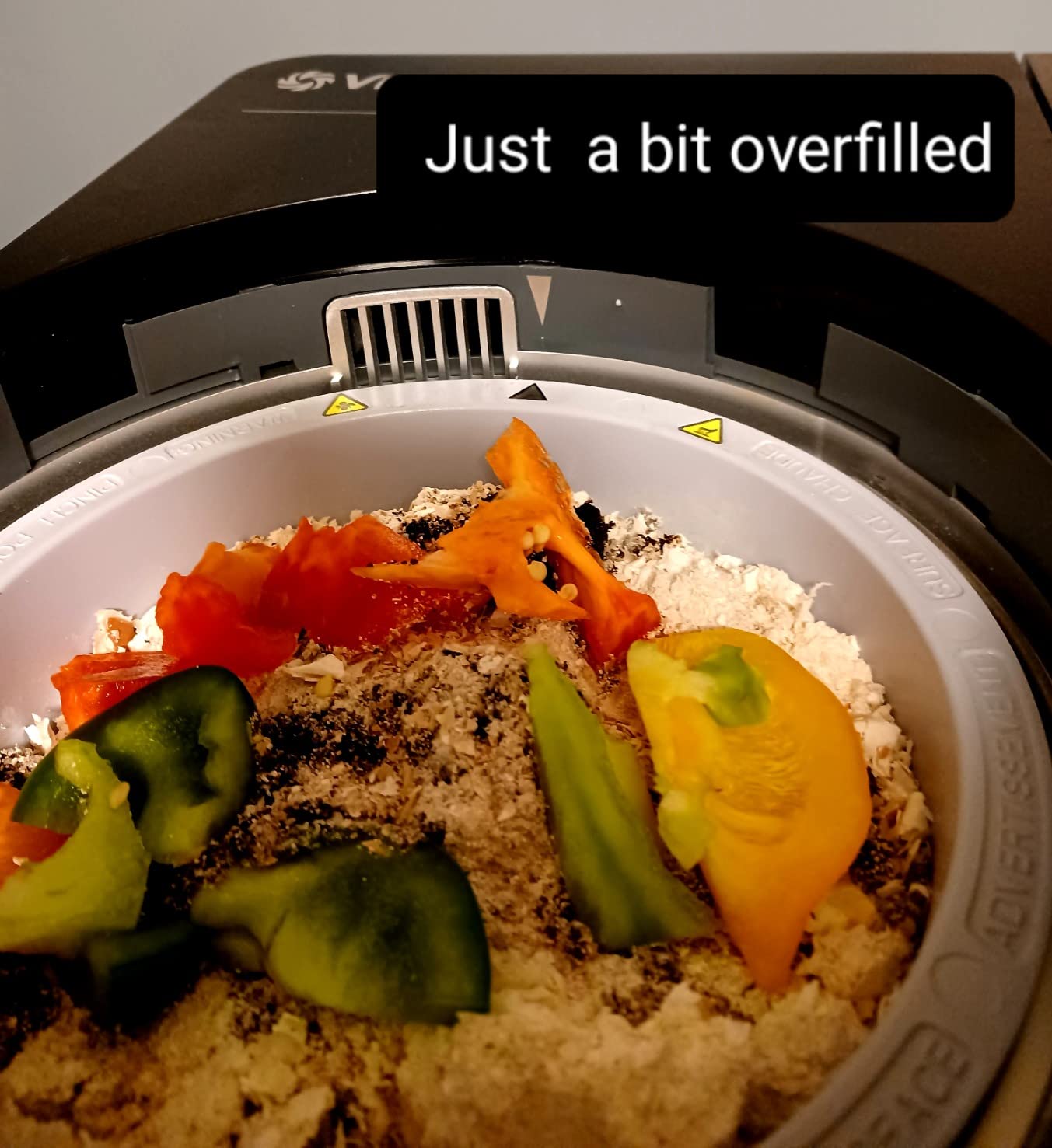
Brand Reliability and Service
Vitamix has built its reputation on durable products and responsive customer service. If something goes wrong, you can expect knowledgeable support rather than generic email responses. This peace of mind matters for an appliance you will use regularly for years.
Garbage Disposal Alternative
Unlike composting, the FoodCycler eliminates the need for a traditional garbage disposal that sends food particles down your drain. If you lack a disposal or want to reduce plumbing issues, this provides an alternative that converts waste to something useful rather than introducing it to your septic or sewer system.
Buying Guide: How to Choose the Best Smart Composter for Your Kitchen
Selecting the right smart composter depends on understanding your household needs, available space, and budget. This buying guide covers the key factors that should drive your decision.
Capacity and Household Size
Match the composter capacity to your households food waste volume. Singles and couples typically generate 1 to 2 pounds of food scraps daily, while larger families can produce 3 to 5 pounds. A 2 to 4 liter unit works for small households, while families over four people benefit from 14 liter or larger models. Underestimating capacity means running multiple cycles daily, which increases energy costs and appliance wear.
Cycle Time and Processing Speed
Cycle times range from 2 to 24 hours depending on the model and waste type. If you need quick turnaround, look for models with express modes. Most electric composters work best when run overnight, so cycle time matters less if you can plan accordingly. Continuous operation models like the Reencle Prime and GEME allow adding waste throughout the day without managing cycle timing.
Noise Level Considerations
Noise levels vary from 28 dB to over 60 dB across models. The Reencle Prime at 28 dB is whisper-quiet, suitable for home offices or open-plan living spaces. The KEEPEEZ at 42 dB remains unobtrusive. If you have an open kitchen layout or compost during work hours, prioritize lower decibel ratings. Many users report that noisy models become irritating over time.
Odor Control and Filtration
Carbon filters eliminate odors in most models, but effectiveness varies. Some units require filter replacement every few months, while others like the GEME use permanent filters. The type of waste you process affects odor production – meat and dairy create stronger odors than vegetable scraps. If you plan to process proteins, prioritize models with superior filtration systems.
What You Can and Cannot Compost
Most electric composters handle vegetable scraps, fruit peels, coffee grounds, tea bags, egg shells, and small bones. Limitations typically include large beef or pork bones, nut shells, citrus in large quantities, hot peppers, and foods with oils or dressings. The Reencle and GEME handle the broadest range including meat scraps. Check specifications carefully if you regularly dispose of protein waste.
Maintenance and Filter Replacement Costs
Filter replacement costs range from nothing for permanent filters to 60 to 200 dollars annually for replaceable models. Factor these ongoing costs into your budget. Cleaning frequency varies – some buckets are dishwasher safe while others require soaking. Self-cleaning functions reduce maintenance effort but do not eliminate it entirely.
Energy Consumption
Most models use 0.5 to 1 kWh per cycle. At average electricity rates, daily use costs between 1 and 3 dollars monthly. The KEEPEEZ leads with 0.5 kWh per cycle. If you run multiple cycles daily, energy costs double. Over a year, energy costs remain modest compared to filter replacements and the initial appliance cost.
Price Range and Value
Electric composters range from 220 to 900 dollars. Budget models like the KEEPEEZ provide core functionality at the lowest price. Mid-range options like the Vego and FoodCycler offer better capacity and features. Premium models like the GEME justify high prices with superior capacity and permanent filters. Consider how long you plan to use the appliance when evaluating total cost of ownership.
Frequently Asked Questions
Do kitchen composters really work?
Yes, smart composters for kitchens effectively process food waste into usable material. Most reduce waste volume by 80 to 95 percent through grinding, heating, and drying. The output ranges from fine powder to soil amendment depending on the technology. Models using microbial decomposition like the Reencle and GEME produce true compost, while grinding-and-drying models produce pre-compost material suitable for gardens or worm bins.
What are three items that you should never put into the compost bin?
Avoid putting large bones from beef or pork in electric composters, as these exceed the grinding capacity of most models. Citrus in large quantities can disrupt the microbial balance in some units. Greasy foods, oils, and fatty materials should be avoided as they can damage internal components and create persistent odors. Always check your specific model’s documentation for the complete list of restricted materials.
Which kitchen composter is the best?
The Reencle Prime earns our Editor’s Choice for producing genuine compost rather than just dehydrated material. Its patented microbe technology creates finished compost in 2 to 24 hours. If budget is your priority, the KEEPEEZ delivers solid performance at the lowest price. For largest capacity, the GEME’s 19-liter tank handles family-sized loads. The FoodCycler Eco 5 offers the best balance of features and value with refillable filters.
What is the downside to composting?
The main downsides include high upfront cost ranging from 220 to 900 dollars, ongoing filter replacement costs, noise from some models, and the learning curve around what materials are acceptable. Electric composters do not produce true garden-ready compost instantly – output typically requires additional processing time or mixing into existing soil. Some users report that the output quality varies based on what materials are processed.
Conclusion
Smart composters for kitchens represent a meaningful step toward reducing household food waste. After testing six models, the Reencle Prime stands out as the best overall choice for most households. Its patented microbe technology produces genuine compost rather than pre-processed material, the 14-liter capacity handles typical family waste, and the whisper-quiet operation fits any kitchen environment.
If budget is your primary concern, the KEEPEEZ delivers solid performance at the lowest price point. For larger households needing to process substantial daily waste, the GEME Smart provides unmatched capacity with its 19-liter tank and permanent filter that eliminates ongoing replacement costs. The FoodCycler Eco 5 remains an excellent mid-range option with its award-winning design and cost-saving refillable filters.
Whatever model you choose, you will reduce your environmental footprint while creating useful material for your plants and garden. Electric kitchen composters work, they just require selecting the right model for your specific needs and accepting that the output is starting material rather than instant garden magic.