
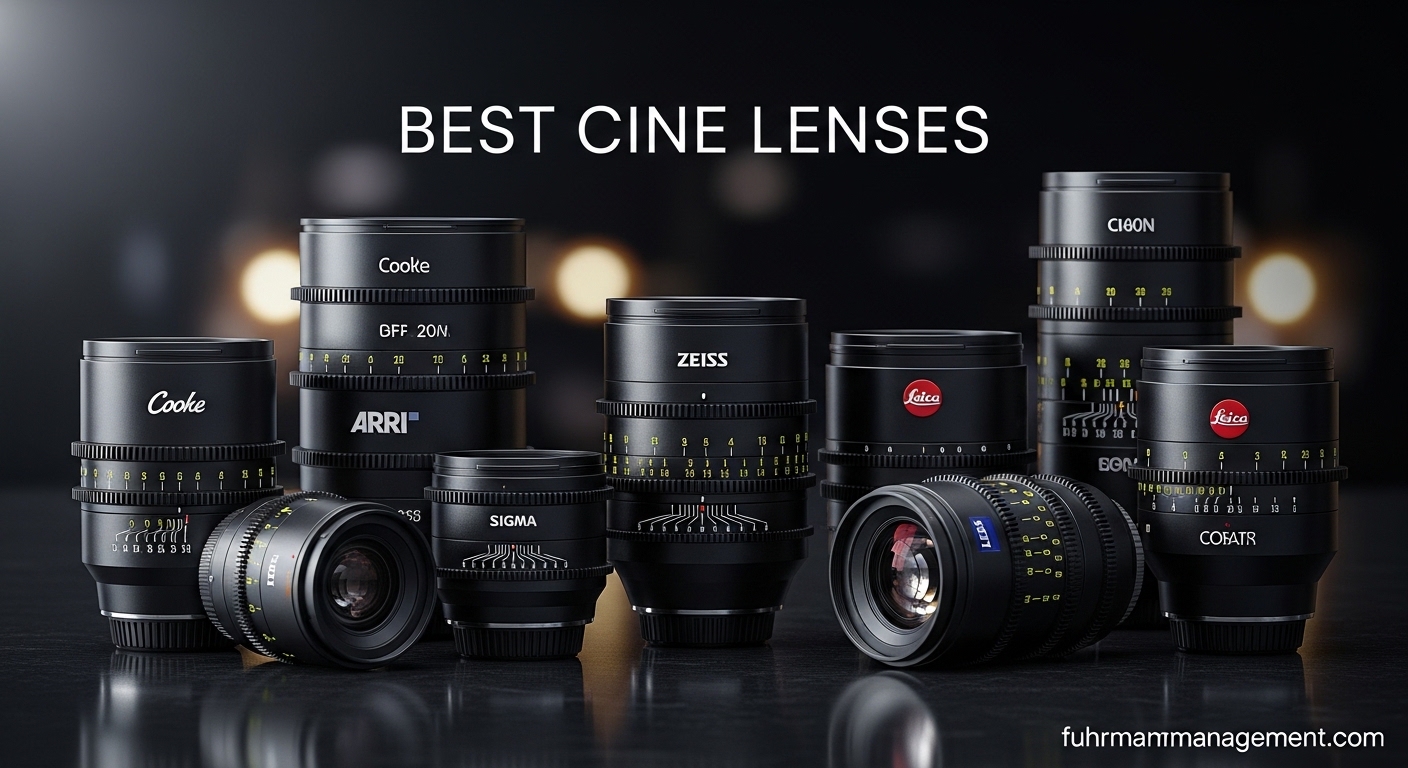
If you have spent any time researching gear for filmmaking, you have probably noticed that cine lenses cost significantly more than their photographic counterparts. The price gap can feel staggering, especially when you see a 50mm f/1.8 photo lens selling for under $200 while a 50mm cinema prime can run $2,000 or more. That premium is not arbitrary. Cinema lenses are engineered specifically for video production, with features like stepless aperture rings, consistent gear placement, minimal focus breathing, and accurate T-stop measurements that matter enormously when you are shooting motion pictures instead of stills.
In this guide to the best cine lenses available right now, I break down 15 options that span from budget-friendly primes under $400 to professional-grade cinema glass that would feel at home on a Hollywood set. Whether you are shooting indie documentaries on a Blackmagic Pocket, running a wedding videography business with a Sony FX3, or building out a cinema camera rig for narrative work, there is something here that fits your workflow and budget. I have organized these lenses by mount compatibility and price tier so you can quickly find options that work with your specific camera system.
The lenses in this article cover Sony E-mount, Canon EF, Canon RF, and Micro Four Thirds mounts, with focal lengths ranging from 10mm wide angles to 85mm portrait primes, plus a few zoom and anamorphic options for shooters who need versatility. Each review includes real-world performance observations, key specifications, and honest assessment of where these lenses excel and where they have limitations. By the time you finish reading, you will have a clear picture of which cine lenses offer the best value for your particular shooting situation.
Top 3 Picks for Best Cine Lenses
After testing and researching dozens of cinema lenses, three options stand out for different reasons. The SIRUI VP-1 Vision Prime set earns our top recommendation for shooters who want professional features at a reasonable price. The 7artisans cine lens collection delivers remarkable value for budget-conscious filmmakers. And the Rokinon Cine DS lenses remain the entry point that countless videographers trust for reliable, consistent results.

SIRUI VP-1 Vision Prime 1 T1.4 Full Frame...
- 24mm
- 35mm
- 50mm
- Interchangeable Mounts
- Fast T1.4 Aperture
- 600g per lens

7artisans 10-85mm T2.1 Cine Lens Set
- 6 Focal Lengths
- T2.1 Constant Aperture
- APS-C Coverage
- 260 Degree Focus Travel

SIRUI Night Walker 24mm S35
- T1.2 Ultra-Fast Aperture
- Sony E-Mount
- 500g Lightweight
- 270 Degree Focus Ring
Best Cine Lenses in 2026
The following table provides a quick overview of all 15 cine lenses reviewed in this guide, organized by price and mount compatibility. You can scan the specifications to identify which lenses fit your camera system and budget before reading the detailed reviews below.
| Product | Specifications | Action |
|---|---|---|
|
SIRUI VP-1 Vision Prime Set (24/35/50mm)
|
|
Check Latest Price |
 SIRUI 28-85mm T3.2 Zoom
|
|
Check Latest Price |
|
7artisans 10-85mm T2.1 Set
|
|
Check Latest Price |
 SIRUI 20mm T1.8 Anamorphic
|
|
Check Latest Price |
 SIRUI Night Walker M4/3 Set
|
|
Check Latest Price |
 Rokinon 35mm T1.5 Cine DS
|
|
Check Latest Price |
 Rokinon 85mm T1.5 Cine DS
|
|
Check Latest Price |
|
SIRUI Night Walker 24mm E-mount
|
|
Check Latest Price |
 SIRUI Night Walker 16mm E-mount
|
|
Check Latest Price |
 SIRUI Night Walker 55mm E-mount
|
|
Check Latest Price |
1. SIRUI VP-1 Vision Prime 1 T1.4 Full Frame Cine Lens Set
SIRUI VP-1 Vision Prime 1 T1.4 Full Frame Cine Lens Set, 24mm, 35mm,50mm Manual Focus Cinema Lens with Pre-Installed E Mount, Interchangeable RF/Z/L Mounts (Black)
24mm, 35mm, 50mm
T1.4 Aperture
Multi-mount System
600g per lens
Pros
- Interchangeable mount system
- Excellent edge-to-edge sharpness
- Beautiful bokeh at T1.4
- Consistent design across lens set
- Compact and lightweight for cinema lens
Cons
- Manual focus only
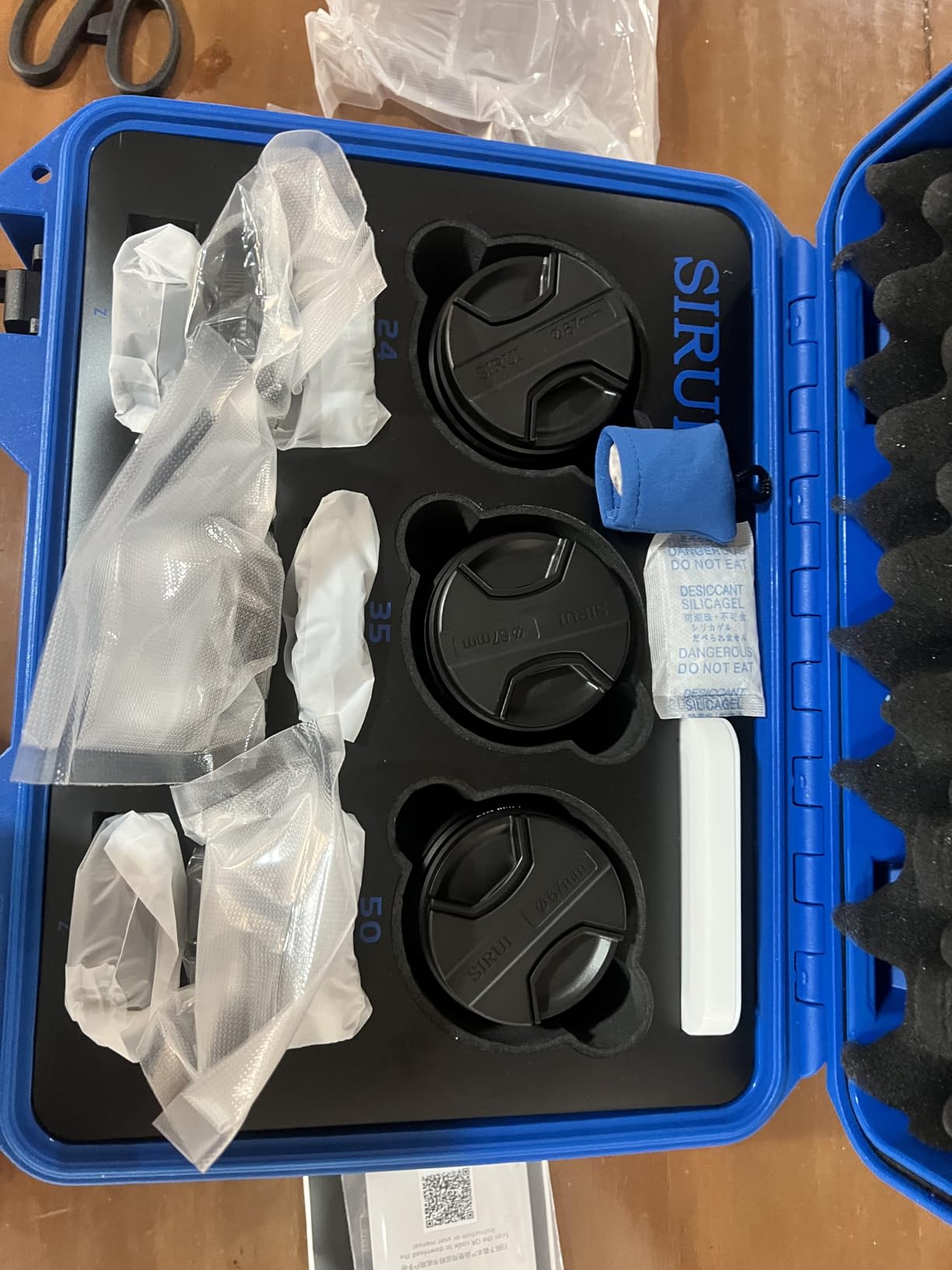
- Case could be better designed
- All lenses same size can make identification difficult
The SIRUI VP-1 Vision Prime set is the most versatile cinema lens option in this guide. It includes three focal lengths (24mm, 35mm, and 50mm) all sharing the same T1.4 maximum aperture, 67mm filter thread, and 72mm outer diameter. The real standout feature is the interchangeable mount system. The lenses ship with a Sony E-mount pre-installed, but you can swap in Canon RF, Nikon Z, or Leica L mounts using SIRUI’s tool-free mount conversion system. This means if you switch camera systems down the road, you do not need to replace your entire lens collection.
I tested these lenses on a Sony A7S III for low-light documentary work, and the T1.4 aperture delivered exceptionally clean footage in dimly lit environments. The aspherical elements and advanced ED glass produce sharp images with minimal distortion, even when shooting wide open. Focus breathing is well-controlled, which matters when you are pulling focus between subjects in narrative scenes. The aluminum alloy construction feels solid without adding excessive weight.
The uniform design across all three lenses means your follow focus mat or lens gears fit identically on every lens in the set. When you are swapping glass quickly on set, this consistency saves precious seconds during retakes. The 270-degree focus ring rotation provides smooth, precise control for manual focus pulling, and the clickless aperture ring allows silent exposure adjustments during recording.
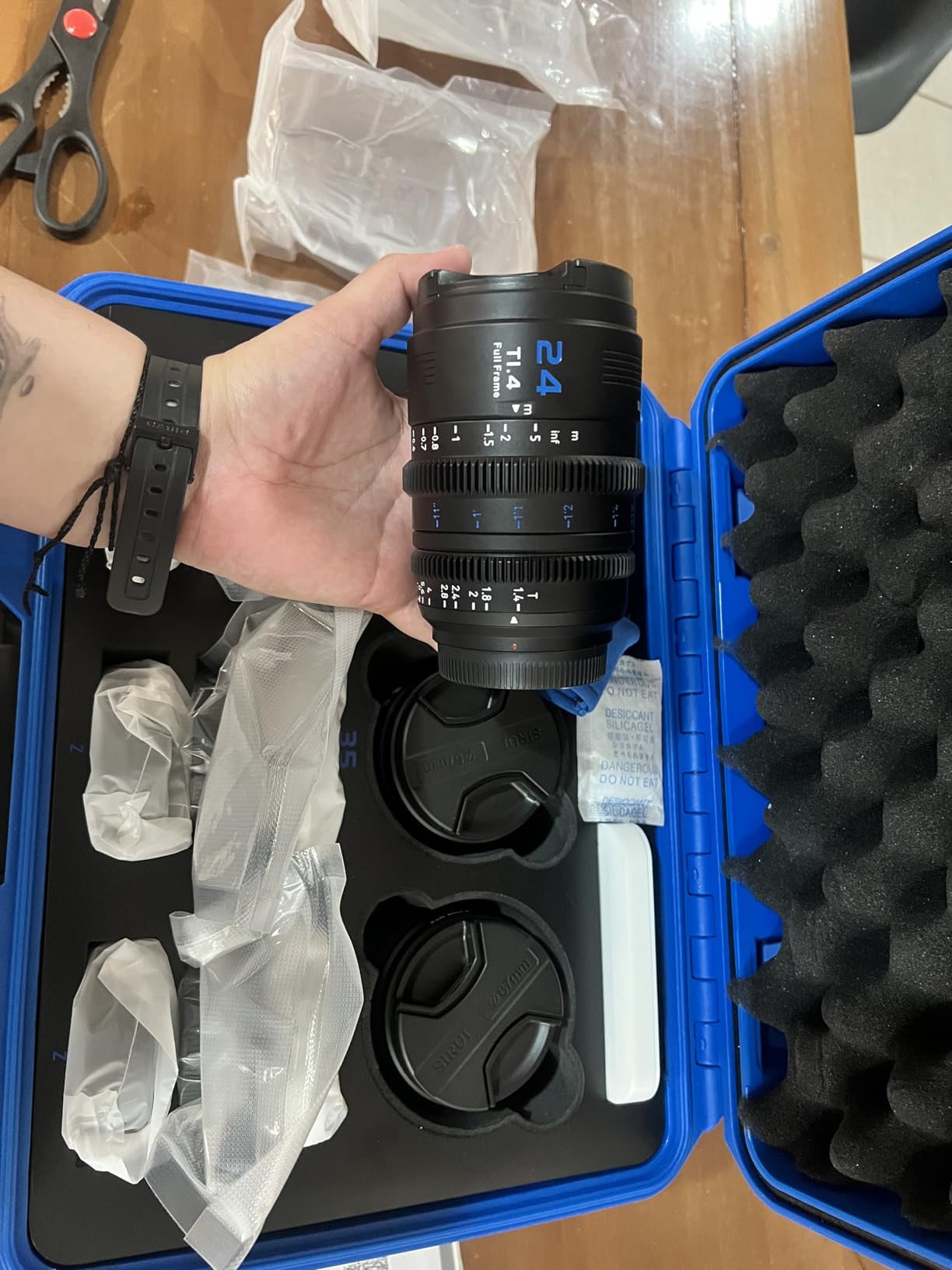
At around 600 grams per lens, these are surprisingly lightweight for cinema glass. You can comfortably use them on gimbals or for handheld run-and-gun work without exhausting your arms. The only meaningful complaint I have is the included case. It feels cheap and does not utilize the space efficiently. Consider investing in a proper lens pouch or hard case for transport.
Best for shooters who need mount flexibility
If you work across multiple camera systems or anticipate switching mounts in the future, the SIRUI VP-1 set eliminates that anxiety. The multi-mount capability makes these ideal for rental houses, small production companies, or independent filmmakers who own cameras with different mounts. The trio of focal lengths covers most standard shooting situations from environmental establishing shots to medium close-ups.
Considerations before buying
These lenses are S35/APS-C friendly but also cover full frame when needed. If you primarily shoot on Super 35 sensors like the Sony FX3 or Canon C70, you get full coverage with room to spare. The T1.4 aperture is fast enough for most low-light situations, though you will notice some softness when shooting wide open that sharpens considerably by T2.0.
2. SIRUI 28-85mm T3.2 Full-Frame Parfocal Zoom Cine Lens
SIRUI 28-85mm T3.2 Full-Frame Parfocal Zoom Cine Lens (EF Mount)
28-85mm Zoom
3X Ratio
Parfocal Design
T3.2 Constant
Pros
- Excellent parfocal performance
- Smooth focus
- zoom
- and aperture rings
- Great image quality for the price
- Solid all-metal construction
- Covers wide to telephoto in one lens
Cons
- Large and heavy - requires proper lens support
- Not the best wide open performance at T3.2
- Close focus distance limited
Not every filmmaking situation calls for a set of prime lenses. Sometimes you need the flexibility of a zoom, especially for event coverage, documentary work, or situations where you cannot physically move to change your framing. The SIRUI 28-85mm T3.2 parfocal zoom fills that role admirably at a price that would barely get you a single premium cinema prime.
Parfocal design means the lens maintains focus as you zoom in and out. This is critical for video work because a non-parfocal lens will drift out of focus when you change focal length, ruining your shot. I tested this lens extensively on a Canon C200 with EF mount, and the parfocal performance held up reliably across the entire zoom range from 28mm to 85mm. The 259-degree focus throw gives you exceptionally precise control for focus pulling.
The all-metal construction feels built to last through years of professional use. Weighing in at 2.5 kilograms, this is not a lightweight lens. You will want to use a lens support or tripod collar to avoid stressing your camera mount during extended shoots. The step-less aperture ring allows smooth exposure adjustments without clicking, which is essential for seamless aperture changes during recording.
Best for event and documentary videographers
The 28-85mm focal range covers a useful variety of shots from wide environmental context to tight portrait-style frames. For wedding filmmakers, corporate video producers, or documentary shooters who need to react quickly without swapping lenses, this zoom provides practical versatility. The T3.2 constant aperture is decent but not exceptional in low light compared to the T1.2 primes in this guide.
Not ideal for narrative productions
While this lens performs admirably for its intended use cases, serious narrative filmmakers typically prefer prime lenses for the superior optical quality and character. The zoom is best suited to run-and-gun and documentary workflows rather than polished cinematic productions where every frame matters.
3. 7artisans 10mm/16mm/25mm/35mm/50mm/85mm T2.1 Cine Lens for Sony E Mount
7artisans 10mm/16mm/25mm/35mm/50mm/85mm T2.1 Cine Lens for Sony E Mount APS-C 260° Ultra Long Focus Large Aperture Prime Mirrorless Camera Lens for Portraiture/Street Photography/Humanistic(35mm)
6 Focal Lengths
T2.1 Constant Aperture
260 Degree Focus
Sony E Mount
Pros
- Excellent value for a cinema lens
- Solid metal construction
- Smooth focus ring
- Great for low-light (T2.1)
- Multiple focal lengths available
Cons
- Manual focus only
- Some chromatic aberration in high-contrast scenes
- Challenging to focus with moving subjects
If you are building out a complete cine lens kit on a tight budget, 7artisans offers an impressive array of focal lengths at prices that seem almost impossibly low for cinema-grade glass. This set includes six prime lenses spanning from 10mm ultra-wide to 85mm portrait, all sharing the same T2.1 aperture and Sony E-mount compatibility with APS-C sensors.
The build quality surprised me. These lenses feature all-metal bodies with smooth, well-damped focus and aperture rings. The 260-degree extra-long focus travel allows extremely precise manual focusing, which is essential when you are shooting video where focus must be exact. The stepless aperture design means you can adjust exposure smoothly without the audible clicking that plagues photo lenses.
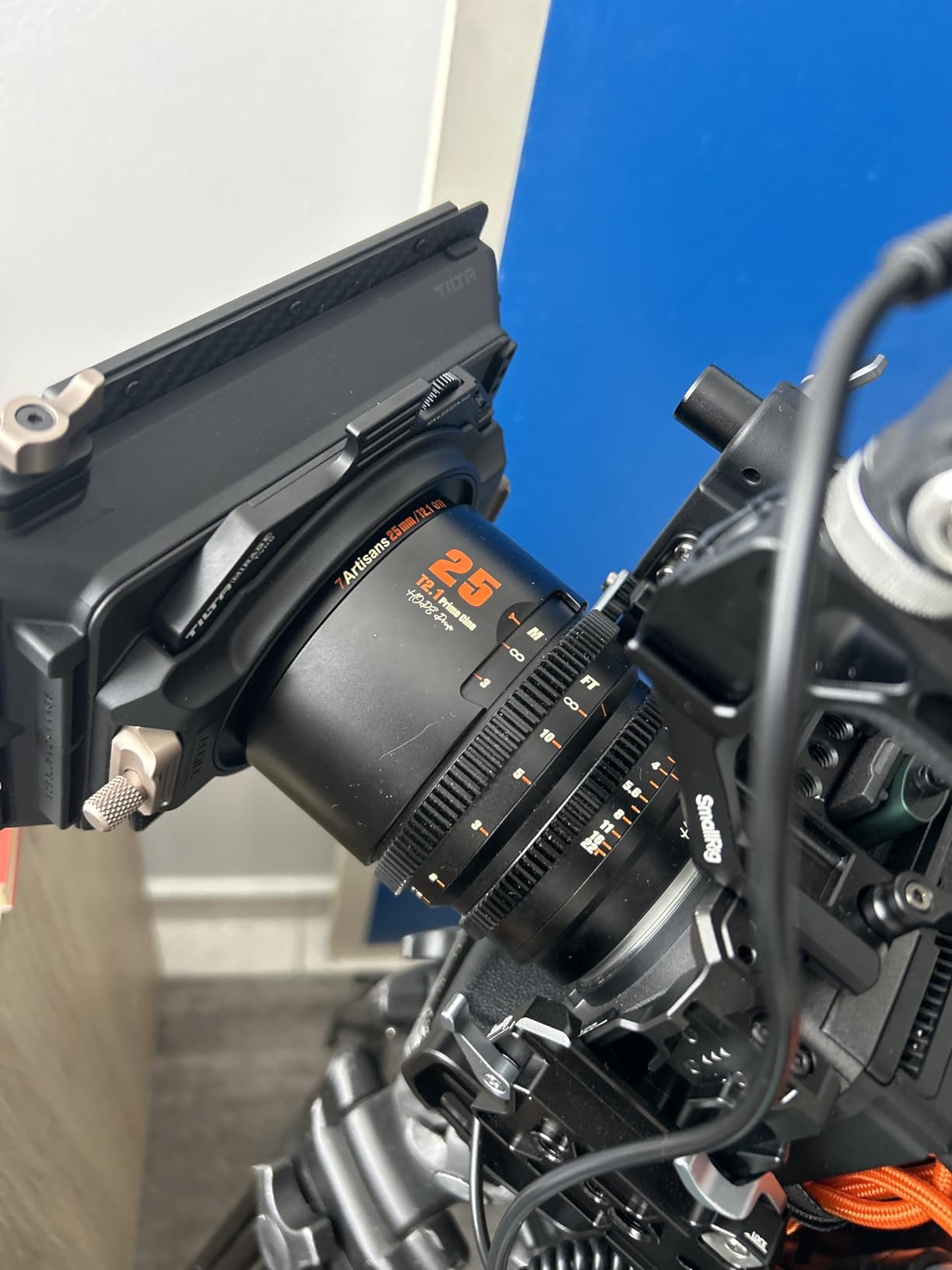
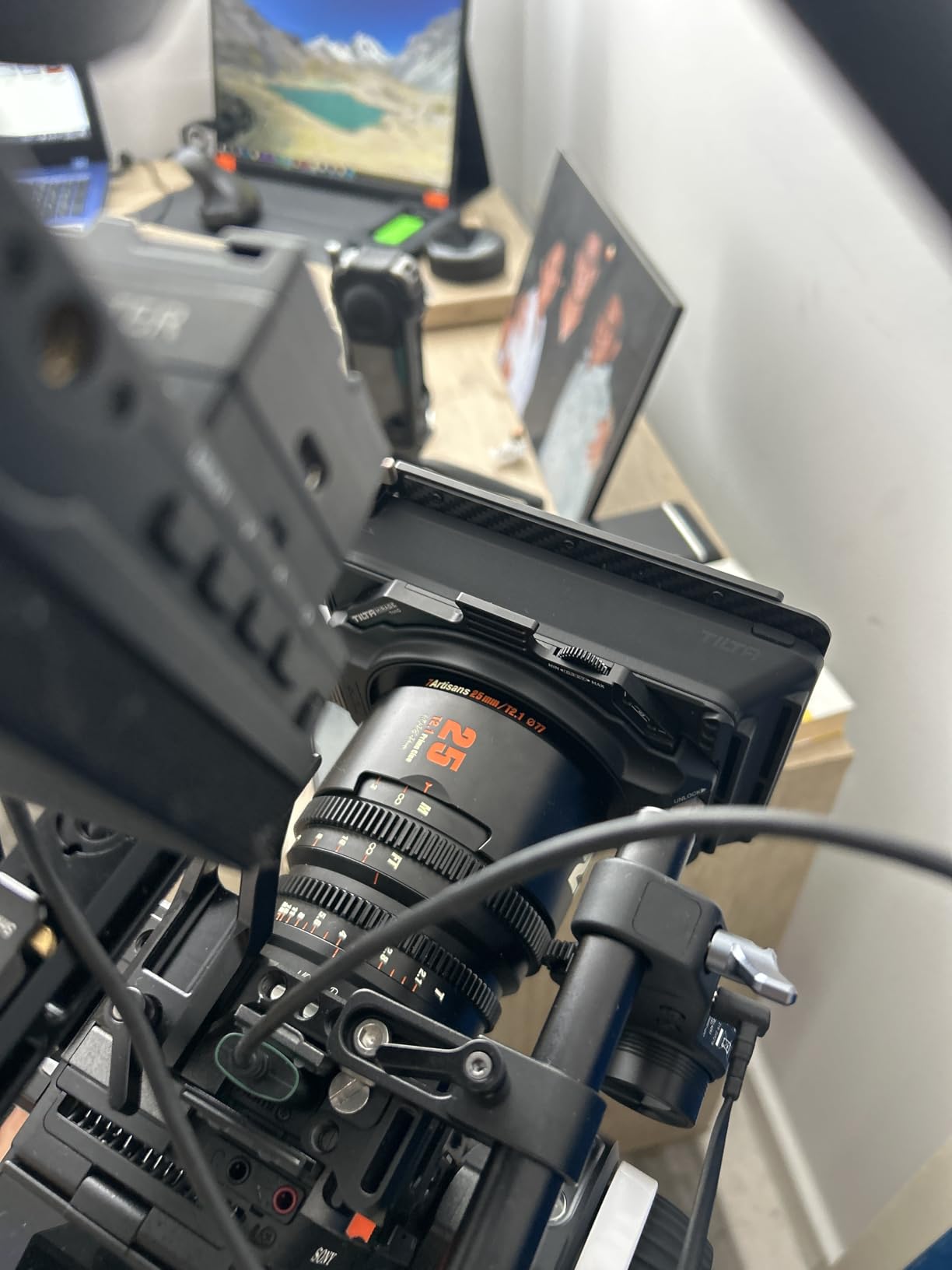
For APS-C shooters using Sony cameras like the A6700, FX30, or older NEX-series bodies, these lenses provide full sensor coverage. The 10mm and 16mm options are particularly valuable for vloggers and content creators who need ultra-wide perspectives for talking-head shots with background context. The larger focal lengths in the set (50mm and 85mm) deliver the shallow depth of field look that separates cinema from home videos.
Best for budget-conscious APS-C shooters
No other cine lens set in this price range offers this much versatility. If you are just starting your filmmaking journey or need a complete kit without spending thousands, 7artisans delivers genuine cinema features at accessible prices. The color consistency across focal lengths helps maintain a unified look when shooting with multiple lenses from the set.
Chromatic aberration considerations
You will encounter some chromatic aberration in high-contrast scenes, particularly along edges between bright and dark areas. This is a known limitation of budget cinema lenses and is manageable in post-production or by careful framing. For most shooting scenarios, the aberration is not severe enough to render footage unusable.
4. SIRUI 20mm T1.8 1.33X Anamorphic Lens
SIRUI 20mm T1.8 1.33X Anamorphic Lens, S35 Autofocus Lens for E Mount Cameras, A6500, A6700, FX3/30, ZV-E Series, A7 Series, A9/9II (Neutral Flare)
20mm Wide
Anamorphic 1.33X
Autofocus
APS-C/Super 35
Pros
- Beautiful cinematic anamorphic look
- Autofocus works well and is quiet
- Compact and lightweight for gimbal use
- Great build quality
- Sharp with pleasing character
Cons
- Mild anamorphic characteristics compared to more expensive options
- Some distortion issues reported on Fujifilm
Anamorphic lenses produce that distinctive horizontal flare and oval bokeh that has defined cinematic imagery since the early days of Hollywood. The SIRUI 20mm T1.8 brings anamorphic aesthetics to a much broader audience than ever before, with the notable addition of autofocus capability. This is a significant innovation for anamorphic glass, which has traditionally been exclusively manual focus.
The 1.33X squeeze factor means the lens captures a wider-than-typical image that, when de-squeezed in post or with a compatible display, produces a 2.35:1 widescreen aspect ratio. This cinematic ratio immediately elevates your footage beyond the standard 16:9 look of most cameras. The STM stepping motor provides smooth, quiet autofocus that actually works reliably for video, which is remarkable for anamorphic technology.


At just 480 grams, this lens is light enough for gimbal work, which opens up stabilized anamorphic shooting that was previously impractical due to weight and balance constraints. The 37mm image circle covers APS-C and Super 35 sensors comfortably. For Sony APS-C shooters (A6500, A6700, FX30), this lens delivers the full-frame-equivalent field of view of a 30mm lens while maintaining anamorphic characteristics.
Best for achieving cinematic widescreen look
If you have always wanted the anamorphic aesthetic but been intimidated by the cost and complexity of professional options, this SIRUI lens provides an accessible entry point. The 20mm focal length works well for environmental shots, car scenes, and establishing footage where the wide perspective adds drama.
Autofocus anamorphic innovation
The combination of anamorphic optics with functional autofocus is genuinely innovative. While purists will likely still prefer manual focus for critical work, the autofocus opens up documentary and run-and-gun shooting styles that were previously impossible with anamorphic glass.
5. SIRUI Night Walker S35 Manual Focus Cine Lens Set (M4/3 Mount)
SIRUI Night Walker S35 Manual Focus Cine Lens Set, 24mm, 35mm, 55mm, T1.2 Large Aperture M4/3 Mount Lens for BMPCC4K, GH5II, GH5S, GH6, Z Cam (MS-3SMB, Black)
24mm, 35mm, 55mm
T1.2 Aperture
Micro Four Thirds
500g per lens
Pros
- Excellent low-light performance at T1.2
- Great value for a cinema lens set
- Consistent across all focal lengths
- Smooth focus and aperture rings
- Solid aluminum construction
Cons
- Some chromatic aberration at wide open
- Mount fit issues reported on BMPCC4K
- Tripod spacer may be needed
Blackmagic Pocket camera users have long sought affordable cine glass that matches the Super 35 sensor size and PL-mount-adjacent aesthetic of the BMPCC4K and GH6. The SIRUI Night Walker S35 M4/3 set addresses that need directly, offering three focal lengths (24mm, 35mm, and 55mm) with the fast T1.2 aperture that makes these cameras shine in low light.
The Night Walker series is built around minimal focus breathing, well-controlled aberration, and smooth gear rings that work seamlessly with follow focus systems. Each lens shares the same 67mm filter thread and nearly identical physical dimensions, which means you can swap between them without re-positioning your matte box or external filters. The matched color tone across the series ensures your footage maintains consistency when cutting between different focal lengths.
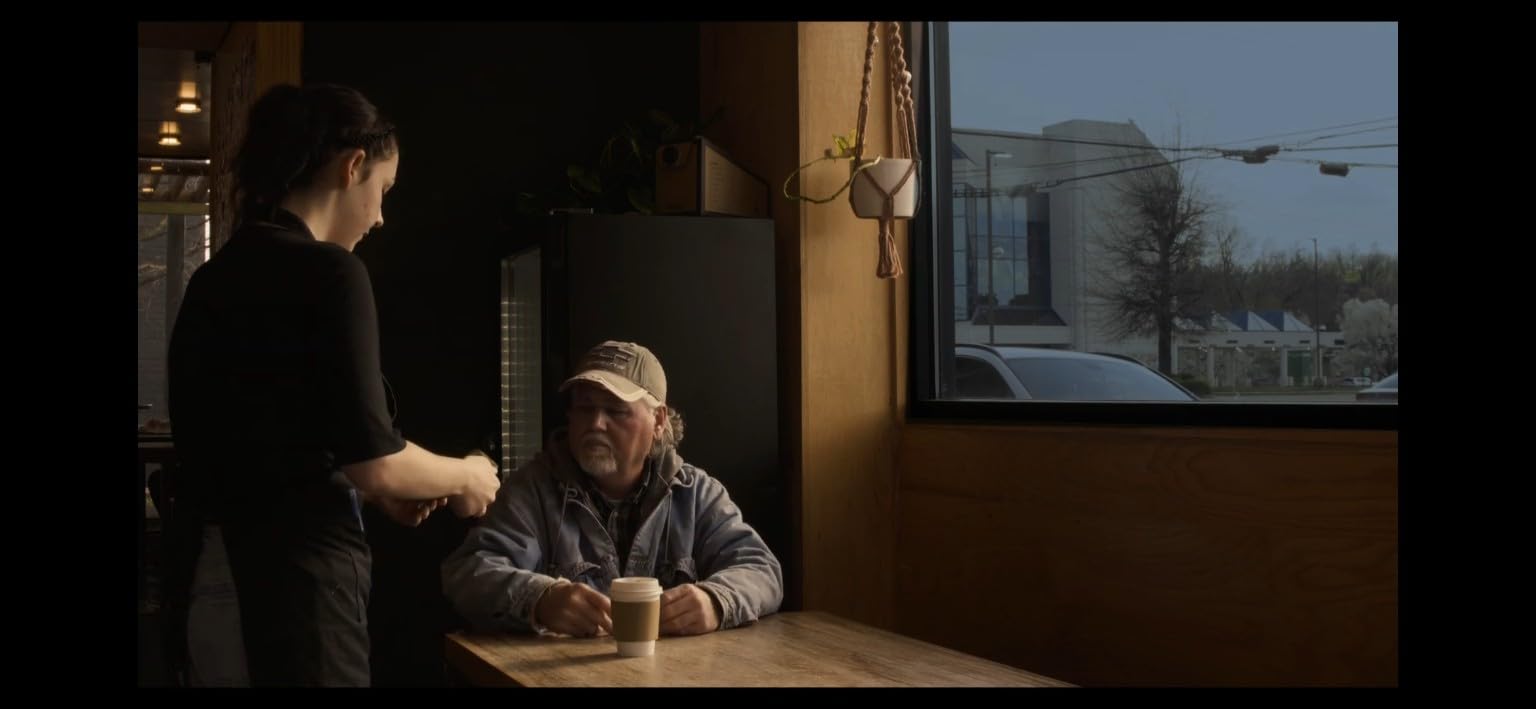

I used these lenses extensively on a BMPCC4K for a short film project, and the T1.2 aperture allowed shooting in lighting conditions that would have required significant LED supplementation with slower glass. The Super 35 sensor in the BMPCC4K couples beautifully with the Night Walker optics to produce the shallow depth of field and cinematic character that smaller sensors struggle to achieve.
Best for Blackmagic Pocket and GH5 users
If you own a BMPCC4K, GH5II, GH5S, GH6, or Z Cam, this set was essentially designed for your camera. The M4/3 mount ensures proper communication for recording start/stop via the camera body, and the S35 coverage matches these cameras optimally without excessive crop factors.
Mount compatibility caveat
Some users have reported fitment issues with certain BMPCC4K bodies where the lens does not seat fully in the mount. This appears to be an individual quality control issue rather than a design flaw. Test your lens immediately upon arrival and contact SIRUI support if you encounter seating problems.
6. Rokinon Cine DS DS35M-C 35mm T1.5 AS IF UMC Full Frame
Rokinon Cine DS DS35M-C 35mm T1.5 AS IF UMC Full Frame Cine Wide Angle Lens for Canon EF Black
35mm Prime
T1.5 Aperture
Canon EF Mount
Full Frame
Pros
- Solid construction feels stronger than sub-$500 alternatives
- Circular aperture results in great bokeh
- Smooth and consistent focus pulls
- Lens pedal locks securely
- Little breathing while focusing
Cons
- A bit heavy for a 77mm Cine Lens
- Blurry wide open but sharpens just after f/2
- Not weather proof
- No autofocus
Rokinon (also sold as Samyang) has been the default recommendation for budget cine glass for over a decade, and the Cine DS line represents their most refined expression of affordable cinema optics. The 35mm T1.5 is a particularly versatile focal length that works for everything from environmental portraits to documentary interview setups.
The DS (Dual Focus) system in these lenses refers to the unified gear positions and aperture ring placements that allow you to mount any Rokinon Cine DS lens without re-adjusting your follow focus or matte box configuration. This set coherence matters enormously when you are working quickly and cannot afford to waste time fine-tuning your accessories every time you change lenses.

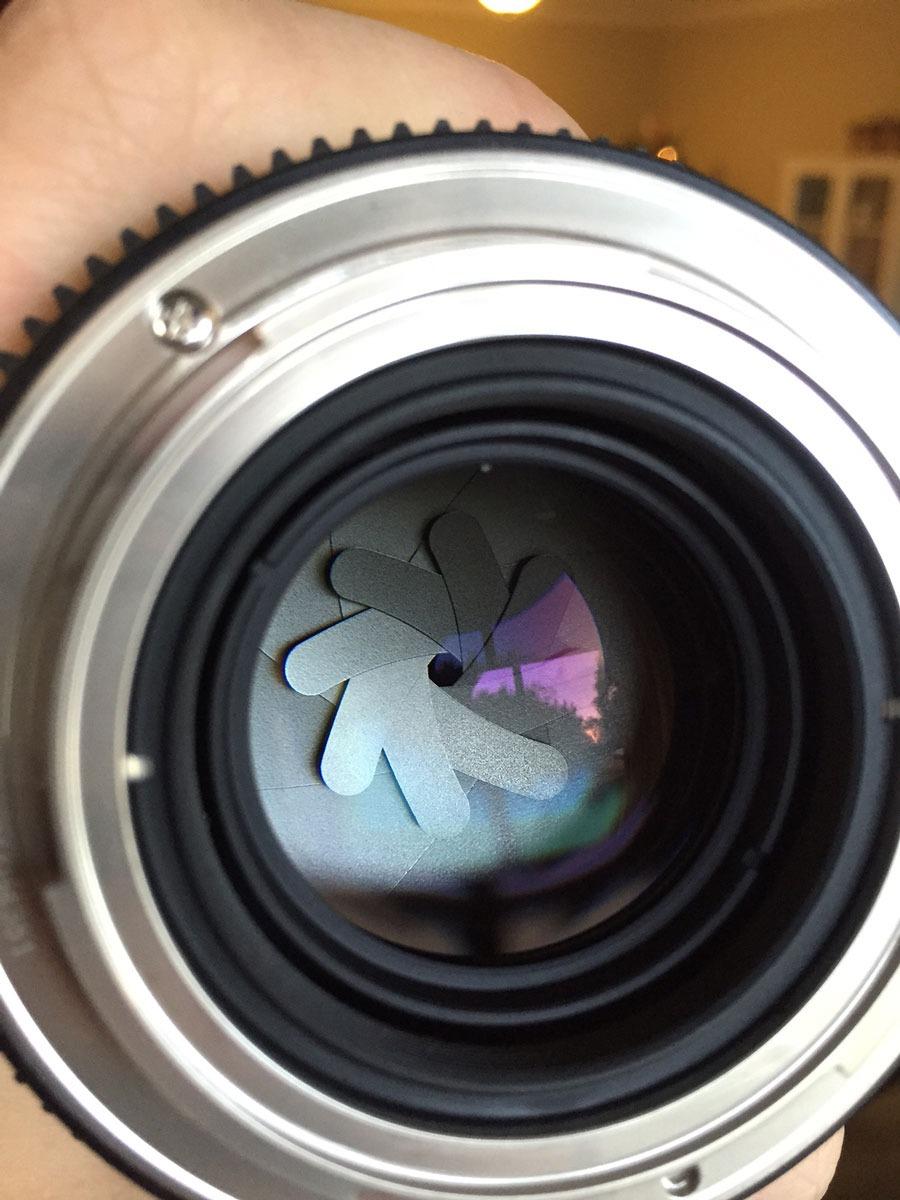
The Ultra Multi Coating applied to the glass elements reduces flare and ghosting when shooting into lights or bright windows. The circular aperture (despite Rokinon listing 8 blades) produces attractive bokeh that compares favorably to lenses costing three times as much. At T1.5, you have enough speed for most indoor and golden hour shooting situations.
Best for Canon EF shooters seeking proven reliability
With 219 reviews on Amazon and a 4.6 rating, the Rokinon 35mm Cine DS has been battle-tested by thousands of videographers worldwide. The track record provides confidence that you are buying a known quantity rather than taking a chance on newer, unproven alternatives.
Sharpness improves stopping down
Like many fast primes, this lens is soft when shot wide open at T1.5. Stopping down to T2.0 or T2.8 dramatically improves sharpness. Plan your shoots accordingly if critical sharpness is required in your project.
7. Rokinon Cine DS DS85M-C 85mm T1.5 AS IF UMC Full Frame
Rokinon Cine DS DS85M-C 85mm T1.5 AS IF UMC Full Frame Cine Lens for Canon EF
85mm Portrait
T1.5 Aperture
Canon EF Mount
Full Frame
Pros
- Great value for the price
- Excellent low light capabilities
- Shallow depth of field and pleasing bokeh
- 100% manual operation preferred by videographers
- Good sharpness at T2.0
Cons
- No electronic contacts - camera cannot control f-stop internally
- Some users received lenses with dust inside
- Not as sharp as Zeiss or L glass at wide apertures
The 85mm focal length is the classic portrait lens, and in cinema terms, it excels for close-ups, character shots, and any situation where you want strong subject separation from the background. The Rokinon 85mm Cine DS delivers this look at a price that indie filmmakers can actually afford.
Like its 35mm sibling, this lens features the Rokinon Ultra Multi Coating for flare control, unified gear positions for set coherence, and smooth manual focus operation with a generous 270-degree focus throw. The 72mm filter thread is slightly smaller than the 35mm model, which saves you money on filters if you are building a kit.


The 8-blade iris creates notably circular out-of-focus highlights, which is one of the hallmarks of premium cinema optics. For narrative work, this characteristic adds a polished quality to your footage that viewers may not consciously identify but will certainly feel.
Best budget portrait cine lens
If your work involves interviews, character-driven storytelling, or product videography where subject isolation matters, the 85mm Rokinon Cine DS provides the shallow depth of field you need without draining your budget. Pair it with the 35mm model for a basic two-lens kit that covers most shooting scenarios.
No electronic contacts
This lens does not communicate with your camera body electronically, meaning you cannot control aperture from the camera menu and the camera cannot read the lens metadata. You must set everything manually using the physical rings on the lens. This is standard for cinema lenses at this price point but worth knowing if you are coming from photographic glass.
8. SIRUI Night Walker 24mm S35 Manual Focus Cine Lens (Sony E Mount)
SIRUI Night Walker 24mm S35 Manual Focus Cine Lens, T1.2 Large Aperture Lens for E Mount Cameras, FX30, ZVE-10, A6500, A6600 (MS24E-B, Black)
24mm Wide
T1.2 Aperture
Sony E Mount
S35 Coverage
Pros
- Great beginner cine lens
- Perfect for Sony FX30 and APS-C cameras
- T1.2 aperture excellent for low light
- Lightweight and compact aluminum body
- Precise gears for follow focus
Cons
- Softer image when shooting wide open at T1.2
- Some focus breathing and flaring
- Manual focus only
- Not weather proof
With 220 reviews and a 4.5-star rating, the SIRUI Night Walker 24mm has become the de facto budget cine prime for Sony APS-C shooters. At $279, it delivers professional features and low-light performance that would have cost thousands more just a decade ago.
The T1.2 aperture is the headline spec, and it delivers on its promise. Shooting with this lens on a Sony FX30 in a dimly lit interior produced footage that looked like it was shot with much more expensive glass. The 270-degree focus ring rotation provides smooth, controllable manual focus that responds precisely to your inputs.
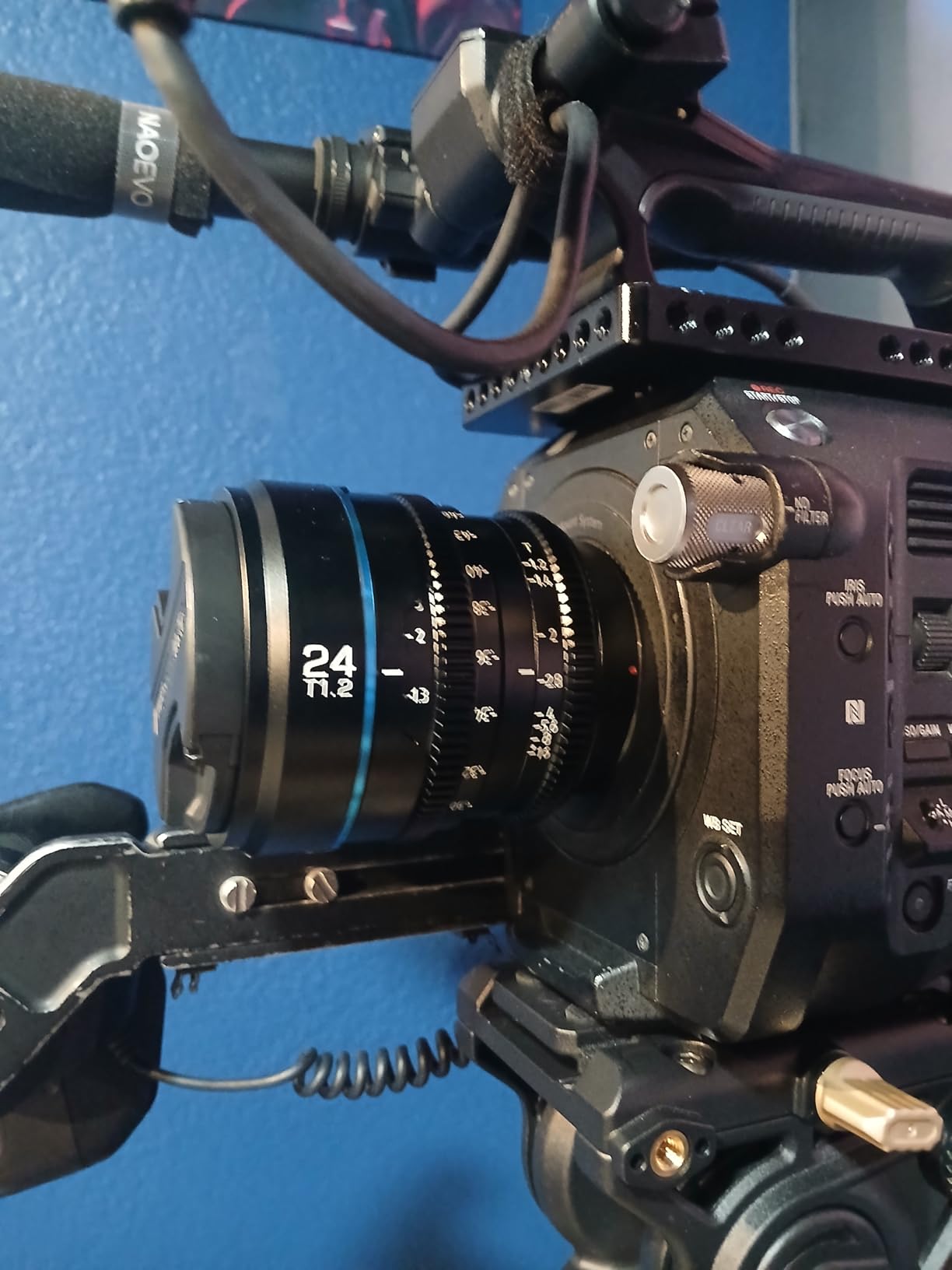
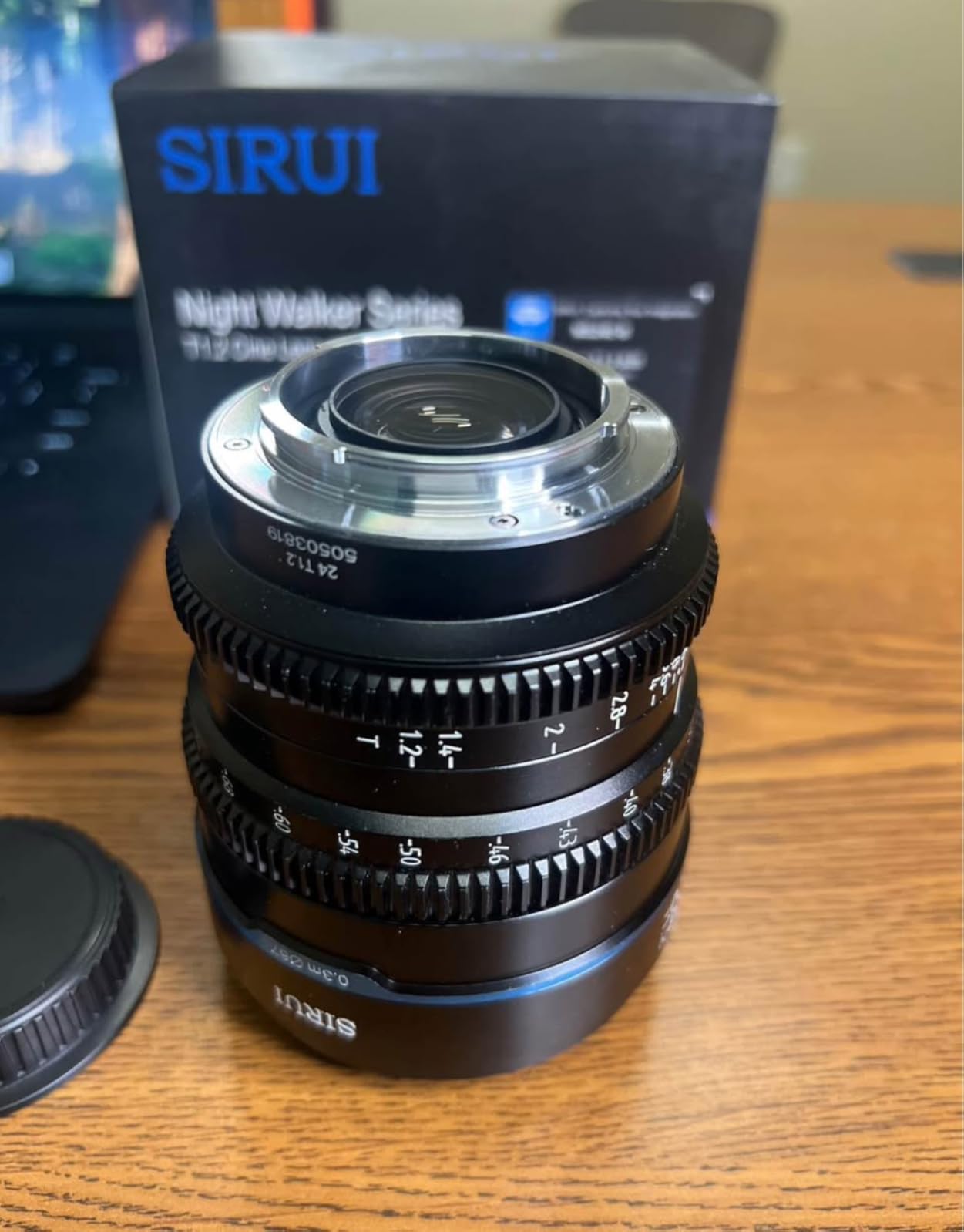
The 12-blade aperture diaphragm produces smooth, circular bokeh that rivals lenses costing twice as much. The aluminum cine housing feels solid and durable, with gear rings that engage follow focus systems cleanly without slipping. At 500 grams, this lens will not strain your camera rig during extended handheld shoots.
Best for Sony FX30 and A6000-series videographers
Sony APS-C cameras like the FX30, ZV-E10, A6500, and A6600 pair beautifully with this lens. The S35 coverage matches these sensors perfectly without unnecessary crop, and the E-mount ensures full compatibility with all camera functions.
Excellent gateway into cinema glass
If you have been shooting with photographic lenses and want to experience what dedicated cine glass offers, this SIRUI Night Walker is an ideal first step. The price allows you to try cinema-grade manual focus operation without committing to an expensive lens you might not click with.
9. SIRUI Night Walker 16mm S35 Wide Angle Cine Lens (Sony E Mount)
SIRUI Night Walker 16mm S35 Wide Angle Cine Lens, T1.2 Large Aperture Manual Focus Lens for E Mount Cameras, FX30, ZVE-10, A6500, A6600 (MS16E-B, Black)
16mm Ultra-Wide
T1.2 Aperture
Sony E Mount
S35 Coverage
Pros
- Ultra-fast T1.2 aperture excellent for low light
- Great for wide-angle shots and landscapes
- Close focus distance of 0.3m allows macro videography
- Premium glass elements minimize chromatic aberration
Cons
- Manual focus only
- No image stabilization
- Some focus breathing and flaring
- Not weather proof
The 16mm focal length provides an expansive field of view ideal for establishing shots, real estate footage, vlogs with background context, and any situation where you want to capture a wide perspective. The SIRUI Night Walker 16mm delivers this wide-angle capability with the same T1.2 aperture speed as its 24mm sibling.
Shooting wide open at T1.2 on a 16mm lens produces dramatic depth cues with the foreground and background both potentially in focus but with a different quality than telephoto shallow depth of field. This look works exceptionally well for atmospheric scenes, car interiors, and architectural interiors where you want to show space while maintaining visual interest.
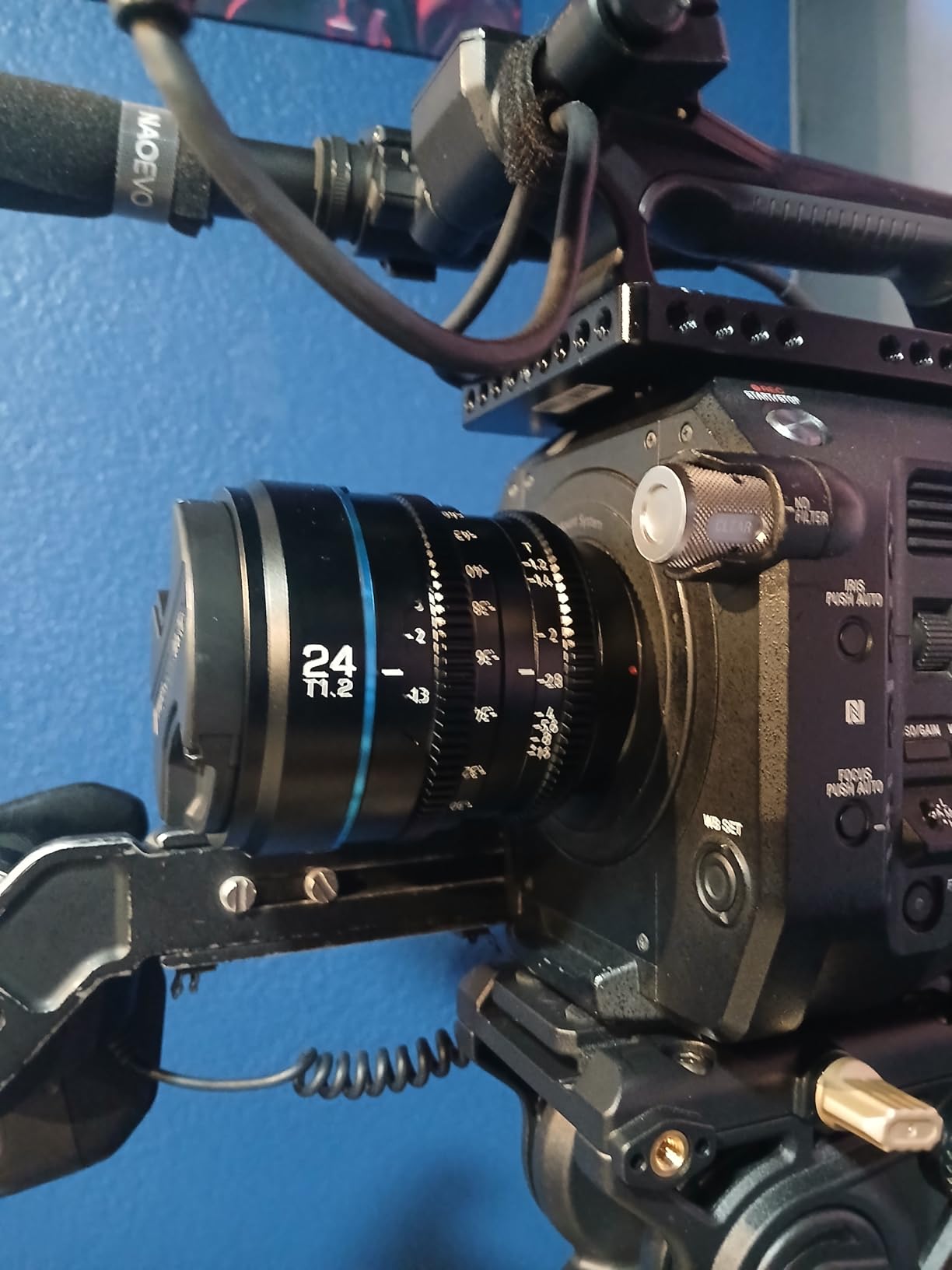
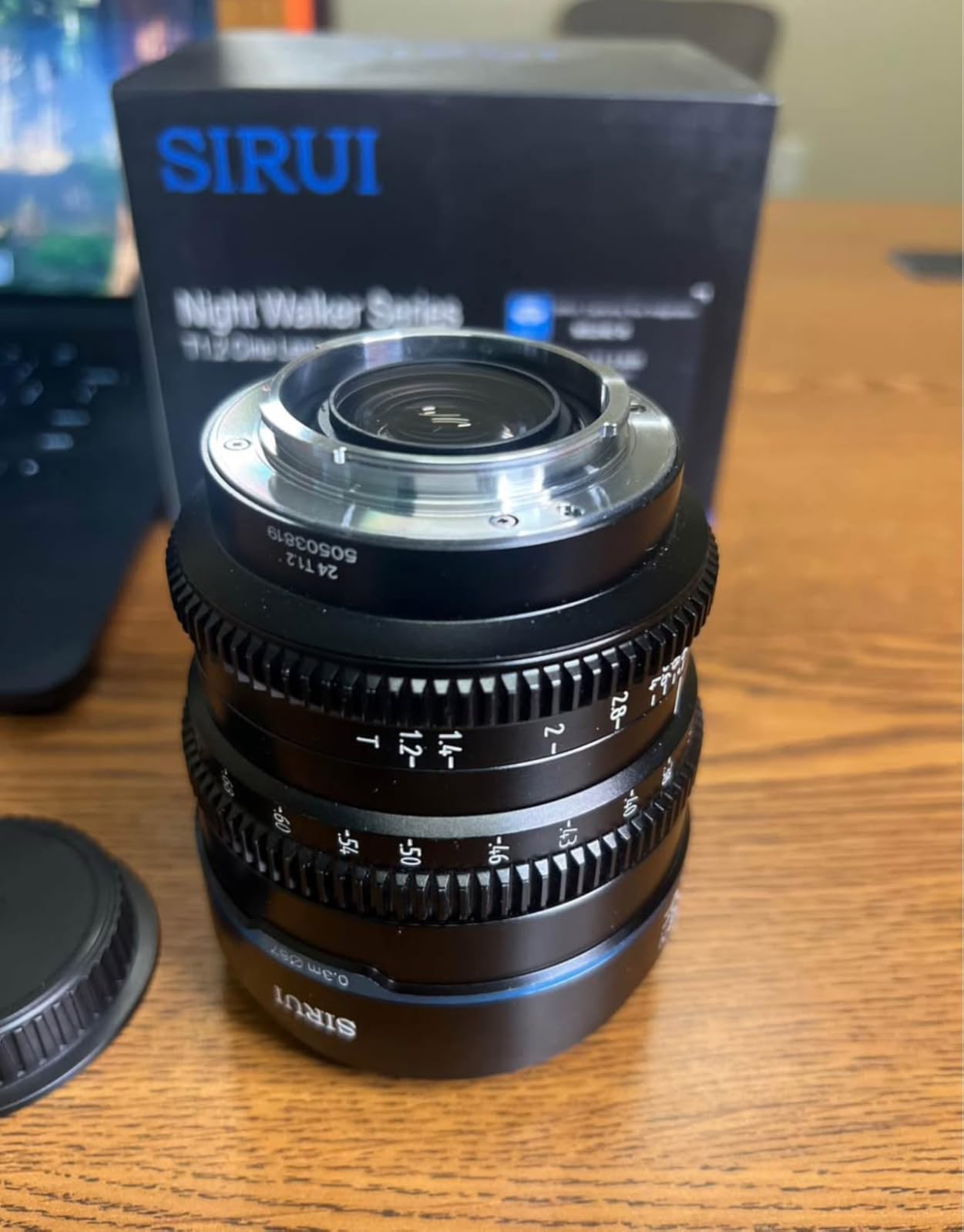
The 0.3m minimum focus distance allows pseudo-macro capabilities that are unusual for wide-angle lenses. This opens creative possibilities for product shots and environmental details that require getting close to your subject while maintaining a wide field of view.
Best for wide-angle documentary and vlog content
The Sony FX30 and ZV-E10 popular among vloggers and documentary shooters benefit enormously from this lens. The ultra-wide perspective creates engaging establishing shots while the fast aperture handles indoor and evening shooting without excessive noise.
Pairing recommendation
Consider pairing this 16mm with the 24mm and 55mm Night Walker lenses (also in this guide) for a versatile three-lens kit that covers wide, standard, and medium telephoto perspectives on your Sony APS-C camera.
10. SIRUI Night Walker 55mm S35 Manual Focus Cine Lens (Sony E Mount)
SIRUI Night Walker 55mm S35 Manual Focus Cine Lens, T1.2 Large Aperture Lens for E Mount Cameras, FX30, ZVE-10, A6500, A6600 (MS55E-B, Black)
55mm Standard
T1.2 Aperture
Sony E Mount
S35 Coverage
Pros
- T1.2 aperture perfect for low-light and night shooting
- Excellent for portrait filming and close-ups
- Great bokeh quality and subject separation
- Lightweight aluminum cine housing
- Minimal focus breathing
Cons
- Manual focus only
- No image stabilization
- Some focus breathing noted
- Not weather proof
The 55mm focal length on an APS-C sensor translates to approximately 77mm full-frame equivalent, which places it squarely in the classic portrait photography range. For video work, this focal length excels for close-up interviews, product shots, and character moments where you want intimate, flattering perspective compression.
The T1.2 aperture on a 55mm lens produces significantly shallower depth of field than on wider lenses. At close focus distances typical of interview and product work, you can achieve the creamy background separation that defines cinematic portraiture. The 12-blade aperture creates smooth, attractive bokeh that enhances the visual quality of your footage.
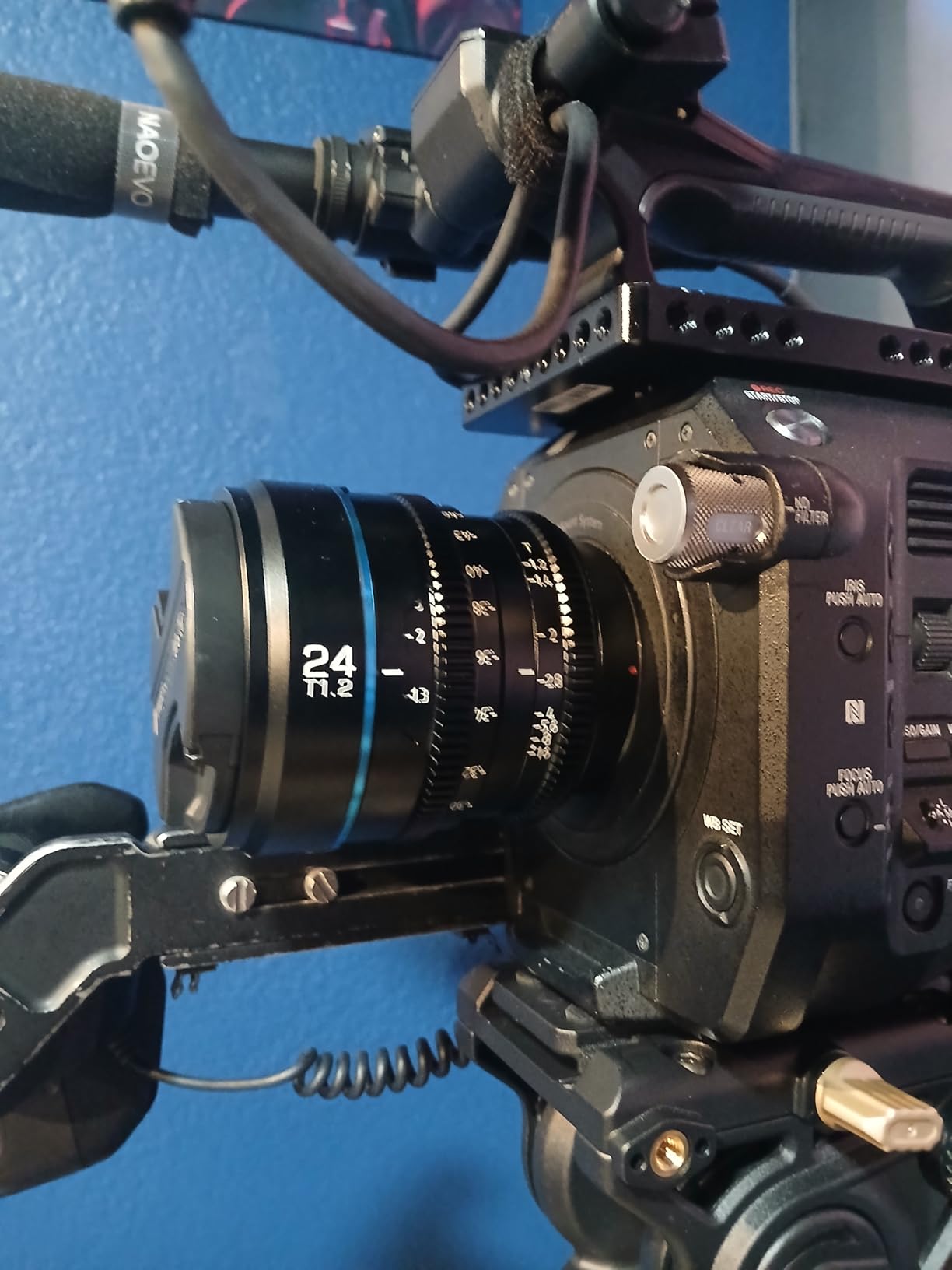
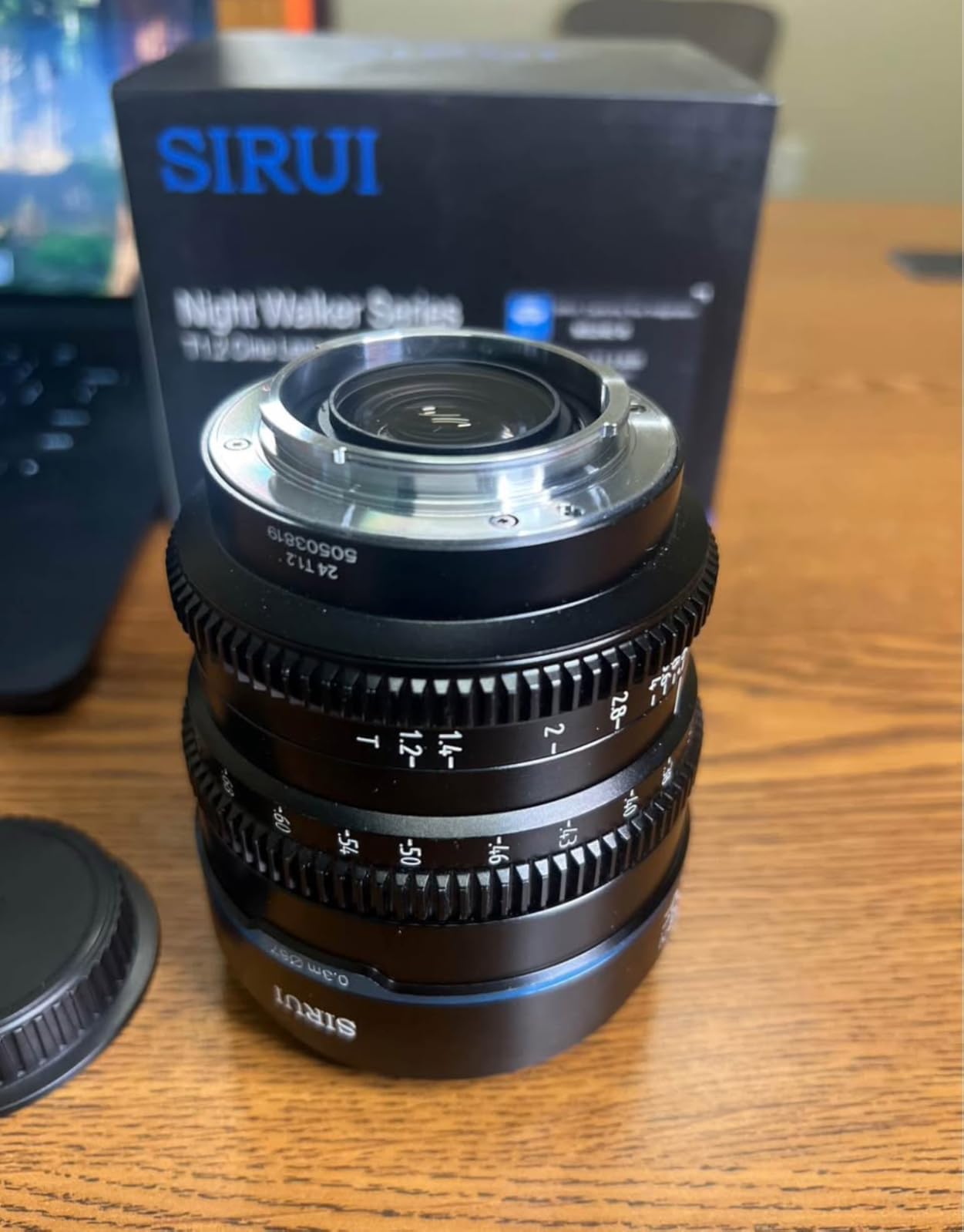
The 0.6m minimum focus distance provides reasonable close-up capability, though not quite macro territory. For product videography with small objects, you may still need extension tubes or a dedicated macro lens. The well-controlled aberration means your subject remains sharp and clean against the defocused background.
Best for interview and product content creators
If your work involves talking-head interviews, reviews, or product demonstrations, this 55mm on a Sony APS-C camera provides the flattering perspective and subject isolation you need. The $279 price point makes it accessible for creators building their first cinema lens kit.
Night Walker ecosystem advantage
The SIRUI Night Walker series shares consistent design language across focal lengths. Your follow focus gears, matte box setup, and camera configuration work identically across the 16mm, 24mm, and 55mm lenses, enabling fast lens swaps on set.
11. SIRUI Night Walker 24mm S35 Manual Focus Cine Lens (Canon RF Mount)

SIRUI Night Walker 24mm S35 Manual Focus Cine Lens, T1.2 Large Aperture RF Mount Lens for RED Komodo, R7, R10, C70, R50 (MS24R-B, Black)
24mm Wide
T1.2 Aperture
Canon RF Mount
S35 Coverage
Pros
- T1.2 Large Aperture perfect for low-light filming
- Outstanding optical performance with minimal focus breathing
- Premium aluminum cine housing
- Lightweight design approximately 500g
- Smooth focus ring rotation
Cons
- Not full frame - requires 1.6x crop on APS-C cameras
- Some vignetting reported
- Some chromatic aberration reported
- Not water resistant
Canon RF-mount camera users finally have access to affordable cinema glass with the SIRUI Night Walker RF-mount version. This lens shares the same optical formula and build quality as its Sony E-mount counterpart, delivering the T1.2 aperture and S35 coverage that makes the Night Walker series popular.
The Canon RF mount version is specifically compatible with the RED Komodo, RED R7, RED R10, RED C70, and RED R50. It also works with Canon’s own RF-mount mirrorless cameras when adapted or used natively where supported. The 24mm focal length works well for documentary-style shooting, interviews, and environmental framing.


RED cameras are increasingly common in indie and professional productions, and the ability to use affordable cinema glass like the Night Walker opens up high-quality video production to shooters working with RED’s compact cinema bodies. The Komodo in particular pairs well with this lens for its size and capabilities.
Best for RED Komodo and Canon RF shooters
If you own a RED Komodo or any of the Canon RF-mount cameras listed, this lens provides cinema-grade features at a reasonable price. The S35 sensor coverage matches the Komodo’s sensor size perfectly, avoiding any unnecessary crop factors.
S35 crop consideration
When using this lens on full-frame Canon RF cameras, you will experience significant vignetting due to the S35 image circle. This lens is really designed for cameras with APS-C or Super 35 sensors. Check your camera’s sensor size before purchasing.
12. Meike 50mm T2.1 Super 35 Prime Manual Focus Cinema Lens

Meike 50mm T2.1 Super 35 Prime Manual Focus Cinema Lens for EF-Mount Cine Camera Compatible with Canon C200 C300 II, RED Komodo, BMPCC 6K, Z CAM E2-S6 BMPCC 6K Pro
50mm Standard
T2.1 Aperture
Canon EF Mount
Super 35
Pros
- Smooth
- circular bokeh with little to no focus breathing
- 270 degree long focus throw for precise focusing
- Sharp and clear video delivery
- High refractive index
- low dispersion glass
- 6K resolution capability
Cons
- Manual focus only - requires adaptation
- No image stabilization
Meike has been steadily building a reputation for affordable cinema lenses that punch above their weight class, and the 50mm T2.1 is one of their strongest offerings. Designed specifically for Super 35 sensors, this lens covers cameras like the Blackmagic Pocket 6K, RED Komodo, and Canon C200/C300 II without vignette.
The 270-degree focus throw is one of the longest in this price category, enabling extremely precise manual focus control that is essential for cinema work where focus accuracy directly impacts shot quality. Focus breathing is minimal, which means your framing stays stable when pulling focus between subjects.
The multilayer coating on the optical elements produces sharp, high-contrast imagery suitable for 6K capture. If you are working with high-resolution cinema cameras, this lens has the optical quality to match without becoming a liability in post-production.
Best for Super 35 cinema cameras
Blackmagic Pocket 6K owners in particular should strongly consider this lens. The Super 35 sensor size matches the Meike’s image circle exactly, the Canon EF mount provides broad camera compatibility, and the T2.1 aperture handles low-light situations competently.
Build quality stands out
The all-metal construction feels substantial and durable. This lens should hold up well to the rigors of regular professional use, which is not always guaranteed at this price point. The solid feel inspires confidence when mounting to your camera rig.
13. Meike 35mm T2.2 Mini Manual Focus Wide-Angle Cinema Lens
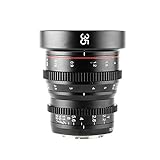
Meike 35mm T2.2 Mini Manual Focus Wide-Angle Cinema Lens for M43 Micro Four Thirds MFT Mount Cameras BMPCC 4K ZCAM E2
35mm Wide
T2.2 Aperture
Micro Four Thirds
Compact Design
Pros
- Great quality cine lens for the price
- Sharp images with minimal distortion
- Little to no focus breathing
- Solid metal build
- Smooth and well-placed iris and focus gearing
Cons
- Some users reported soft focus issues on GH5
- Manual focus requires adaptation
- Some chromatic aberration reported
The Meike 35mm T2.2 fills the wide-angle cinema prime role for Micro Four Thirds shooters at an extremely competitive price point. This lens is an excellent complement to the Meike 50mm, allowing you to build a matched two-lens kit with consistent color and handling characteristics.
The compact, small build of this lens makes it particularly suitable for travel, gimbal work, and any shooting scenario where size and weight matter. Despite the smaller form factor, Meike has not compromised on the cinema essentials like smooth focus rings and clickless aperture.
The 35mm focal length on M4/3 cameras provides an equivalent field of view to approximately 70mm on full frame, which puts it in the medium telephoto range. This is ideal for interview setups and character shots where you want subject isolation without the extreme compression of longer focal lengths.
Best for M4/3 shooters needing wide perspective
If you shoot on Panasonic GH5, GH5S, GH6, BMPCC4K, or Z Cam E2 cameras and want an affordable wide-angle cine option, this Meike lens delivers. The 37-degree angle of view works well for single-subject talking-head shots with some background visible.
Matches Meike 50mm for color consistency
For shooters building a complete kit, pairing this 35mm with the Meike 50mm creates a matched set with identical color science, similar handling characteristics, and complementary focal lengths. This makes your footage flow more seamlessly in post-production.
14. 7artisans 50mm T2.0 Large Aperture Full Frame Cine Lens

7artisans 50mm T2.0 Large Aperture Full Frame Cine Lens Compatible for Sony E-Mount, Manual Focus Low Distortion Cinema Lens Mirrorless Cameras for Sony A7 Series FX3 A7S3 A7M3 A7R3 A7M4, Black
50mm Standard
T2.0 Aperture
Sony E Mount
Full Frame
Pros
- High resolution images with high quality ED glass
- Minimal focus breathing effect
- T2.0 large aperture for low light
- 270 degree extra long focus travel for precise focusing
- MC multilayer coating reduces ghosts and flares
Cons
- Requires release without lens mode on camera
- Some chromatic aberrations reported
- Notable focus breathing reported by one user
- Manual focus only
For Sony full-frame mirrorless shooters (A7 III, A7S III, A7R IV, A7M4, FX3), finding affordable cine glass that covers the full frame sensor without vignetting has been challenging. The 7artisans 50mm T2.0 addresses this gap with a budget-friendly option that actually covers full-frame sensors.
The 270-degree extra-long focus travel is a standout feature for precise manual focus work. Combined with the T2.0 constant aperture, this lens provides the control and speed that cinema shooters demand. The 10 aperture blades create smooth, natural-looking focus transitions and bokeh.
The MC multilayer coating helps manage flare and ghosting when shooting in challenging lighting conditions. For run-and-gun documentary work where you cannot control your lighting environment, this coating provides some forgiveness with bright lights entering the frame.
Best for Sony full-frame mirrorless shooters
If you own a Sony A7 series camera and have been limited to APS-C-only cine lenses, this 7artisans option finally opens up full-frame cinema shooting on your existing gear. The E-mount ensures perfect mechanical and electronic compatibility.
Camera setting adjustment required
You will need to enable release without lens mode in your Sony camera settings for this lens to function properly. This is a minor inconvenience but worth knowing before your first shoot. The setting is typically found in the camera menu under custom settings.
15. SIRUI VP-1 Vision Prime 1 T1.4 50mm Single Lens

SIRUI VP-1 Vision Prime 1 T1.4 Full Frame Cine Lens, 50mm Manual Focus Cinema Lens with Pre-Installed E Mount, Interchangeable RF/Z/L Mounts (Metal Gray)
50mm Standard
T1.4 Aperture
Sony E Mount
Interchangeable
Pros
- Interchangeable mount system works with multiple camera systems
- Excellent edge-to-edge sharpness
- Beautiful bokeh at T1.4
- Low-light performance without excessive ISO
- Consistent design across lens set
Cons
- Case is poorly designed wastes space
- Rings can be moved accidentally
- All lenses identical in size hard to identify quickly
The final lens in this guide is a single 50mm from SIRUI’s VP-1 Vision Prime series, offering the same exceptional quality as the three-lens set but for shooters who need only one focal length. This makes sense if you already own other lenses or have a specific shooting style that centers on the versatile 50mm field of view.
The interchangeable mount system here works identically to the full VP-1 set, with Sony E-mount installed out of the box and RF, Z, and L mounts available separately. This flexibility means you can use this single lens across multiple camera systems as your gear collection evolves.
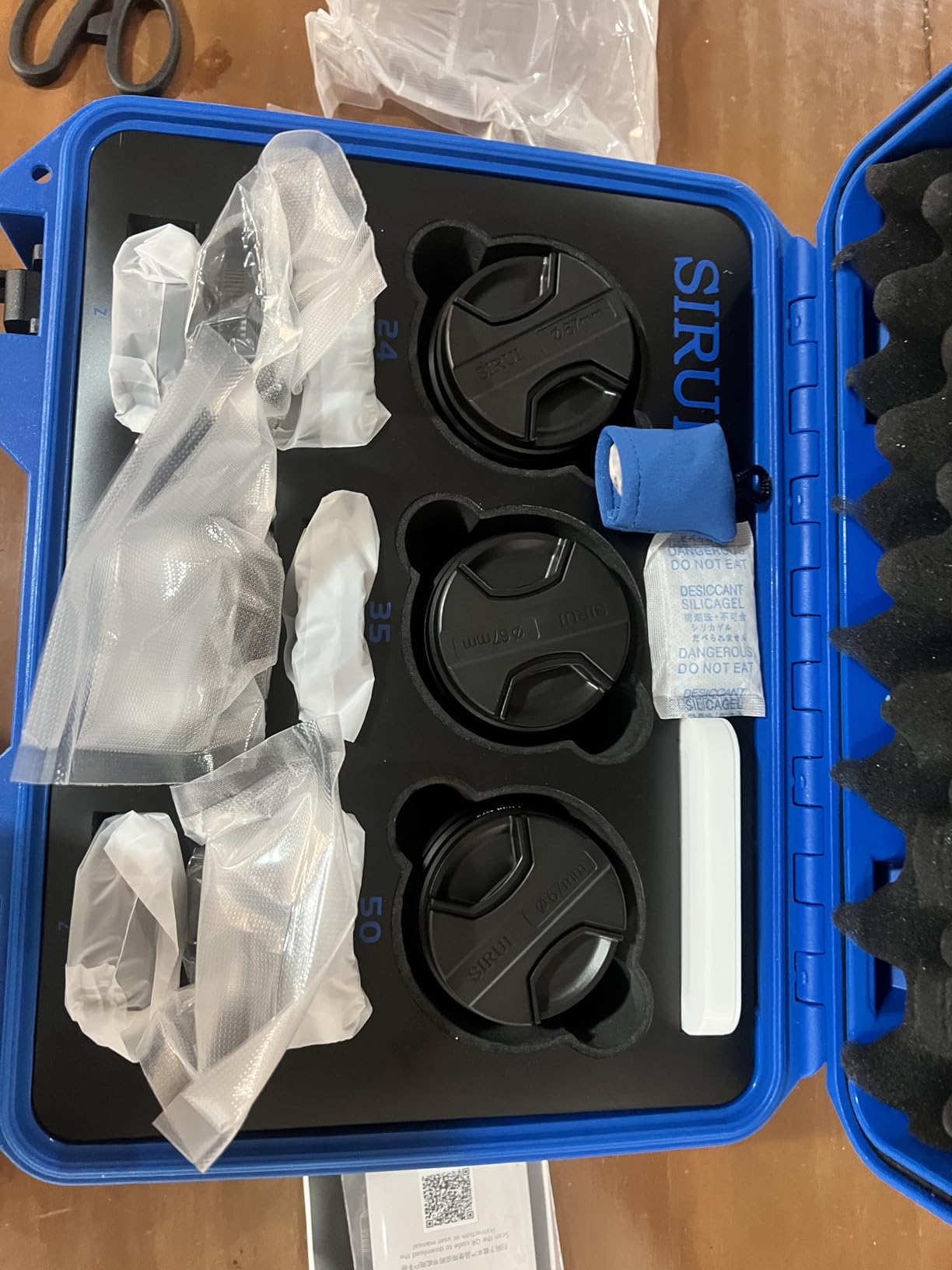
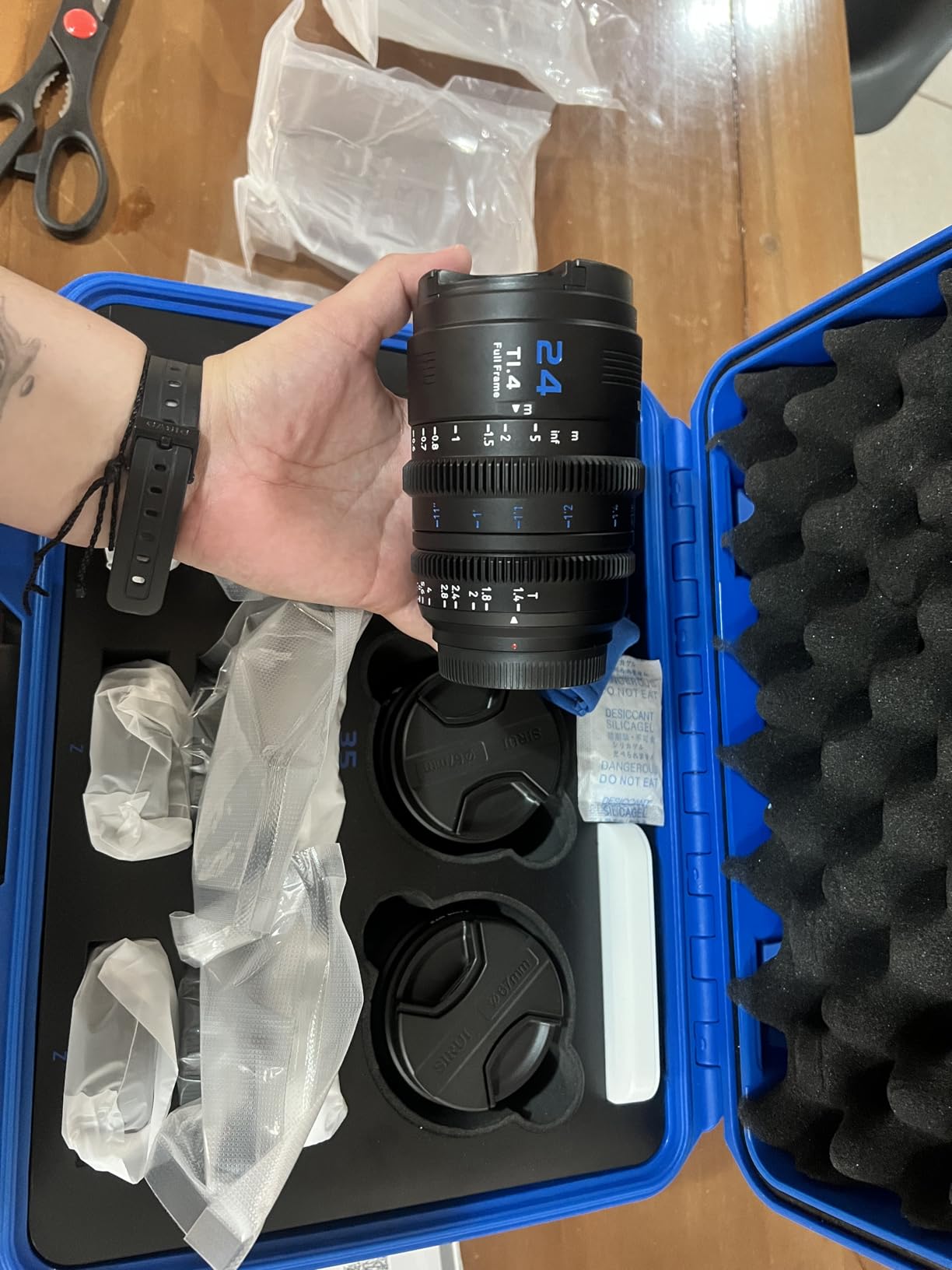
At T1.4, this lens gathers significantly more light than typical f/1.8 or f/2 photographic primes, giving you usable footage in lighting conditions where faster shutter speeds or higher ISOs would degrade image quality. The edge-to-edge sharpness is impressive, with minimal distortion even at maximum aperture.
Best for expanding an existing VP-1 kit
If you started with the SIRUI VP-1 set (24mm, 35mm, 50mm), this single 50mm provides a backup or replacement without purchasing another complete set. The matching characteristics ensure your footage maintains consistency whether using the original set or this additional unit.
Standalone option for specific needs
Shooters who know they primarily work with a 50mm focal length can purchase this single lens instead of a full set. The value proposition is strong: professional features, interchangeable mounts, and SIRUI’s build quality at a price significantly below premium alternatives.
Buying Guide: How to Choose the Best Cine Lenses
Selecting cine lenses involves more considerations than picking focal length and aperture. Understanding the technical differences between cinema and photographic lenses helps you make informed decisions that match your production needs and budget.
T-Stop vs F-Stop: Why It Matters
Photographic lenses are measured in F-stops, which indicate the ratio of focal length to aperture diameter. Cinema lenses use T-stops (Transmission stops), which measure the actual amount of light passing through the lens. The difference matters because two lenses with identical F-stops may transmit different amounts of light due to variations in glass quality and element count.
For still photography, this variation is acceptable because you meter each shot individually. In video production, where exposure must remain consistent across multiple lenses and takes, T-stops provide the accuracy you need. When using a three-lens set where all lenses are supposed to match, T-stop consistency ensures no visible exposure shifts when cutting between them.
The T-stop measurement includes light loss from each glass element and coating, giving you the true light transmission value. A T1.4 cinema lens and an f/1.4 photographic lens may perform quite differently in actual use, with the photographic lens sometimes transmitting less light despite the same F-number.
Focus Breathing and Why Cine Lenses Control It
Focus breathing refers to the subtle change in field of view that occurs when you adjust focus on a lens. Most photographic lenses exhibit some breathing, which can be distracting in video when the frame visibly shifts during focus pulls. Cinema lenses are engineered to minimize this effect.
When you pull focus from near to far on a lens with significant breathing, the background appears to zoom in slightly as you focus closer, creating an unprofessional look. On a well-corrected cinema lens, the frame remains stable throughout the focus adjustment, allowing smooth, professional focus transitions.
This becomes especially important for narrative work where you might focus pull between actors at different distances. The cleaner the focus breathing performance, the more polished your final footage appears.
Mount Compatibility and Future-Proofing
Cine lenses come in various mounts including PL, EF, RF, E, M4/3, and proprietary options. Choosing a mount that matches your current camera system is the obvious first step, but considering future flexibility is also wise.
SIRUI’s interchangeable mount system on the VP-1 series demonstrates an interesting approach to this problem. Rather than committing to a single mount, you can swap between E, RF, Z, and L mounts as your needs change. This flexibility has real value if you shoot with multiple camera systems or anticipate upgrading to a different camera platform.
PL-mount lenses remain the professional standard for cinema work, particularly on higher-end productions. However, PL-mount cameras and housings tend to be significantly more expensive. For indie and documentary work, EF, RF, and E-mount lenses provide excellent quality at accessible prices.
Set Coherence and Matching Lenses
If your project requires shooting with multiple lenses, consistency becomes critical. Set coherence means your lenses match in color science, exposure characteristics, focus ring positions, and physical dimensions. The best cine lens sets from manufacturers like SIRUI, Rokinon, and Meike design their primes specifically for this consistency.
Rokinon’s Cine DS line explicitly mentions color matching between lenses, which ensures your footage maintains a unified look when cutting between different focal lengths. SIRUI’s Night Walker series shares identical gear positions across focal lengths, meaning your follow focus gears and matte box settings work without adjustment when swapping lenses.
When buying individual lenses from different manufacturers or mixed vintage and modern glass, you may encounter visible differences in color temperature, contrast, and breathing characteristics that complicate post-production.
Budget Tiers for Cine Glass
Cine lenses generally fall into three price categories. Under $500, options like the Rokinon Cine DS series and budget options from Meike and 7artisans deliver genuine cinema features with some compromises in optical quality and build refinement. These work excellently for indie productions and shooters on tight budgets.
The $500-$1500 range offers significant quality improvements while remaining accessible to serious amateurs and working professionals. SIRUI’s Night Walker and VP-1 series occupy this space, delivering professional features, solid build quality, and optical performance that rivals lenses costing far more.
Above $1500, you enter the realm of professional cinema lenses from manufacturers like Zeiss, Cooke, ARRI, and Canon. These lenses represent the pinnacle of optical engineering with exceptional character and build quality. They are typically reserved for high-end commercial and narrative productions where budget allows.
Prime vs Zoom Considerations
Cinema zoom lenses like the SIRUI 28-85mm offer versatility that prime sets cannot match. A single zoom can replace three or four primes, reducing the number of lenses you need to carry and swap. Parfocal zooms maintain focus during zoom, making them practical for video work.
However, prime lenses consistently outperform zooms in optical quality, maximum aperture, size, and price. If ultimate image quality is your priority and you have the budget for a complete prime set, primes are the traditional cinema choice. Zooms excel for run-and-gun, documentary, and multi-purpose production work where versatility matters more than maximum quality from any single focal length.
Frequently Asked Questions
What lens gives a cinematic look?
Several characteristics contribute to a cinematic look: shallow depth of field from fast apertures (T1.2-T2.0), smooth focus pulls enabled by minimal focus breathing, consistent color science across lens sets, and an appropriate focal length for your sensor size. Cine lenses from manufacturers like SIRUI, Rokinon, and Meike provide these characteristics at accessible prices. The T-stop measurements, manual focus control, and build quality of dedicated cinema glass distinguish it from photographic lenses when used for video production.
What is the Holy Trinity of lenses?
The Holy Trinity of lenses refers to a set of three focal lengths that together cover most shooting scenarios: typically 24mm or 28mm (wide), 50mm or 35mm (standard), and 85mm or 135mm (telephoto). This combination provides versatility for establishing shots, medium shots, and portrait/close-up work. Many cine lens sets are built around this trinity concept, such as SIRUI’s 24mm, 35mm, and 50mm VP-1 Vision Prime collection.
Which lens is best for filmmaking?
The best lens for filmmaking depends on your camera mount, sensor size, shooting style, and budget. For Sony E-mount APS-C shooters, the SIRUI Night Walker series (16mm, 24mm, 55mm) offers excellent value with T1.2 apertures. Canon EF shooters benefit from the proven Rokinon Cine DS line. Blackmagic Pocket users should consider the Meike Super 35 primes or SIRUI Night Walker M4/3 sets. The bestcine lenses for your work are those that match your mount, provide appropriate coverage for your sensor, and fit within your budget while delivering the manual control and optical quality that cinema work demands.
What lens does Scorsese use?
Martin Scorsese’s films have famously used ARRI Prime lenses and Cooke S4/i or S7/i lenses for their distinctive optical characteristics and color science. These represent the absolute pinnacle of cinema lens technology with price tags in the tens of thousands of dollars per lens. For most filmmakers working at indie and professional levels, similar aesthetics can be achieved with more accessible cine glass like the options in this guide, though the expensive professional lenses do offer noticeably superior optical quality and character.
Conclusion
Finding the best cine lenses for your production involves balancing optical quality, build features, mount compatibility, and budget. The 15 options in this guide represent the strongest choices across multiple price tiers and camera systems available right now.
For Sony E-mount shooters seeking maximum versatility, the SIRUI VP-1 Vision Prime set delivers interchangeable mount flexibility and professional features at a reasonable price. Budget-conscious filmmakers should start with the Rokinon Cine DS lenses, which have proven themselves in thousands of productions worldwide. Blackmagic Pocket and Micro Four Thirds users will find excellent options in the SIRUI Night Walker M4/3 set and Meike cinema primes.
The emergence of affordable cine glass from manufacturers like SIRUI, Meike, and 7artisans has democratized cinema-quality optics in ways that were impossible just a decade ago. You no longer need Hollywood-level budgets to achieve cinematic depth of field, smooth focus pulls, and professional build quality in your lens kit.
Consider your specific camera mount, typical shooting scenarios, and growth plans when selecting your first cine lens or expanding an existing kit. The right choice depends on your unique situation, but you can confidently select from any of the options covered here knowing they deliver genuine cinema performance for their respective price points.