
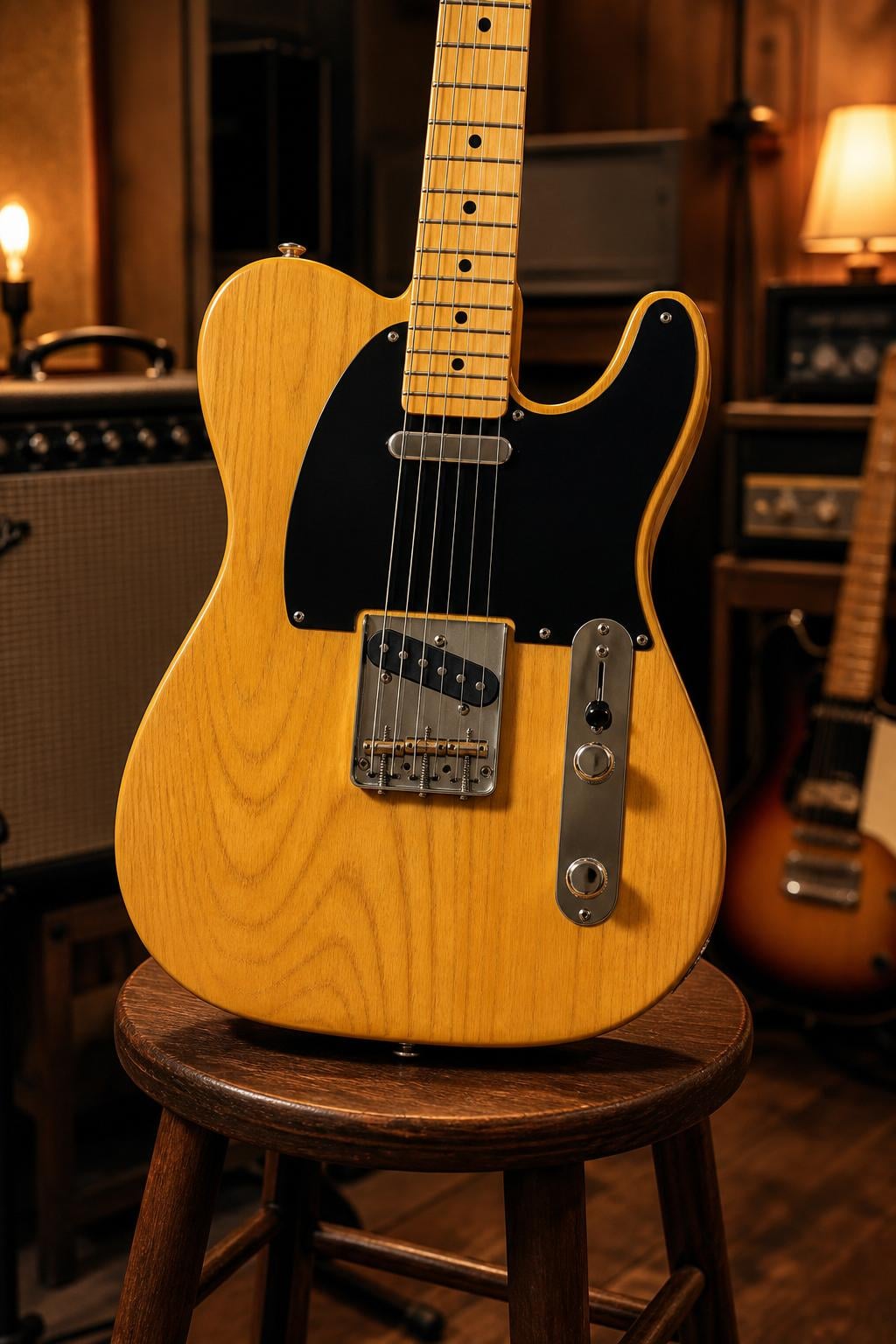
The Telecaster has been the workhorse of the guitar world since 1950. It launched the solid-body electric guitar era and has never gone out of style. From the chicken-picking country stages of Nashville to the grunge clubs of Seattle, the Tele has proven itself as arguably the most versatile guitar ever built. When you are shopping for the best telecaster guitars in 2026, the options stretch from sub-$150 beginner models to $2,600 collector-grade reissues. That range is both a blessing and a source of serious decision paralysis.
Our team has spent months analyzing specifications, reading hundreds of customer reviews, and mining forums like Reddit’s r/telecaster and the TDPRI (Telecaster Discussion Page Reissue) community to separate the real winners from the marketing fluff. The consensus from the guitar community is clear: the Fender Player II Telecaster is the best all-rounder for most players. As one Reddit user put it, “I absolutely love mine, plays and sounds amazing.” But the Player II is not the right pick for everyone. Budget, genre, hand size, and even your tolerance for single-coil hum all factor into the decision.
This guide covers 11 Telecaster models across four price tiers. We start with the ultra-affordable Squier Debut Series at under $150 and climb all the way to the American Vintage II 1951 Telecaster reissue at over $2,600. Along the way, we cover single-coil classics, humbucker-loaded rock machines, a hybrid acoustic-electric, and a vintage Nocaster recreation. We also dig into the technical details that actually matter: body tonewoods, neck profiles, fretboard radius, bridge types, and pickup configurations. Whether you are a first-time buyer or a seasoned player looking for your next stage weapon, you will find the right Tele here.
One thing to keep in mind before we dive in: almost every Telecaster benefits from a professional setup. Forum users consistently report sharp fret ends, poorly cut nuts, and intonation issues on budget models. A $50 to $80 setup from a qualified guitar tech can transform a mediocre out-of-box experience into something that feels like a guitar costing three times as much. Budget for it.
Top 3 Picks for Best Telecaster Guitars in July
Before we get into the full lineup, here are our three standout picks. These represent the best overall value, the premium pro-level option, and the best budget entry point. Each one earned its spot through a combination of community consensus, specification quality, and verified customer feedback.

Fender Player II Telecaster
- Ash body
- Alnico V pickups
- Rolled neck edges
- Butterscotch Blonde

Fender American Professional II Telecaster
- Roasted Pine body
- V-Mod II pickups
- Deep C neck
- US-made

Squier Affinity Series Telecaster
- String-through bridge
- Maple fretboard
- Butterscotch Blonde
- Belly cut
Best Telecaster Guitars in 2026
Here is the complete lineup of all 11 models we reviewed, ranked from budget to premium. Use this table as a quick reference, then scroll down for the detailed analysis of each guitar.
| Product | Specifications | Action |
|---|---|---|
 Squier Debut Series Telecaster
|
|
Check Latest Price |
|
Squier Affinity Series Telecaster
|
|
Check Latest Price |
 Squier Classic Vibe 50s Telecaster
|
|
Check Latest Price |
 Squier Classic Vibe 70s Deluxe Telecaster
|
|
Check Latest Price |
 Fender Standard Series Telecaster
|
|
Check Latest Price |
|
Fender Player II Telecaster
|
|
Check Latest Price |
 Fender Vintera II 50s Nocaster
|
|
Check Latest Price |
 Fender Acoustasonic Player Telecaster
|
|
Check Latest Price |
 Custom Telecaster FMT HH
|
|
Check Latest Price |
|
Fender American Professional II Telecaster
|
|
Check Latest Price |
1. Squier Debut Series Telecaster – Best Budget Pick
Fender Squier Debut Series Telecaster Electric Guitar, Beginner Guitar, 2-Year Warranty, Includes Free Lessons, 2-Color Sunburst with Satin Urethane Finish
Poplar body
Maple neck
Laurel fretboard
S-S pickups
25.5 inch scale
Hardtail bridge
Pros
- Excellent value for money
- Comfortable slim C-shaped neck
- Lightweight poplar body
- Classic Tele twang
- Great modding platform
Cons
- Sharp fret ends on some units
- Nut may need work
- Stock pickups adequate not exceptional
- Satin finish feels dry
The Squier Debut Series Telecaster is the most affordable entry point into the Telecaster world. At under $150, it delivers the classic T-shape silhouette and single-coil tone without making you choose between paying rent and learning guitar. Our team has recommended this model to dozens of first-time players, and the feedback has been consistently positive for the price.
The poplar body keeps things lightweight at around 10 pounds total, which makes it comfortable for long practice sessions. The slim C-shaped maple neck is genuinely easy to play, even for players with smaller hands. You get two single-coil pickups with 3-way switching, giving you access to the bright bridge position, the warmer neck position, and the quacky middle setting that Tele players love.
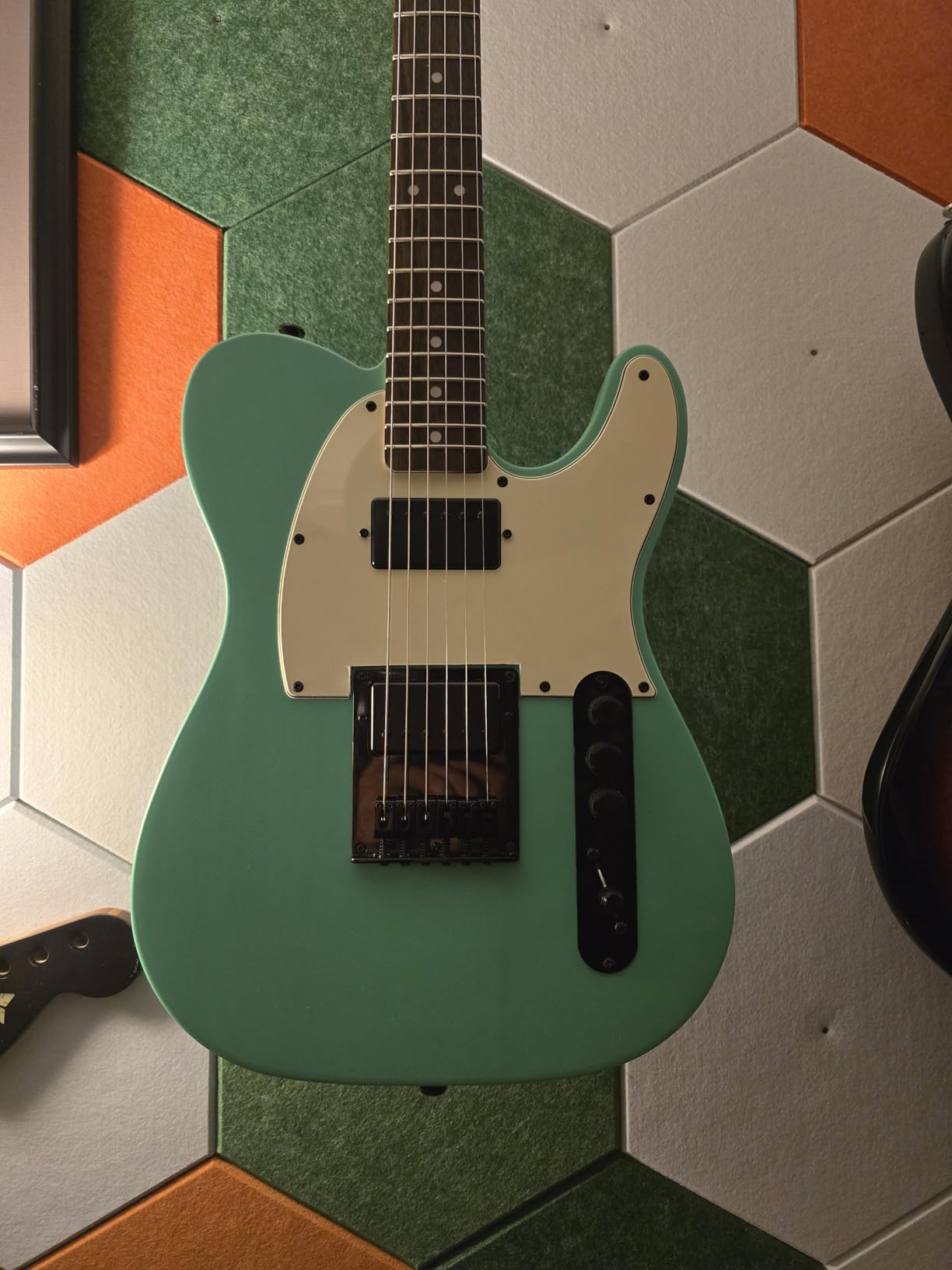
Now, let us be real about what you are getting at this price. The stock pickups are adequate but not exceptional. They deliver the basic Tele twang, but they lack the nuance and dynamic response of the alnico pickups found on more expensive models. The plastic nut is a budget component that may need to be replaced eventually. And the satin urethane finish can feel a little dry when the guitar is brand new.
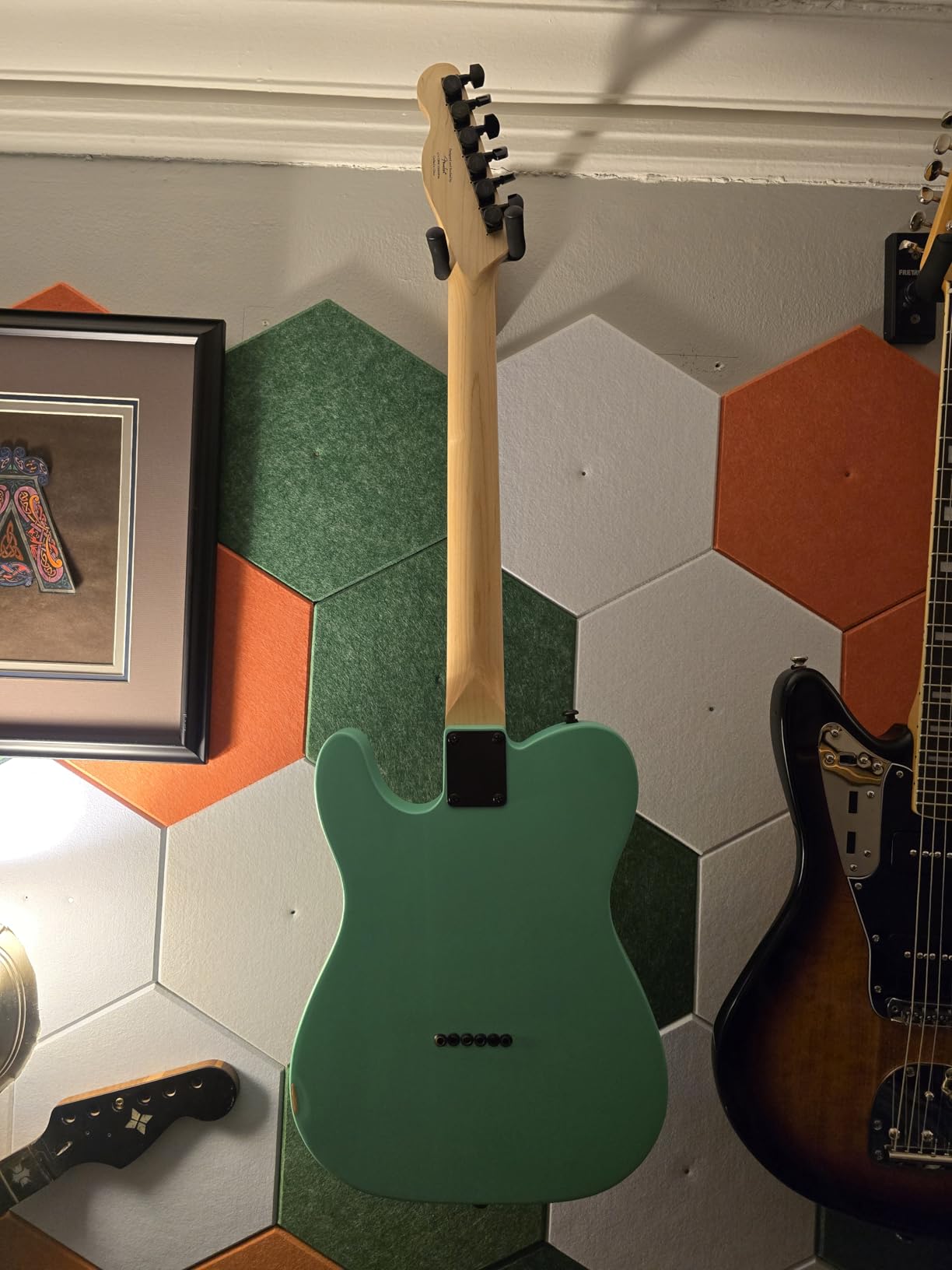
Where the Debut Series truly shines is as a modding platform. The TDPRI forum community consistently recommends Squier guitars as the base for customization projects. Swap the pickups, upgrade the nut, file the fret ends, and you have a guitar that sounds and plays like something three times the price. One experienced forum member described these as “the best $150 blank canvas you can buy.”
For Whom It Is Good
The Debut Series is perfect for absolute beginners who want to try electric guitar without a major financial commitment. It is also ideal for parents buying a first guitar for a child. The included 2-year warranty and free Fender Play lessons add serious value to the package.
Experienced players looking for a modding platform or a beater guitar for camping trips and casual sessions will also appreciate what this model offers. You get a real Fender-designed instrument at a price that leaves plenty of budget for upgrades.
For Whom It Is Not So Good
If you are a gigging musician who needs reliable, professional-grade tone out of the box, this is not your guitar. The stock pickups and hardware will not meet stage or recording standards without modification. Players who hate doing setup work or modifications should look higher up the range.
Anyone who expects premium fit and finish should also pass on this model. The fretwork and nut cutting are inconsistent between units, and you may need to spend additional money on a professional setup to get it playing its best.
2. Squier Affinity Series Telecaster – Best Value
Squier Affinity Series Telecaster Electric Guitar, with 2-Year Warranty, Butterscotch Blonde, Maple Fingerboard
Poplar body
Maple neck
Maple fretboard
S-S pickups
25 inch scale
6-saddle string-through bridge
Pros
- Outstanding build quality for price
- String-through-body bridge for sustain
- Satin slim C neck
- Beautiful Butterscotch Blonde finish
- Belly cut contour
Cons
- 21 frets not 22
- Some sharp fret edges
- Stock pickups decent but many upgrade
- Some QC variability
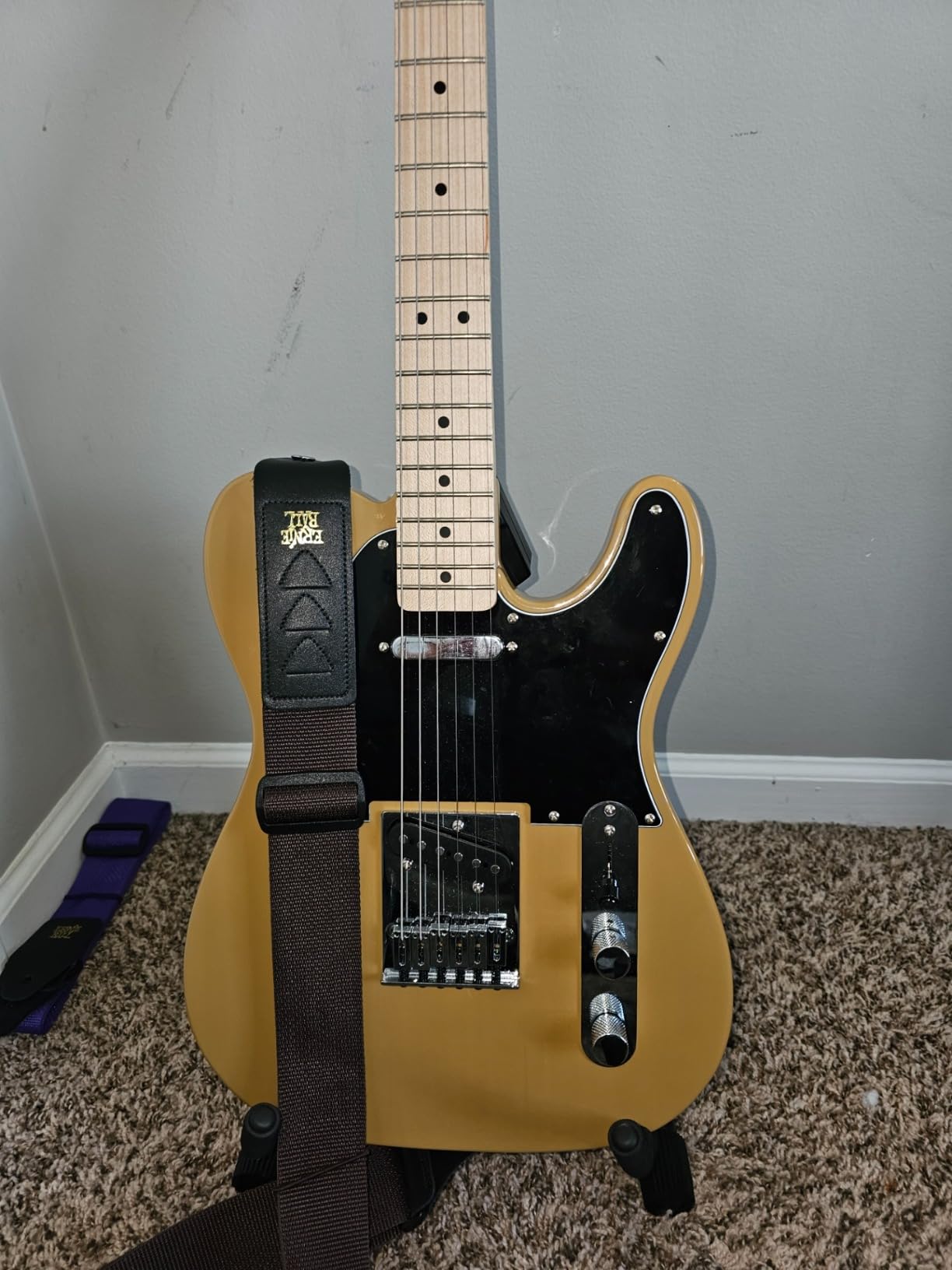
Step up from the Debut Series and you land at the Squier Affinity Telecaster, which is where things get genuinely impressive. The Affinity Series has earned a reputation as the best value Telecaster on the market, and our analysis of 357 customer reviews confirms why. The build quality and fit-to-finish at this price point punches well above its weight class.
The standout feature here is the 6-saddle string-through-body bridge. This design transfers string vibration directly through the body wood, resulting in noticeably better sustain and resonance compared to a top-loading bridge. Each string has its own saddle, which means you can adjust intonation independently for every string. This is a meaningful upgrade over vintage 3-saddle designs that force you to compromise.
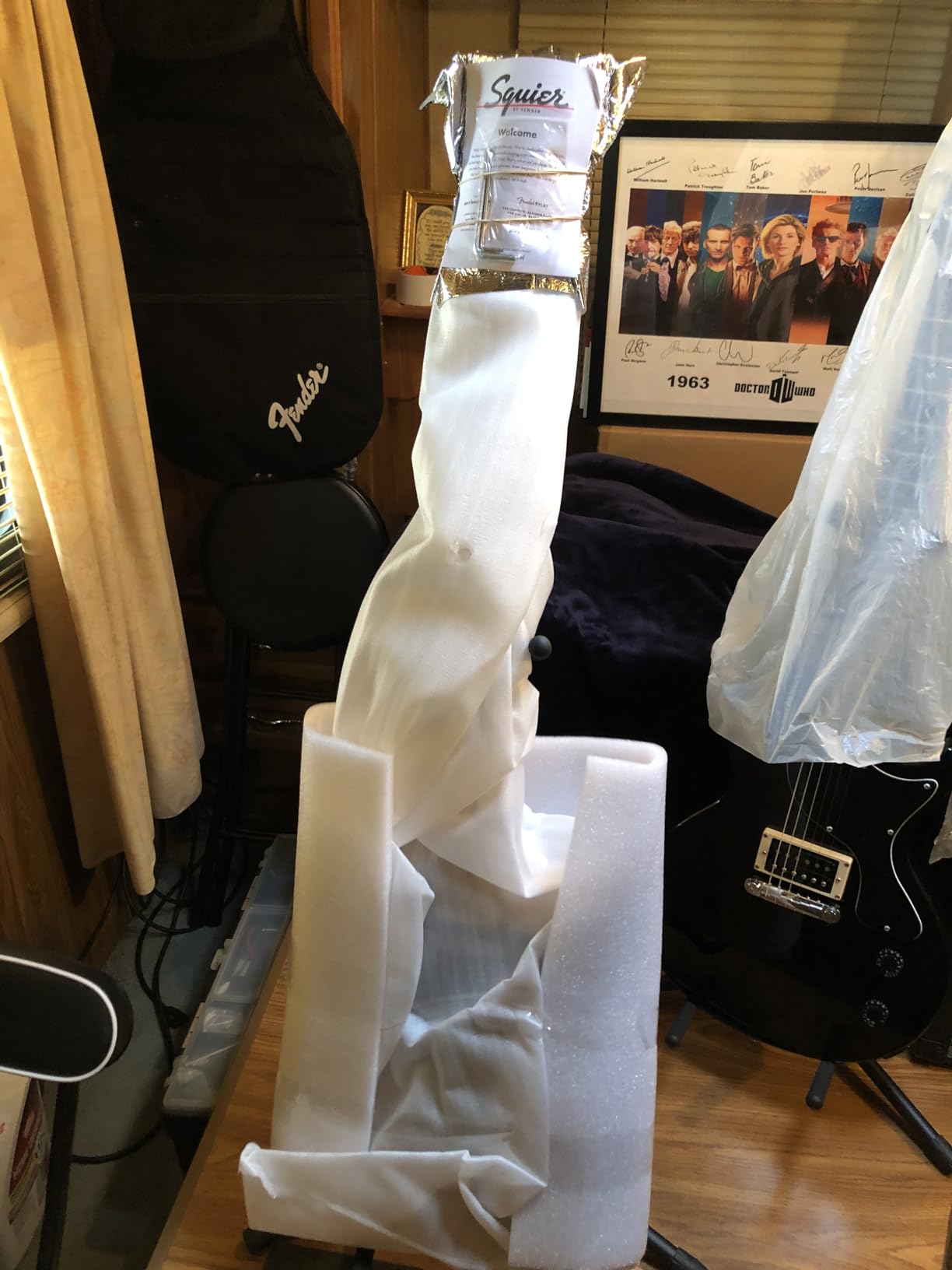
The Butterscotch Blonde finish on the maple fretboard is a classic combination that looks far more expensive than it is. The gloss finish on the body contrasts nicely with the satin-finished slim C-shaped neck, which feels fast and comfortable. The belly cut contour is a thoughtful addition that makes the guitar sit more comfortably against your body during long playing sessions.
The Affinity comes with synthetic bone nut, which is a step up from the plastic nut on the Debut Series. Sealed die-cast tuning machines with split shafts provide reliable tuning stability. Most players report that the guitar arrives well-set-up out of the box, though some units may need minor saddle adjustments. The main complaints center around stock pickups that sound good but leave room for upgrades, and the 21-fret count instead of the 22 found on some competitors.
For Whom It Is Good
The Affinity Telecaster is the sweet spot for beginners who want a quality instrument that will last through their first few years of playing. It is also excellent for intermediate players who want a reliable backup or modding platform. The string-through bridge and 6-saddle design make it a practical choice for players who care about tuning accuracy and sustain.
Anyone drawn to the classic Butterscotch Blonde Tele aesthetic will appreciate how well this model captures that look. The belly cut contour also makes it a comfortable choice for players who find traditional slab Tele bodies uncomfortable.
For Whom It Is Not So Good
Players who need 22 frets for lead work should look elsewhere, as the Affinity only offers 21. If you are particular about pickup quality and want professional-grade single-coil tone without upgrading, you should budget for a pickup swap or consider the Classic Vibe series instead.
Quality control variability means you might get a great one or a slightly rough one. If you cannot inspect the guitar in person before buying, factor in the potential cost of a setup to smooth out any fret or nut issues.
3. Squier Classic Vibe 50s Telecaster – Best Beginner Telecaster
Squier Classic Vibe 50s Telecaster Electric Guitar, Butterscotch Blonde, Maple Fingerboard
Pine body
Maple neck
Maple fretboard
Fender-Designed alnico S-S pickups
Vintage barrel saddles
25.5 inch scale
Bone nut
Pros
- Exceptional value rivals more expensive guitars
- Authentic pine body like 1950s originals
- Alnico pickups deliver classic Tele tone
- Stellar fretwork
- Beautiful Butterscotch Blonde
Cons
- Heavy body
- Thicker neck profile
- Vintage 3-saddle limits intonation precision
- Only 21 frets
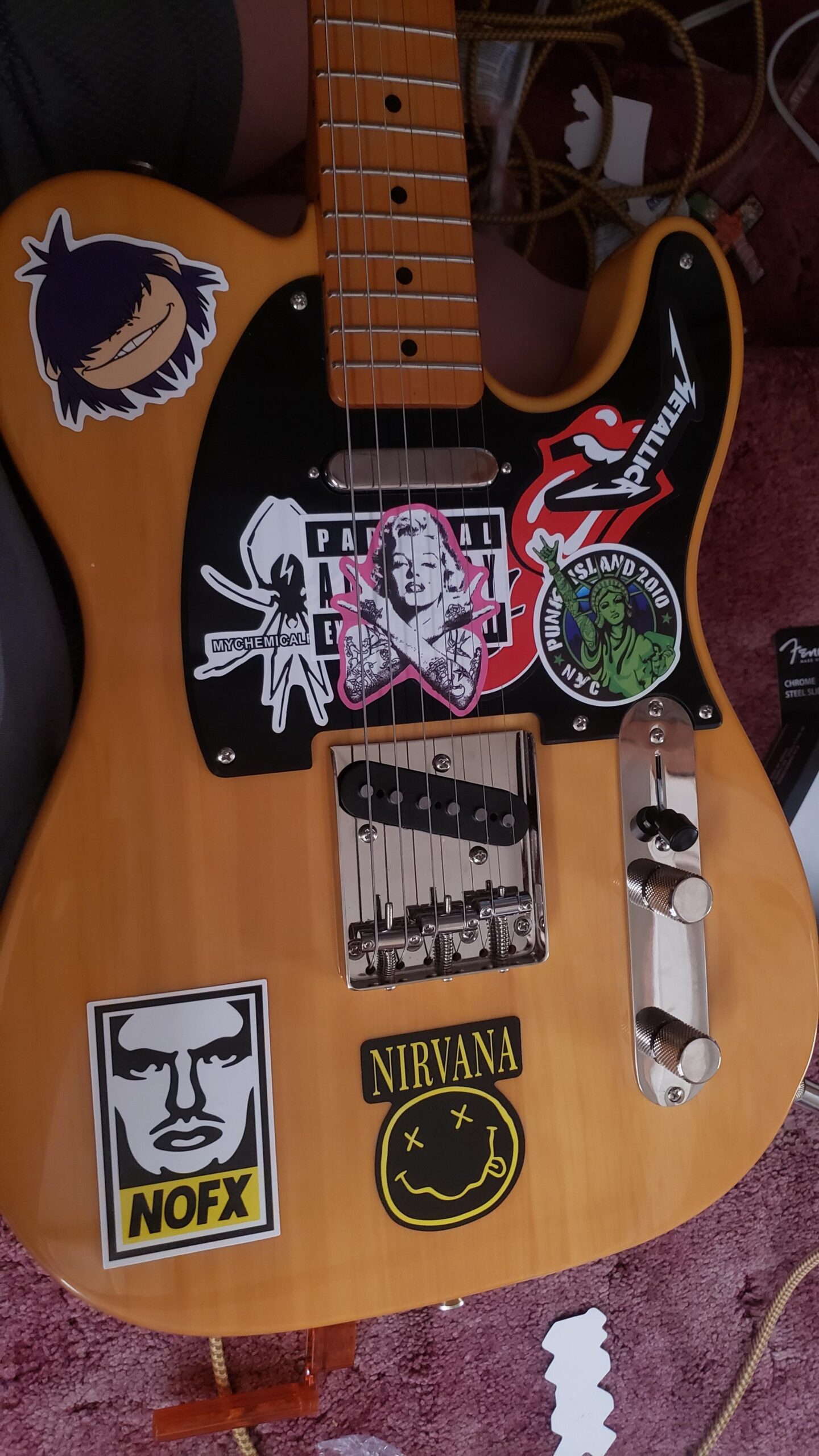
The Squier Classic Vibe 50s Telecaster is where the value proposition gets serious. This model has been praised across forums and review sites as one of the best bang-for-buck guitars available anywhere. Reddit users describe it as a guitar that “massively overdelivers on the classic Tele experience versus the cost.” With 577 customer reviews and a 4.3-star average, the community has spoken clearly.
What sets this model apart is the pine body. The original 1950s Telecasters used pine, and the Classic Vibe recreates that authentic tonal foundation. Pine has a slightly warmer, more resonant character than the poplar found on cheaper Squier models. Combined with the Fender-Designed alnico single-coil pickups, the result is genuine classic Telecaster twang that will make you forget you are playing a sub-$500 guitar.
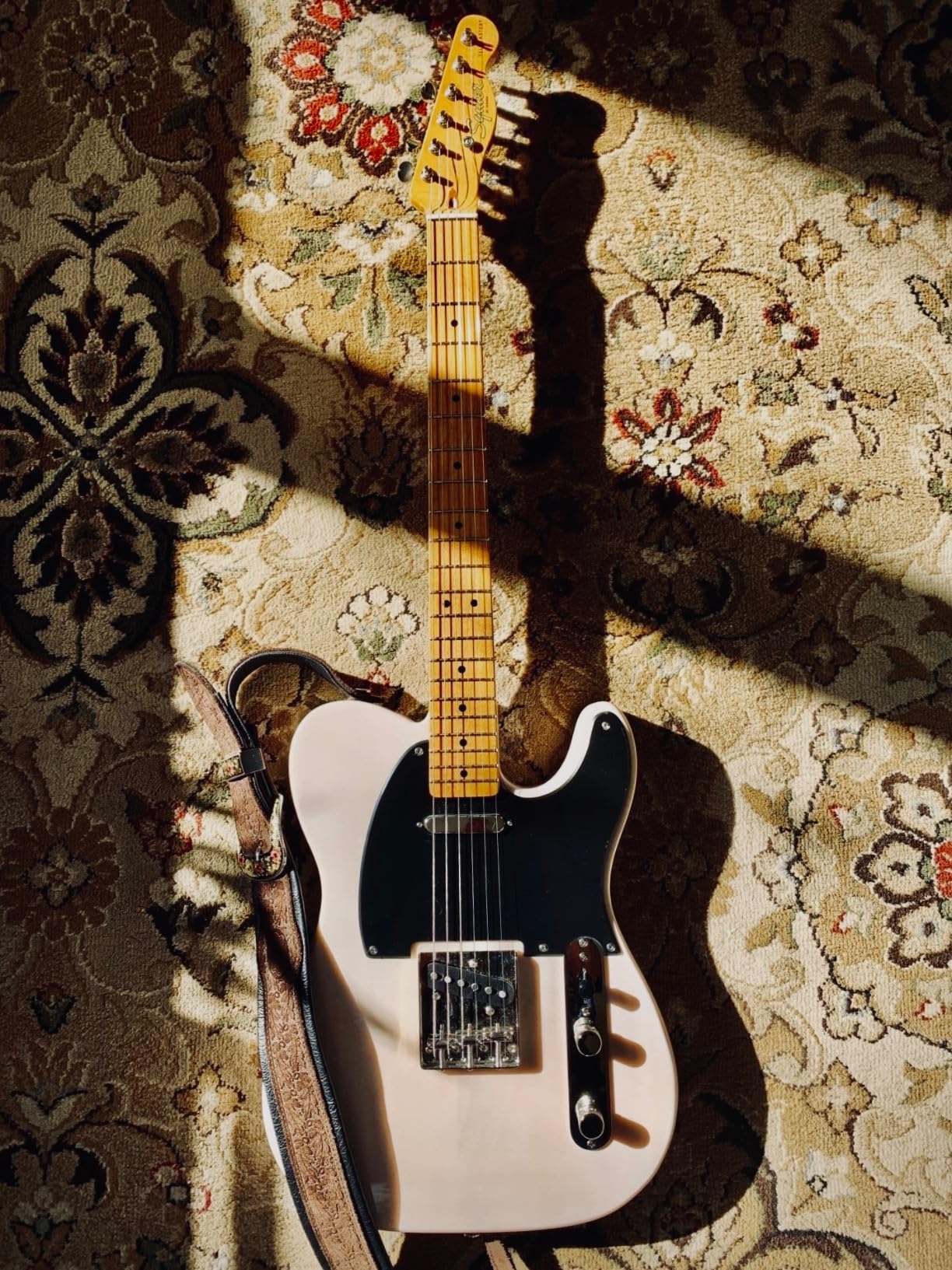
The bone nut is a genuine premium feature that you rarely find at this price point. Bone provides better string-to-nut contact than plastic, resulting in improved sustain and tuning stability. The vintage-style barrel saddles with string-through-body design complete the authentic 1950s spec sheet. Fretwork on the Classic Vibe is consistently praised as stellar, with clean leveling and no sharp ends on most units.
The main trade-offs are weight and neck thickness. The pine body is noticeably heavier than poplar, which some players find fatiguing during long sessions. The neck has a chunkier profile that vintage purists will love but players with small hands might find cumbersome. The 3-saddle bridge, while period-correct, limits individual intonation precision compared to a modern 6-saddle design. Forum users note that you can compensate by using compensated barrel saddles.
For Whom It Is Good
This is the ideal Telecaster for players who want authentic vintage tone and aesthetics without spending over $1,000. The alnico pickups and pine body deliver a sound that is remarkably close to the originals. Beginners who want to start with a quality instrument will appreciate that this guitar can serve them for years without needing upgrades.
Country and blues players in particular will love the classic twang and warmth. The vintage styling makes it a gorgeous guitar to display on a stand, and the 2-year warranty adds peace of mind.
For Whom It Is Not So Good
If you change tunings frequently, the 3-saddle barrel bridge will frustrate your intonation efforts. Players who prefer slim, modern neck profiles should test one in person before committing, as the chunkier vintage feel is not for everyone.
Lighter players or those with back issues should also be cautious about the weight. At approximately 11 pounds, the pine body is heavier than most modern alternatives. If weight is a dealbreaker, the poplar-bodied Affinity or the ash-bodied Player II are better choices.
4. Squier Classic Vibe 70s Deluxe Telecaster – Best Humbucker Tele on a Budget
Fender Squier Classic Vibe 70s Deluxe Telecaster Electric Guitar, Olympic White, Maple Fingerboard
Poplar body
Maple neck
Maple fretboard
Fender-Designed Wide Range humbucker
Hardtail bridge
25.5 inch scale
Pros
- Wide Range humbucker delivers fat powerful tone
- Vintage-tinted gloss neck
- Olympic White finish looks stunning
- Great for rock blues and jazz
- Excellent value vs Fender Deluxe
Cons
- Not Prime eligible
- Nut may need cutting
- Input jack looseness reported
- Only 42 reviews available
The Squier Classic Vibe 70s Deluxe Telecaster is the oddball of this lineup, and that is exactly why it deserves a spot. Instead of the traditional single-coil pickup configuration, this model features a Fender-Designed Wide Range humbucker. This gives it a fatter, more powerful tone that is perfect for rock, blues, and jazz players who find traditional Tele tones too thin.
The Wide Range humbucker is a historically significant pickup design. Originally created by Seth Lover for Fender in the early 1970s, it uses CuNiFe magnet polepieces threaded directly into the pickup bobbins. The Squier version uses a more modern construction, but it captures the essential character: warm, thick, and full-bodied without losing too much clarity. If you want a Tele that can handle higher gain without the 60-cycle hum that plagues single-coils, this is your most affordable option.
The Olympic White finish with vintage-tinted gloss maple neck looks fantastic. The nickel-plated hardware adds to the vintage aesthetic. At approximately 9.1 pounds, the poplar body is reasonably lightweight. The hardtail bridge provides solid tuning stability, though some players have noted minor neck dive when standing.
Quality control is the main concern with this model. With only 42 reviews available, the sample size is small. Reports of input jack looseness and nuts that need cutting suggest some inconsistency. It is also not Prime eligible, which means you cannot rely on Amazon’s easy return process if you get a dud.
For Whom It Is Good
Rock, blues, and jazz players who want humbucker thickness in a Tele-shaped package will find a lot to love here. The Wide Range pickup handles overdrive and distortion far better than single-coils. It is also a smart choice for players who play in bands where they need to cut through a dense mix.
Players who love the 1970s Fender aesthetic will appreciate the vintage styling at a fraction of what an original or American-made version costs.
For Whom It Is Not So Good
If you want the classic Tele twang, this is the wrong guitar. The Wide Range humbucker changes the fundamental character of the instrument. Traditional country players should stick with single-coil models higher on this list.
Players who want reliable quality control and easy returns should also consider alternatives. The low stock, non-Prime status, and limited review data make this a riskier purchase than other models we tested.
5. Fender Standard Series Telecaster – Best Mid-Range Fender
Fender Standard Series Telecaster, Electric Guitar, with 2-Year Warranty, Modern "C" Shaped Neck, Laurel Fingerboard, White Pickguard, 3-Color Sunburst
Poplar body
Maple neck
Laurel fretboard
Fender Standard ceramic S-S pickups
String-through bridge
25.5 inch scale
9.5 inch radius
Pros
- Authentic Fender tone and craftsmanship
- Gorgeous 3-Color Sunburst finish
- Modern C-shaped neck
- Excellent playability
- Versatile clean and distorted tones
Cons
- Higher price point
- Some setup work needed
- Low stock availability
- Only 14 reviews
The Fender Standard Series Telecaster is your first step into genuine Fender-branded territory. While Squier guitars are designed by Fender and manufactured under Fender’s quality control, the Standard Series carries the Fender headstock logo and is built to a higher standard. With a 4.8-star rating from customer reviews, the reception has been near-universally positive.
The poplar body is finished in a stunning 3-Color Sunburst gloss polyurethane that looks professional in any setting. The modern C-shaped maple neck has a satin urethane finish on the back, which feels fast and smooth in the hand. The 9.5-inch radius laurel fingerboard is a comfortable middle ground between the vintage 7.25-inch radius and the modern compound radius designs.
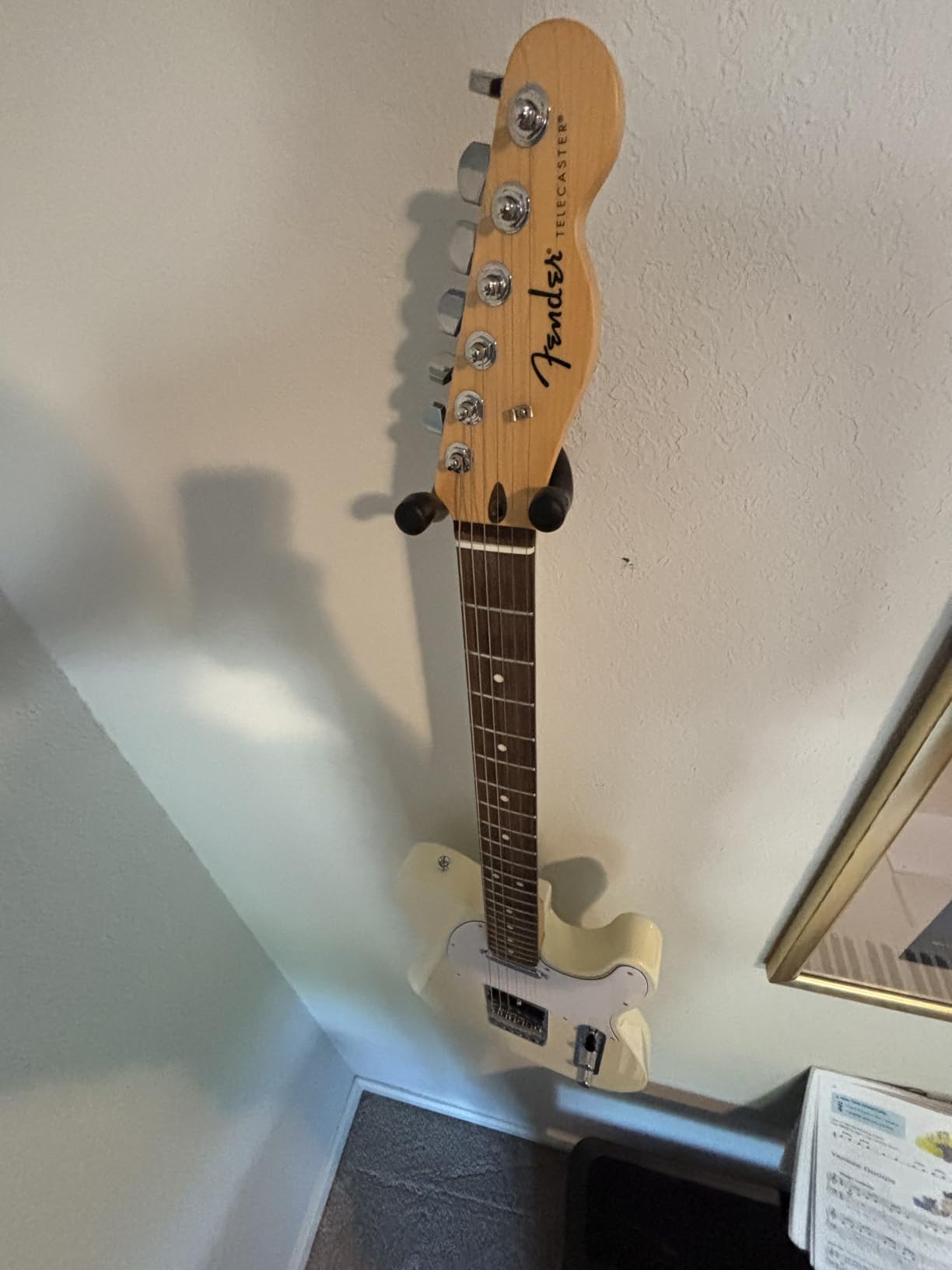
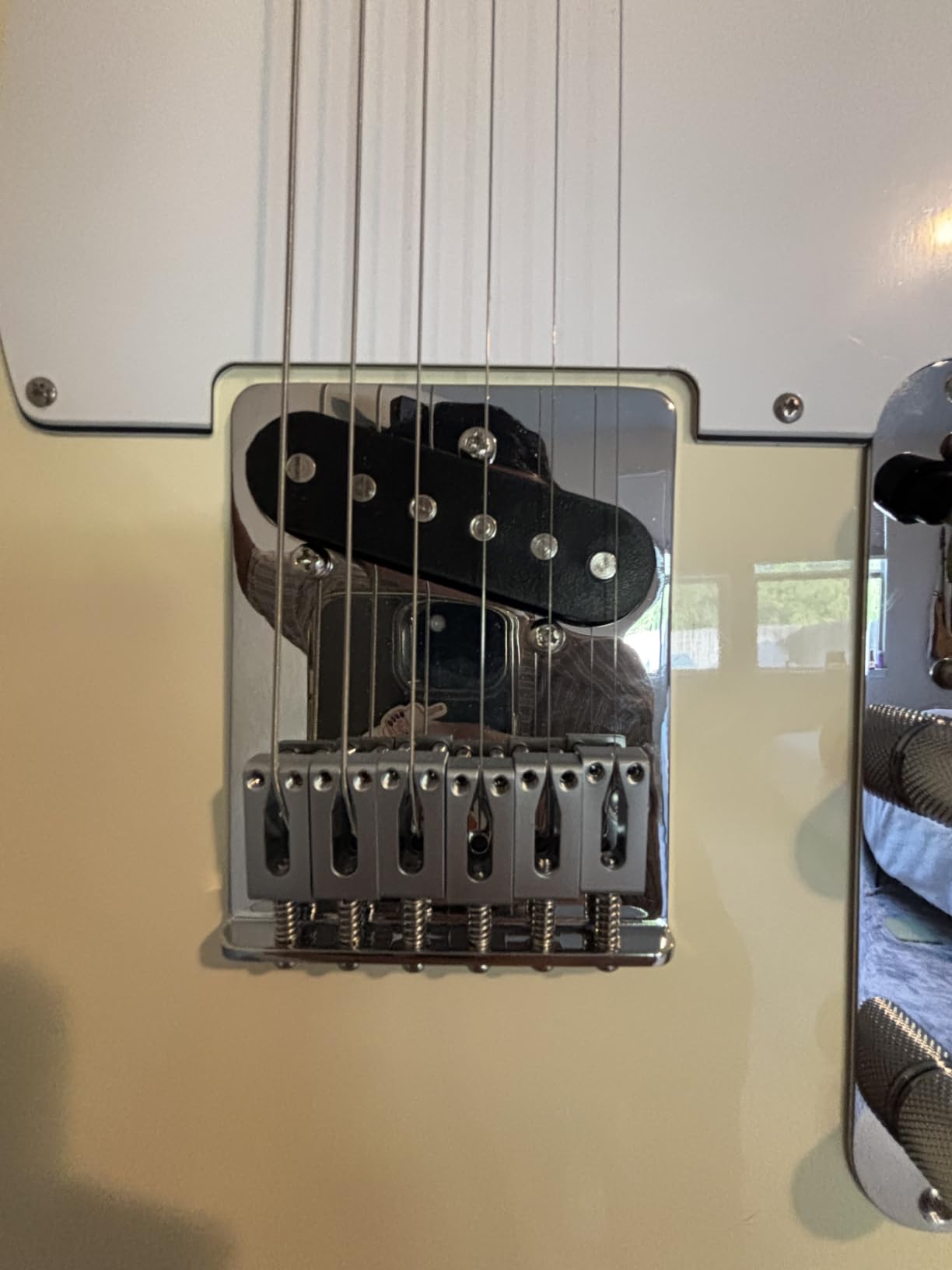
The Fender Standard ceramic single-coil pickups deliver classic bright Telecaster tone with a slightly hotter output than vintage-voiced alnico pickups. This makes the guitar more versatile for modern playing styles that involve moderate amounts of gain. The string-through-body bridge with satin chrome steel block saddles provides excellent sustain and intonation accuracy.
Reviewers consistently describe the craftsmanship as excellent, with one buyer saying it “plays like butter.” The versatility is a strong selling point: this guitar handles sparkling clean tones, crunchy blues, and heavy distortion with equal competence. The 2-year warranty provides additional confidence. The main concerns are the limited stock availability and the fact that some units may still need minor setup work despite the higher price point.
For Whom It Is Good
This is the ideal step-up guitar for players who have outgrown their Squier and want a real Fender on their headstock. The modern C neck and 9.5-inch radius make it comfortable for players transitioning from other guitar brands. Versatile players who cover multiple genres will appreciate the ceramic pickups’ ability to handle both clean and distorted tones.
Gigging musicians who need a reliable workhorse will find the build quality and warranty reassuring. The 3-Color Sunburst finish also makes it a visually stunning stage instrument.
For Whom It Is Not So Good
Players who want vintage-accurate tone should note that ceramic pickups sound different from traditional alnico designs. If you are chasing the exact sound of a 1950s or 1960s Tele, you may prefer the Classic Vibe 50s or the Vintera II Nocaster.
The limited stock means you may need to act quickly or look elsewhere if availability drops. And with only 14 reviews, there is less community consensus compared to more established models on this list.
6. Fender Player II Telecaster – Best Overall Telecaster
Fender Player II Telecaster Electric Guitar - Butterscotch Blonde with Maple Fingerboard
Ash body
Maple neck
Maple fretboard
Alnico V S-S pickups
Rolled neck edges
25.5 inch scale
Telescaster bridge
Pros
- Beautiful Butterscotch Blonde on ash body
- Alnico V bridge pickup sounds amazing
- Rolled neck edges for comfort
- Excellent setup out of the box
- Greater acoustic resonance
Cons
- Neck pickup dark and quiet
- No case or gig bag included
- Some shipping damage reported
- Price has increased
The Fender Player II Telecaster is the model we recommend more than any other. It sits in the sweet spot where quality, tone, and price converge. Reddit’s r/telecaster community has reached near-universal consensus on this guitar as the best all-rounder. Multiple users echo the sentiment: “I absolutely love mine, plays and sounds amazing.” Both Guitar World and Guitar Player named it their best overall pick, and we agree.
The ash body is the foundation of this guitar’s magic. Ash is the wood used on the most desirable vintage Telecasters, and it produces a bright, snappy tone with excellent note definition. The weight-relieved ash body also provides louder acoustic resonance than poplar or alder, which means the guitar sounds lively even when unplugged. The Butterscotch Blonde finish on ash is the most iconic Telecaster visual combination, period.
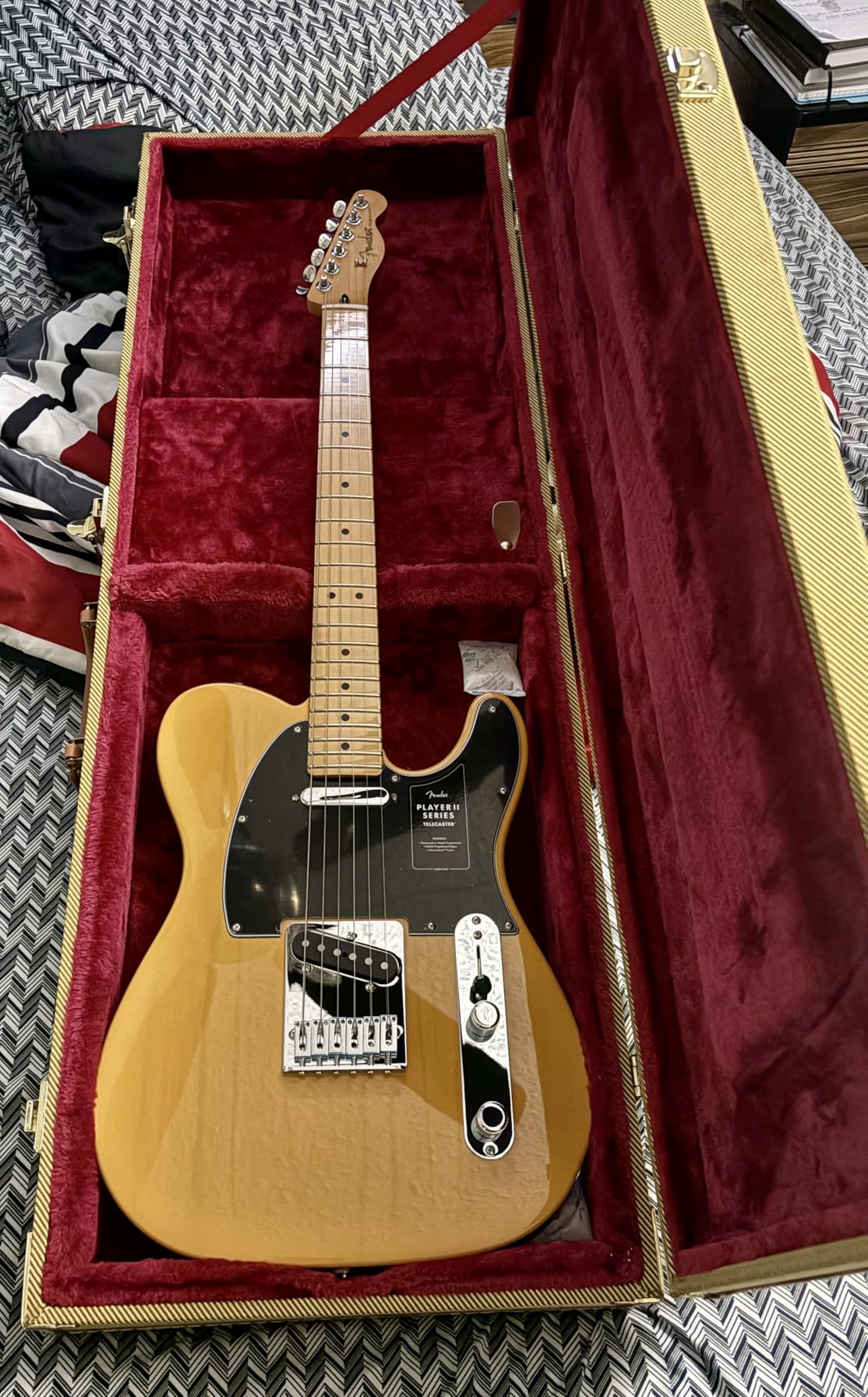
The Alnico V bridge pickup is the star of the show. It delivers that classic Tele twang with enough output to push an amp into natural breakup. For country chicken-picking, blues bending, or rock rhythm work, the bridge position alone is worth the price of admission. The rolled neck edges give the maple neck a played-in feel that usually takes years to develop naturally.
The well-documented weakness is the neck pickup. Many reviewers describe it as dark, quiet, and generally unusable. This is a known issue that the Tele community has discussed extensively. The solution is either to adjust the pickup height, swap it for a better unit, or simply live with the bridge position as your primary voice. Most Tele players spend 90% of their time on the bridge pickup anyway. Other complaints include the lack of a gig bag at this price point and occasional shipping damage, which underscores the importance of buying from a retailer with a good return policy.
For Whom It Is Good
The Player II is the best telecaster guitars pick for most players. If you can only own one Telecaster, this is the one. It covers country, blues, rock, punk, and indie with equal authority. The ash body and Alnico V pickups deliver authentic vintage tone with modern playability.
Players upgrading from a Squier will notice an immediate step up in resonance, tone quality, and overall feel. The rolled neck edges and excellent factory setup mean you can start gigging or recording right away without modifications.
For Whom It Is Not So Good
If the neck pickup matters to you for warm, jazzy lead tones, the Player II’s weak neck pickup will disappoint. Budget for a pickup swap or consider the American Professional II, which has superior V-Mod II pickups in both positions.
Players on a strict budget should also consider whether the price jump from the Standard Series is justified. The ash body and Alnico V pickups are significant upgrades, but the price increase from around $680 to $950 is not trivial. If you are on the fence, the Standard Series remains an excellent alternative.
7. Fender Vintera II 50s Nocaster – Best Vintage Telecaster
Fender Vintera II '50s Nocaster Electric Guitar - Blackguard Blonde
Alder body
Maple neck
Maple fretboard
Vintage-style Nocaster S-S pickups
Telescaster bridge
25.5 inch scale
Pros
- Authentic 1950s Nocaster recreation
- Blackguard Blonde finish stunning
- Excellent build quality
- Deluxe gig bag included
- Perfect 5-star rating
Cons
- Only 2 reviews available
- Higher price point
- Not Prime eligible
- Limited review data
The Fender Vintera II 50s Nocaster is for players who want to channel the spirit of the original 1951 Nocaster. For those unfamiliar with the history, Fender briefly renamed the Broadcaster to the Nocaster in 1951 after Gretsch objected to the Broadcaster trademark. The Nocaster name has since become legendary among Telecaster enthusiasts, representing the purest expression of Leo Fender’s original design.
The Vintera II recreates that experience with period-correct specs. The alder body provides a balanced tonal foundation that sits between the brightness of ash and the warmth of mahogany. The vintage-style Nocaster single-coil pickups are voiced to match the original 1950s tone, which is brighter and more raw than modern Tele pickups. The Blackguard Blonde finish is a faithful recreation of the iconic black-guarded Tele look.
Build quality is exceptional, consistent with Fender’s Mexican-made Vintera II line. The guitar comes with a deluxe gig bag, which is a nice touch at this price point. The Telescaster bridge provides authentic string-through-body resonance. Everything about this instrument is designed to transport you back to the early 1950s Telecaster experience.
The challenge with reviewing this model is the extremely limited data. With only 2 customer reviews on Amazon, we cannot draw firm conclusions about quality control consistency. However, both reviews are 5-star, and the broader guitar community has praised the Vintera II line extensively. The fact that it is not Prime eligible means you should buy from a retailer with a solid return policy.
For Whom It Is Good
This is the Telecaster for players obsessed with vintage accuracy. If you have watched every YouTube video about the original Nocaster and want that experience without spending $2,600 on the American Vintage II, the Vintera II is the next best thing. The alder body and vintage-voiced pickups deliver authentic 1950s tone.
Country and roots-rock players will find the bright, raw Nocaster pickup tone inspiring. The included gig bag also makes it a practical choice for gigging musicians who want vintage vibe with modern reliability.
For Whom It Is Not So Good
If you prefer modern playability features like compound radius fretboards, narrow tall frets, or noiseless pickups, this vintage-spec guitar will feel limiting. The 1950s neck profile and fret specifications are intentionally old-school.
Players who are wary of buying guitars with minimal review data should proceed with caution. While the Vintera II line has a strong reputation, this specific model has very little Amazon review history to draw from. Consider purchasing from a music retailer like Sweetwater where you can get a detailed setup and inspection before shipping.
8. Fender Acoustasonic Player Telecaster – Best Hybrid Guitar
Fender Acoustasonic Player Telecaster Acoustic Electric Guitar, with 2-Year Warranty, Shadow Burst, Rosewood Fingerboard, with Gig Bag
Mahogany body and neck
Rosewood top
Acoustasonic Noiseless plus Fishman transducer
Acoustic Engine with blend knob
SIRS system
25.5 inch scale
Pros
- Acoustic and electric voice versatility
- Integrated forearm and back contour
- Realistic acoustic sounds
- Electric Tele feel preserved
- Includes gig bag
Cons
- Some QC issues reported
- Bridge lift after about 1 year
- Not a replacement for dedicated acoustic or electric
- Pickup switch less intuitive
The Fender Acoustasonic Player Telecaster is the most unconventional guitar on this list. It is not a traditional Telecaster by any stretch. Instead, it is a hybrid instrument that combines acoustic and electric voices in a single body. If you have ever wished you could switch between an acoustic guitar and an electric Telecaster mid-song without changing instruments, this is the guitar Fender built for you.
The Acoustasonic achieves its magic through a dual pickup system. The Fender Acoustasonic Noiseless pickup handles electric Tele tones, while the Fishman Under-Saddle Transducer captures acoustic resonance. The Acoustic Engine, powered by Fender and Fishman technologies, blends these signals and offers multiple preset voices. A blend knob lets you move seamlessly between acoustic and electric sounds, and the patented Stringed Instrument Resonance System (SIRS) gives the hollow-chambered mahogany body authentic acoustic projection.
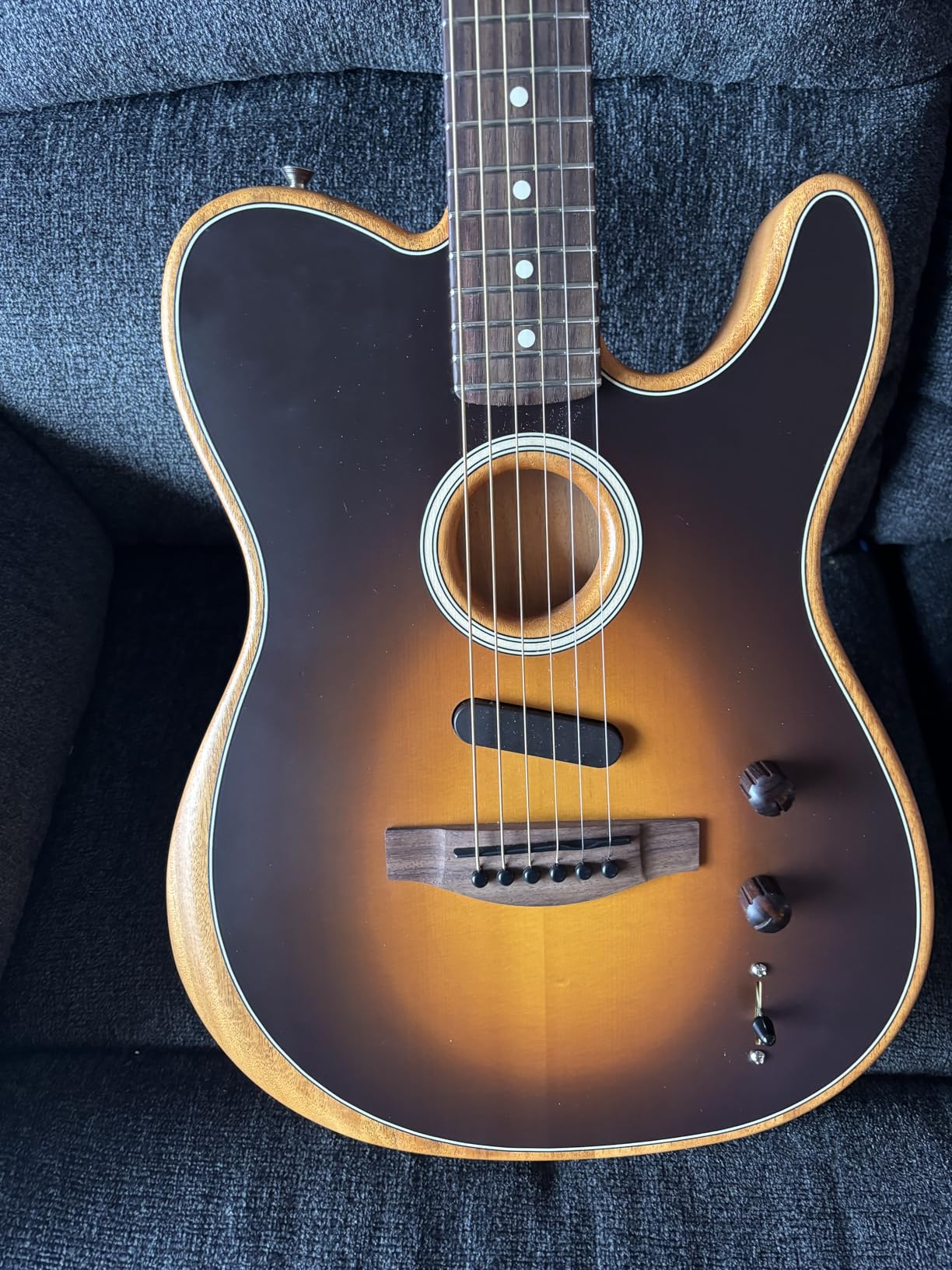
The mahogany body with rosewood top looks stunning, especially in the Shadow Burst finish. The integrated forearm and back contour make it extremely comfortable to play, even for extended periods. The electric Tele feel is preserved through the familiar 25.5-inch scale length and Telecaster neck profile. It comes with a gig bag, which is appropriate for a gigging musician’s tool.
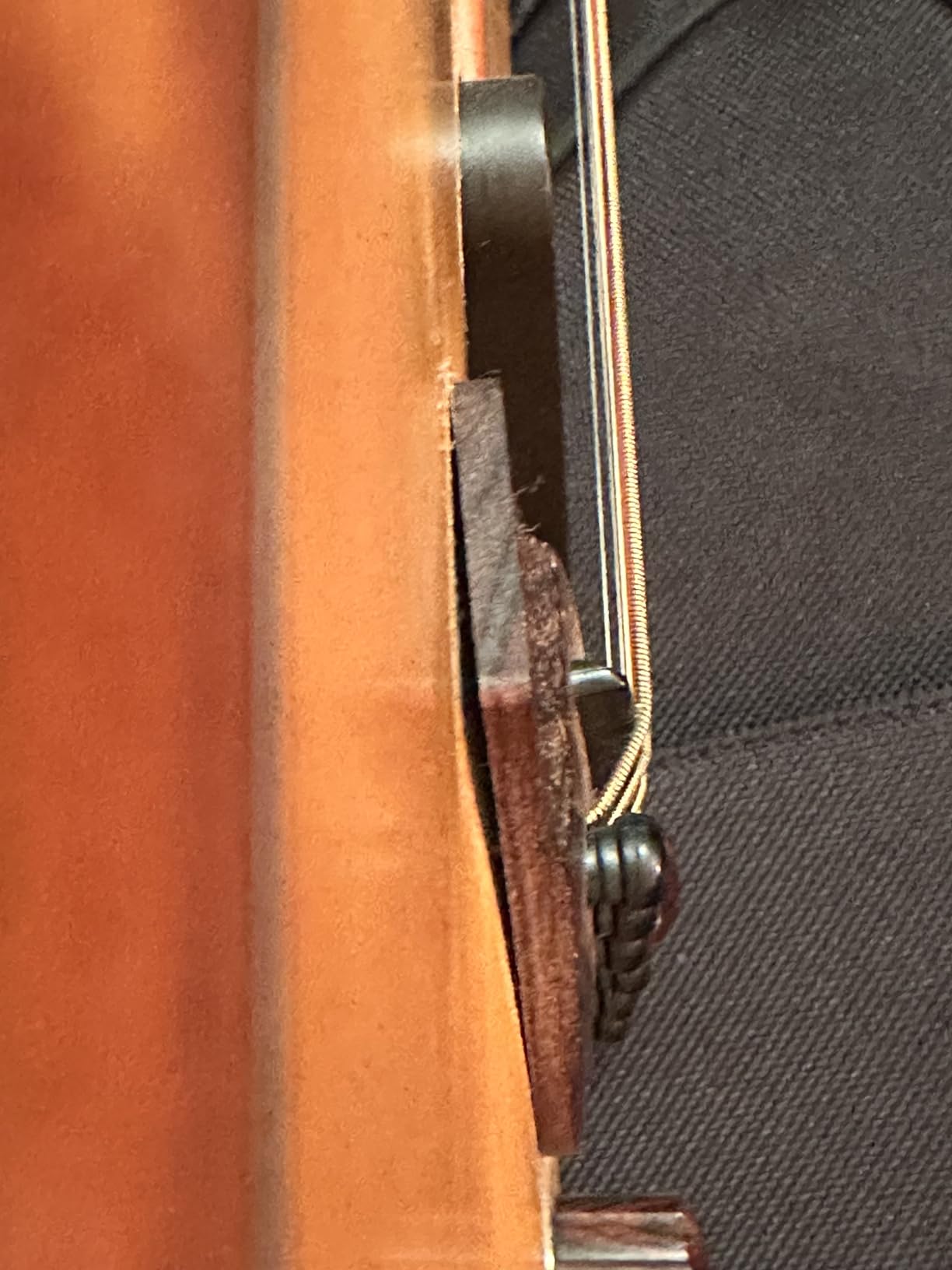
The Acoustasonic is not without its issues, however. The review distribution is polarizing: 61% of reviewers give it 5 stars, but 22% give it 1 or 2 stars. Reports of quality control problems include neck finish issues and, more seriously, bridge lift after approximately one year of use. The pickup switching system is less intuitive than a standard Tele’s 3-way toggle. And critically, this guitar is not a replacement for a dedicated acoustic or a dedicated electric. It is a compromise instrument that does both adequately but neither perfectly. Forum users also note that the bridge pickup can sound shrill, recommending you roll off the tone knob to tame the harshness.
For Whom It Is Good
Gigging musicians who play sets requiring both acoustic and electric tones will love this guitar. It eliminates the need to switch instruments between songs. Singer-songwriters who play coffeehouse gigs or small venues will find it particularly useful for creating dynamic setlists.
Home recording enthusiasts who want both acoustic and electric sounds from a single instrument will also benefit. The Acoustic Engine’s multiple voices give you tonal variety without needing a room full of guitars.
For Whom It Is Not So Good
If you want a pure, classic Telecaster experience, the Acoustasonic will frustrate you. It sounds different, feels different, and plays differently than a traditional solid-body Tele. Purists should look at the Player II or American Professional II instead.
Players who already own quality acoustic and electric guitars may find the Acoustasonic redundant. It is a jack of all trades that does not fully replace either instrument type. The reported bridge lift issues are also concerning for long-term durability, so factor in the cost of potential repairs.
9. Custom Telecaster FMT HH – Best Humbucker and Metal Tele
Fender Custom Telecaster FMT HH Electric Guitar, Features Seymour Duncan '59/Pearly Gates Humbuckers with Coil Tap, with 2-Year Warranty, Black Cherry Burst
Basswood body with Flame Maple top
Nato Mahogany set neck
Seymour Duncan 59 and Pearly Gates humbuckers
Coil tap
Hardtail bridge
25.5 inch scale
Pros
- Seymour Duncan pickups deliver Les Paul-like warmth
- Coil tap for tonal versatility
- Carved Flame Maple top stunning
- Set neck for upper-fret access
- Lightweight and comfortable
Cons
- Saddle screws stick up
- Coil tap difficult during live performance
- Does not sound like classic Tele
- Some fret and finish issues
The Custom Telecaster FMT HH is the rebel of this lineup. It takes the Telecaster body shape and fills it with hardware that would feel more at home on a Gibson Les Paul. With 251 customer reviews and a 4.5-star average, it is also the most-reviewed model in our premium tier, which speaks to its popularity among players who want something different.
The defining feature is the Seymour Duncan pickup pairing. The ’59 model in the neck position delivers warm, smooth jazz and blues tones with rich harmonic content. The Pearly Gates in the bridge position provides a fat, punchy tone with a slightly scooped midrange that is perfect for classic rock and blues-rock. Together, these humbuckers produce a thick, saturated tone that shares more DNA with a Les Paul than a traditional Telecaster.
The push/pull coil tap on the tone knob splits the humbuckers to single-coil mode, giving you access to thinner, brighter tones. This effectively gives you four distinct sounds from two pickups. The basswood body with carved Flame Maple top looks spectacular, especially in the Black Cherry Burst finish. The set neck construction (rather than bolt-on) improves sustain and provides smoother access to the upper frets.
The trade-offs are real, though. The saddle adjustment screws on the hardtail bridge stick up above the bridge plate, which can be uncomfortable when palm-muting. The coil tap is on the tone knob, which makes it difficult to activate mid-performance without disrupting your tone setting. And make no mistake, this guitar does not sound like a classic Telecaster. If you want twang, buy a Player II. But if you want a versatile rock machine in a familiar body shape, the FMT HH delivers in spades.
For Whom It Is Good
Rock, blues, and jazz players who want humbucker warmth and sustain in a Tele-shaped body will love this guitar. The Seymour Duncan pickups are professional-grade, and the coil tap adds genuine versatility. Players who play both rhythm and lead will appreciate the tonal range from warm neck tones to cutting bridge sounds.
Players who find traditional single-coil Teles too thin for heavier genres should seriously consider this model. It handles overdrive and distortion with authority, making it suitable for hard rock and even metal-adjacent styles.
For Whom It Is Not So Good
Country players and Tele purists should look elsewhere. This guitar does not deliver the classic twang that defines the Telecaster sound. The humbuckers and set neck construction fundamentally change the instrument’s character.
Players who frequently use palm-muting technique may find the protruding saddle screws uncomfortable. And if you need to switch between coil-tapped and full humbucker modes during live performance, the push/pull tone knob placement is less convenient than a dedicated toggle switch.
10. Fender American Professional II Telecaster – Best Pro-Level Telecaster
Fender American Professional II Telecaster - Butterscotch Blonde with Maple Fingerboard
Roasted Pine body
Maple neck
Maple fretboard
V-Mod II S-S pickups
Deep C neck profile
Narrow tall frets
25.5 inch scale
US-made
Pros
- Top-tier US-made craftsmanship
- Roasted Pine body for resonance
- V-Mod II pickups with modern clarity
- Deep C neck profile comfortable
- Narrow tall frets for bending
- 84 percent 5-star reviews
Cons
- Premium price point
- Very limited review data
- Not Prime eligible
- Limited availability
The Fender American Professional II Telecaster represents the pinnacle of Fender’s production-line Telecaster craftsmanship. Built in the United States to exacting standards, this is the guitar that working professionals reach for when they need a reliable, tone-rich instrument for the studio or the stage. One TDPRI forum member summarized it perfectly: “The Pro II is the best Fender in a long time” for comfort, sonic range, and playability.
The roasted pine body is a standout feature. Roasting (also called thermal treatment) removes moisture and stabilizes the wood, resulting in a lighter, more resonant body with enhanced tonal clarity. The Butterscotch Blonde finish on roasted pine is visually stunning and tonally significant. Pine was the original body wood for 1950s Telecasters, and roasting it gives you vintage character with modern stability.
The V-Mod II single-coil pickups are a significant upgrade over the Player II’s Alnico V set. Designed by Fender’s pickup guru Tim Shaw, the V-Mod II pickups use a blend of different magnet types within each pickup to balance the output across the frequency spectrum. The result is a bridge pickup that twangs without being shrill, and a neck pickup that is warm and usable, unlike the Player II’s widely criticized neck pickup.
The Deep C neck profile is thicker and more substantial than the Player II’s modern C. Combined with narrow tall frets, this gives you a playing experience that bends, vibrato, and lead work feel effortless on. The roasted pine body is lightweight at approximately 4.5 kilograms (under 10 pounds), which means you can gig for hours without shoulder fatigue. The 2-year warranty provides additional confidence in the build quality.
For Whom It Is Good
Professional gigging musicians and serious recording artists will find this guitar meets their highest standards. The V-Mod II pickups solve the neck pickup problem that plagues the Player II, giving you genuinely useful tones in both positions. The Deep C neck and narrow tall frets are ideal for lead players who do extensive bending and vibrato.
Players who value lightweight instruments will appreciate the roasted pine body. At under 10 pounds, it is one of the lighter Telecasters available while still delivering full-bodied resonance.
For Whom It Is Not So Good
At nearly $1,940, this guitar represents a significant financial investment. Beginners and casual players do not need this level of instrument. If you are just starting out, the Squier Classic Vibe or Player II will serve you just as well for a fraction of the cost.
The limited availability and non-Prime status mean you may need to wait or shop around. With only 18 Amazon reviews, there is also less community feedback compared to the Player II, though the 84% 5-star rate among those reviews is impressive.
11. Fender American Vintage II 1951 Telecaster – Best Vintage Reissue

Fender American Vintage II 1951 Telecaster Electric Guitar - Butterscotch Blonde
Ash body
1-piece Maple neck
Maple fretboard
Pure Vintage 3-saddle bridge
Brass barrel saddles
Stainless steel frets
25.5 inch scale
Pros
- Authentic 1951 specifications
- Ash body resonance
- Brass barrel saddles for vintage tone
- Stainless steel frets for lifetime play
- 1-piece maple neck construction
- 2-year warranty
Cons
- Only 2 reviews available
- High price point
- Not Prime eligible
- Limited availability
The Fender American Vintage II 1951 Telecaster is the crown jewel of this lineup. It is a meticulous recreation of the original 1951 Telecaster, built in the United States to period-correct specifications. For collectors, vintage enthusiasts, and players who want the most authentic 1950s Tele experience available from a production instrument, this is the pinnacle.
The ash body is true to the original 1951 specification. Ash produces a bright, snappy tone with excellent treble response and note articulation. The Butterscotch Blonde finish over ash is the look that defined the early Telecaster and remains the most iconic Tele visual to this day. The 1-piece maple neck is another period-correct detail, featuring a single continuous piece of maple rather than a separate fretboard glued to the neck.
The Pure Vintage 3-saddle Tele bridge with brass barrel is the defining hardware feature. Brass barrel saddles produce a slightly warmer, more complex tone than modern steel block saddles. They are the saddles that were on the very first Telecasters, and they contribute significantly to the authentic vintage voice. The trade-off is that the 3-saddle design makes precise individual intonation more difficult, which is a well-known pain point discussed extensively on the TDPRI forum.
The stainless steel frets are a modern addition that the original 1951 guitars did not have. Stainless frets last virtually forever, resisting the wear that nickel-silver frets develop over years of playing. This means the guitar will maintain its playability for decades without needing a refret. The lone Amazon reviewer called it “Perfection!” and noted it arrived in flawless condition.
For Whom It Is Good
Collectors and vintage enthusiasts who want the most authentic 1951 Telecaster experience available without spending five figures on an original will find this guitar deeply satisfying. The period-correct specs deliver the true 1950s Tele sound and feel.
Professional players who want a lifetime instrument will appreciate the stainless steel frets and impeccable American craftsmanship. The ash body and brass barrel saddles produce a tone that modern Teles simply cannot replicate.
For Whom It Is Not So Good
At $2,649.99, this is a major investment that most players do not need to make. If you are a working musician rather than a collector, the American Professional II or Player II will serve you just as well for significantly less money.
The 3-saddle bridge and vintage specs are not for everyone. Players who prefer modern intonation precision, compound radius fretboards, or contemporary neck profiles will find this guitar frustratingly old-school. With only 2 reviews available, there is also minimal community data to validate the long-term ownership experience.
How to Choose the Best Telecaster Guitar
Choosing from the best telecaster guitars means understanding what specifications actually affect your playing experience. The Telecaster is a simple design, but the details matter enormously. Here is what you need to know about the key factors that separate a guitar you will love from one you will resell within a year.
Setting Your Budget
Telecaster prices span an enormous range, from under $150 to over $2,600. Here is how the tiers break down and what you can expect at each level.
The under-$350 tier includes the Squier Debut Series and Affinity Series. These are genuine Fender-designed instruments that deliver the core Telecaster experience. They are ideal for beginners, casual players, and modding enthusiasts. Expect to spend an additional $50 to $80 on a professional setup.
The $350 to $1,000 tier is where the value sweet spot lives. The Squier Classic Vibe series, Fender Standard Series, and Player II Telecaster all fall here. These guitars offer significant quality improvements in pickups, body woods, and fretwork. Most players will be completely satisfied staying in this range.
The $1,000 to $2,000 tier includes premium models like the Vintera II Nocaster, Acoustasonic, Custom FMT HH, and American Professional II. These are serious instruments for dedicated players. You are paying for superior materials, better pickups, and in the case of the American Pro II, US-made craftsmanship.
The $2,000-plus tier is collector territory. The American Vintage II 1951 Telecaster is a precision reissue for enthusiasts who want the most authentic vintage experience available from a production instrument.
Body Tonewoods: Alder, Ash, Mahogany, and Pine
The wood used for the body affects the guitar’s resonance, weight, and tonal character. Telecasters have been made from several different woods over the decades, and each has its own personality.
Alder is the most common Telecaster body wood. It provides a balanced tone with strong midrange presence and moderate sustain. If you want a versatile Tele that sounds good across all genres, alder is a safe choice. The Vintera II Nocaster uses alder.
Ash body Telecasters are prized for their bright, snappy tone with excellent treble response. Ash is the wood used on the most desirable vintage Teles, and it is what gives the Player II its signature character. The American Vintage II 1951 also uses ash. Swamp ash, a specific type of ash from the southern United States, is particularly valued for its lightweight and resonant properties.
Pine bodies connect directly to the original 1950s Telecaster specification. The Squier Classic Vibe 50s and the American Professional II both use pine. Pine produces a warm, resonant tone with a slightly softer attack than ash. Roasted pine, as used on the American Pro II, undergoes thermal treatment that stabilizes the wood and enhances its tonal properties.
Poplar and basswood are budget-friendly alternatives used on Squier and entry-level Fender models. Poplar has a neutral, slightly compressed tone. Basswood, as used on the Custom Telecaster FMT HH, is lightweight with a smooth midrange that pairs well with humbucker pickups.
Mahogany, found on the Acoustasonic Player Telecaster, provides warmth and low-end fullness. It is less common in solid-body Teles but contributes to the Acoustasonic’s unique acoustic-electric voice.
Pickup Configurations: Single-Coil vs Humbucker vs Noiseless
Pickups are the single biggest factor in how a Telecaster sounds. The traditional Tele configuration uses two single-coil pickups: a bright, twangy bridge pickup and a warmer, darker neck pickup. This S-S configuration defines the classic Telecaster voice.
Single-coil pickups produce the iconic Tele twang but also introduce 60-cycle hum, especially under high-gain settings. This is a well-documented pain point on forums. Players who use heavy distortion often switch to humbuckers or noiseless single-coils to eliminate the hum.
Alnico pickups (using aluminum, nickel, and cobalt magnets) are the vintage standard. Alnico V, as used on the Player II, provides a bright, dynamic tone with strong output. The Fender-Designed alnico pickups on the Classic Vibe 50s deliver authentic vintage character at a budget price.
Ceramic pickups, as found on the Fender Standard Series and Squier Debut, use ceramic magnets. They tend to have a slightly hotter, more modern output with less dynamic range than alnico. Some players prefer them for higher-gain styles.
Humbucker Telecasters replace one or both single-coils with humbuckers. The Squier Classic Vibe 70s Deluxe uses a Wide Range humbucker, while the Custom Telecaster FMT HH uses Seymour Duncan ’59 and Pearly Gates humbuckers. These guitars are better suited for rock, blues, and metal than traditional country.
Coil tap functionality, as on the Custom FMT HH, lets you split humbuckers to single-coil mode. This gives you tonal flexibility but does not perfectly replicate a true single-coil sound.
Noiseless pickups, which use stacked coil designs to eliminate hum while preserving single-coil character, are found on premium models like the Acoustasonic. The V-Mod II pickups on the American Professional II are not technically noiseless but are engineered for clarity and reduced microphonics.
Neck Profiles and Fretboard Materials
The neck is where your hand lives, so it needs to feel right. Telecasters have shipped with several neck profiles over the decades.
The modern C profile is the most common contemporary shape. It is comfortable for most hand sizes and works well for various playing styles. The Fender Standard Series and Player II both use modern C-shaped necks.
The slim C profile on the Squier Debut and Affinity is slightly thinner, making it ideal for beginners and players with smaller hands. The satin finish on these necks allows your hand to move freely.
The Deep C profile on the American Professional II is thicker and more substantial. It fills the hand more completely, which many lead players prefer for bending and vibrato work.
Vintage U-shaped profiles are chunkier and thicker still. The Classic Vibe 50s has a neck that leans toward this vintage feel, which some players love and others find cumbersome.
For fretboard materials, maple and rosewood are the two classic choices. Maple fingerboards (as on the Player II, Classic Vibe, and American Pro II) provide a brighter, snappier tone with a smooth, glossy playing surface. Laurel wood, used on the Squier Debut and Fender Standard Series, is a budget-friendly alternative that approximates rosewood’s warmer character.
Rosewood fretboards, as on the Acoustasonic, deliver a warmer, mellower tone with a slightly darker appearance. The choice between maple and rosewood is largely personal preference, though maple tends to complement the bright Tele bridge pickup nicely.
Rolled fingerboard edges are a premium feature that gives the neck a played-in, broken-in feel. The Player II and American Professional II both have rolled edges. This small detail makes a noticeable difference in playing comfort.
Bridge Types: 3-Saddle vs 6-Saddle
The Telecaster bridge is a defining design element that affects both tone and playability. There are two main configurations.
The vintage 3-saddle bridge uses three barrel-shaped saddles, with each saddle serving two strings. This is the original 1950s design, found on the Classic Vibe 50s and the American Vintage II 1951. Brass barrel saddles, as on the American Vintage II, produce a warm, complex tone. The 3-saddle design provides excellent string-through-body resonance but makes individual intonation difficult because adjusting one saddle affects two strings.
The modern 6-saddle bridge gives each string its own saddle. This allows precise intonation adjustment for every string, which is critical for players who use altered tunings. The Squier Affinity, Fender Standard Series, and Player II all use 6-saddle designs. Most modern players prefer this configuration for its practical advantages.
If you love the vintage look but want better intonation, compensated barrel saddles are a popular modification. These are angled barrel saddles that allow more precise intonation while maintaining the 3-saddle vintage aesthetic.
Fender vs Squier: What Is the Difference?
This is one of the most frequently asked questions in the guitar community. Squier is Fender’s budget brand, manufactured primarily in Indonesia and China. Fender-branded guitars are made in Mexico (Player II, Vintera II, Standard Series) and the United States (American Professional II, American Vintage II).
The differences come down to materials, pickups, and quality control. Squier guitars use less expensive body woods (poplar instead of ash or alder), ceramic or budget alnico pickups instead of premium Fender-designed pickups, and more affordable hardware. Quality control is generally less consistent on Squier models.
However, the gap has narrowed significantly in recent years. The Squier Classic Vibe series, in particular, has earned praise for delivering tone and playability that rivals Mexican-made Fenders. Many experienced players own both Squier and Fender guitars and find that a well-set-up Squier can hold its own against a Fender costing twice as much.
The TDPRI community has even noted that some Made in Japan (MIJ) Telecasters rival or exceed American-made models in build quality. If you have the opportunity to try a MIJ Tele, it is worth considering.
Our recommendation: if budget allows, the Fender Player II is the best entry point into genuine Fender quality. If you are strictly budget-constrained, the Squier Affinity or Classic Vibe will not disappoint.
FAQs
What is the best Telecaster for the money?
The Fender Player II Telecaster is widely considered the best Telecaster for the money. At around $950, it features an ash body, Alnico V single-coil pickups, rolled neck edges, and excellent factory setup. It delivers the iconic Tele twang while handling modern gain styles, making it the most versatile and best-value option for most players.
Are Telecasters good for beginners?
Yes, Telecasters are excellent for beginners. Their simple two-pickup, three-way switching design is easy to understand. The bolt-on neck and flat fretboard radius provide comfortable playability. The Squier Debut Series at under $150 and Squier Affinity Series at around $330 are specifically designed as beginner-friendly entry points with comfortable slim C neck profiles.
What makes a Telecaster sound like a Telecaster?
The Telecaster sound comes from three key elements: the bridge single-coil pickup with its metal base plate that adds brightness and twang, the solid-body construction for sustain and clarity, and the string-through-body bridge design that transfers vibration directly into the body wood. The combination produces the bright, snappy tone with excellent note definition that defines the classic Tele voice.
Are Telecasters good for metal?
Traditional single-coil Telecasters are not ideal for metal due to 60-cycle hum at high gain. However, humbucker-equipped models like the Custom Telecaster FMT HH with Seymour Duncan pickups handle distortion well. Players also use the Fender Jim Root Telecaster with active EMG pickups specifically designed for heavy metal tones, though it is far from a traditional Tele sound.
What is the difference between Fender and Squier Telecasters?
Squier is Fender’s budget brand, manufactured in Indonesia and China with less expensive woods, pickups, and hardware. Fender-branded guitars are made in Mexico and the United States with premium materials and tighter quality control. However, the Squier Classic Vibe series has narrowed the gap significantly, with many players finding that a well-set-up Squier rivals a Mexican-made Fender in tone and playability.
How much does a good Telecaster cost?
A good Telecaster costs between $330 and $950 for most players. The Squier Affinity Series at $330 offers outstanding value for beginners. The Squier Classic Vibe 50s at $500 delivers authentic vintage tone. The Fender Player II at $950 is the best overall pick, offering genuine Fender quality with ash body and Alnico V pickups that will satisfy most players for years.
Conclusion
Finding the best telecaster guitars for your needs comes down to matching your budget, playing style, and tonal preferences. After analyzing 11 models across four price tiers, our top recommendation remains the Fender Player II Telecaster. Its ash body, Alnico V pickups, and rolled neck edges deliver the complete Telecaster experience at a price that makes sense for most serious players.
If budget is your primary concern, the Squier Affinity Series at $329.99 offers remarkable value. For vintage enthusiasts, the Vintera II 50s Nocaster captures authentic 1950s tone. Players who need pro-level performance should consider the American Professional II, while collectors will find their holy grail in the American Vintage II 1951 reissue.
Remember that almost every Telecaster benefits from a professional setup. Budget $50 to $80 for fret work, nut adjustment, and intonation. This small investment transforms a good guitar into a great one. And if you are choosing between two models at similar price points, the one that feels better in your hands is always the right choice. The Telecaster has been the most versatile solid-body electric guitar for over 75 years, and any model on this list will serve you well for years to come.