
When Square Enix finally decided to localize Dragon Quest VII: Fragments of the Forgotten Past for the Nintendo 3DS, Western fans let out a collective sigh of relief that had been held for nearly fifteen years. Originally released on the PlayStation in Japan back in 2000, the game was a massive, sprawling JRPG that many feared would never see the light of day outside of its home country. Fast forward to the 3DS era, and we received a “reimagined” version that promised to trim the fat, modernize the mechanics, and deliver the epic story to a new generation. But does this classic hold up, or is it just a relic of a bygone era of bloated turn-based RPGs? In this comprehensive Dragon Quest VII Reimagined Review, we’ll dive deep into what makes this remake tick, separating the nostalgia from the actual gameplay experience.
The Visual Overhaul: From Polygons to Portraits
One of the most immediate changes players notice is the shift from the original PlayStation’s CG backgrounds to a fully navigable 3D world. While some purists miss the pre-rendered beauty of the 2000 release, the 3DS version offers a consistency that the original lacked. The character models, designed by the legendary Akira Toriyama, pop with vibrant colors and expressive animations.
However, it’s not just about moving from 2D to 3D. The UI has been completely revamped to be cleaner and more readable. The original game was notorious for its cluttered menus and slow text speeds. The 3DS version streamlines this significantly, making inventory management and equipment changes a breeze rather than a chore. It’s a quality-of-life update that respects the player’s time—a crucial factor in modern gaming.
For those interested in how visual design impacts player retention, check out our article on user interface design principles to see why these changes matter so much.
A Story About Restoring the World
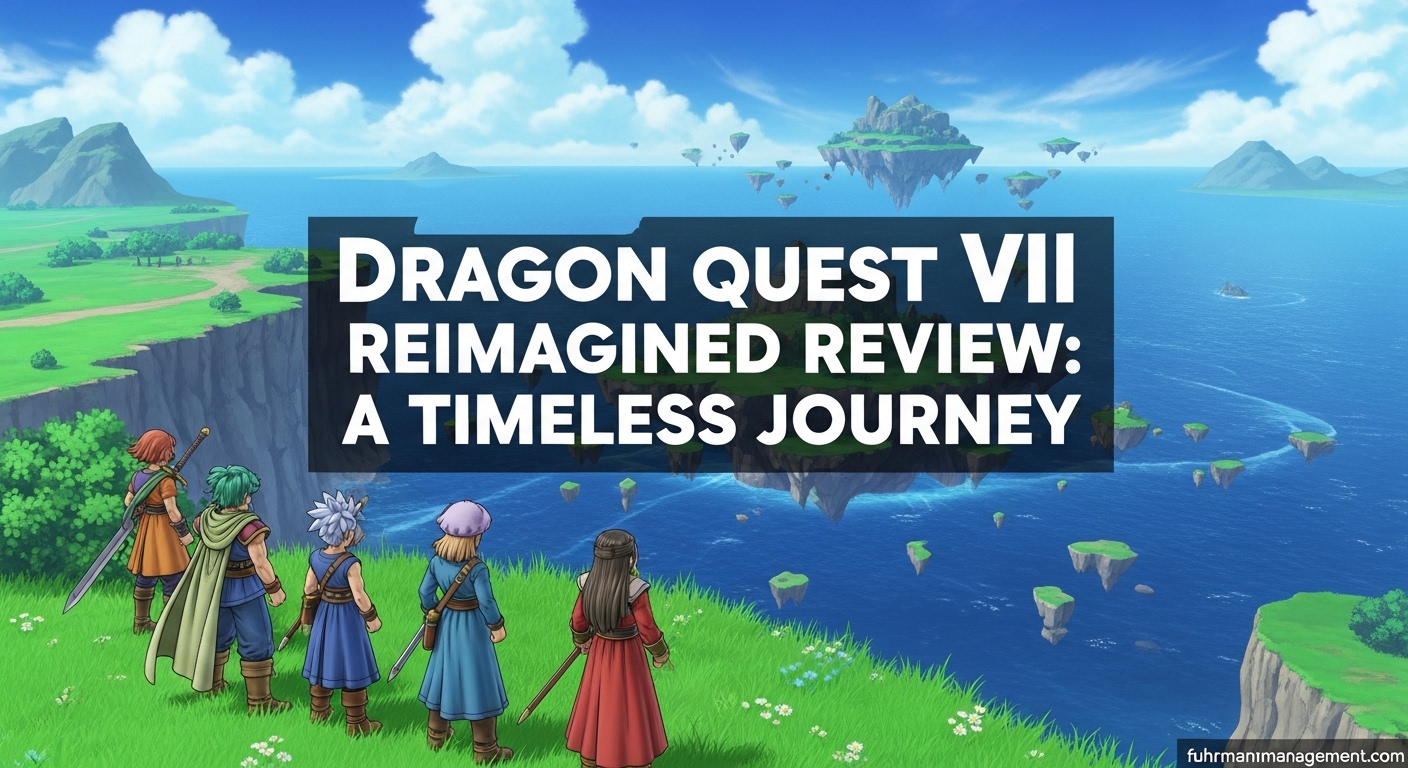
Without spoiling the plot, Dragon Quest VII has a unique premise. You start on a tiny, isolated island called Estard. The rest of the world is seemingly empty ocean. As you and your hero friend discover ancient artifacts, you are transported back in time to solve problems in the past. Solving these crises causes new islands to rise up in the present.
This episodic structure is both the game’s greatest strength and its potential weakness. Each island acts as a self-contained story, almost like a TV show anthology. You might be dealing with a town that has lost its ability to speak in one timeline, and then helping a group of pirates in the next. The variety keeps the gameplay fresh, but the lack of a central, looming villain for 80% of the game can make the stakes feel uneven at times.
Dragon Quest VII Reimagined Review: Gameplay and Mechanics
Let’s talk about the meat of the game: the combat and progression. If you’ve played any turn-based RPG from the 90s, you know the drill. You encounter enemies in the overworld (or dungeons), you select commands from a list, and you watch the turn play out. It’s traditional, perhaps to a fault.
The “Reimagined” tag isn’t just marketing fluff; the developers added a “Faster” button for battles. In the original PS1 version, battles were agonizingly slow. The pacing improvements here are game-changing, allowing you to grind through random encounters without reaching for your phone out of boredom.
The Vocation System (Job System)
The true depth of Dragon Quest VII lies in its Vocation system. Similar to Final Fantasy V or Dragon Quest III, characters can change classes at Alltrades Abbey. You start as a basic Warrior, Mage, Priest, or Thief, but you eventually unlock advanced hybrid classes like Dragoon, Paladin, and Godhand.
Mastering a class grants permanent stat boosts and skills that carry over to other classes. This encourages experimentation. Want a Mage who can also wear heavy armor? You can do that. The system is robust and provides the “gamer crack” loop of seeing numbers go up that RPG fans adore. It’s a complex system that rewards strategic planning, something we discuss in our guide on strategic resource management.
The Pacing Problem
We have to address the elephant in the room: the pacing. Even with the “Faster” battle option, Dragon Quest VII is a massive time commitment. We are talking 100+ hours easily.
The beginning of the game is notoriously slow. It takes several hours before you even get to the first real dungeon or fight your first monster. For gamers used to the instant gratification of modern titles, this is a steep barrier to entry. The game demands patience. If you can’t commit to a slow burn, this might not be the RPG for you.
Sound and Atmosphere
Koichi Sugiyama’s score is as iconic as ever, though the presentation here is a mixed bag. The 3DS version uses synthesized MIDI tracks rather than a full live orchestra. While the compositions are masterful, the sound quality can feel a bit harsh on the 3DS speakers, especially during high-pitched brass sections.
That said, the sound effects are crunchy and satisfying, and the little vocal quips characters make during battle add personality without becoming annoying. The ambient noise in the towns and dungeons helps build a cozy, lived-in world that you genuinely want to save.
Comparison: 3DS vs. Original PS1
It is worth noting how this version stacks up against the original for history buffs.
- Party Chat: The 3DS version restores the “Party Chat” feature, which was cut from the original US release (if a fan translation existed back then). This feature lets you talk to your party members at any time to get hints or their reactions to the story. It adds immense character development.
- Fragments: The game introduces a system where you collect small mini-medals and fragments to unlock bonus dungeons and content.
- Difficulty: The 3DS version is generally considered slightly easier than the PS1 original, making it more accessible for a broader audience.
For more on how remasters compare to originals, see Retro Gaming: Then vs. Now.
Is It Worth Your Time?
So, where does that leave us? Dragon Quest VII is a game that demands you meet it on its own terms. It is stubbornly old-school in its design philosophy. It doesn’t hold your hand with map markers (though the 3DS version at least gives you a general objective on the bottom screen), and it isn’t afraid to waste your time if you let it.
However, the charm is undeniable. The stories of the various islands are surprisingly mature and often touching, dealing with themes of loss, faith, and perseverance. The character progression is deeply satisfying, and the world is beautiful in a storybook way.
Pros and Cons
Pros:
- Incredibly deep class system with tons of customization.
- Charming, episodic story structure with memorable individual arcs.
- Significant quality-of-life improvements over the PS1 original.
- Massive amount of content (100+ hours).
Cons:
- Extremely slow start; takes hours to get going.
- Random encounter rate can still feel high despite improvements.
- Graphics, while improved, still show the limitations of the 3DS hardware.
- Lack of a central, driving villain for most of the game.
Final Verdict
This isn’t a game for everyone. If you prefer fast-paced action RPGs like Diablo or story-driven cinematic games like The Last of Us, Dragon Quest VII might feel like a slog. But if you love the idea of getting lost in a massive world, tinkering with stats, and experiencing dozens of unique mini-adventures, this is a masterpiece.
The “Reimagined” label is earned not because it reinvented the wheel, but because it polished a rough gem until it finally sparkled. It took a game that was nearly unplayable for modern audiences due to pacing and accessibility issues and turned it into a delightful, if lengthy, experience.
Conclusion
In the end, Square Enix succeeded in preserving the heart of the original while fixing many of its frustrating elements. This Dragon Quest VII Reimagined Review concludes that the game is a love letter to the golden age of JRPGs. It’s a reminder of a time when games were about patience, discovery, and the simple joy of watching your party grow from helpless villagers into god-slaying heroes. If you have the patience to endure the slow opening, you will find one of the most rewarding adventures on the Nintendo 3DS.