

That awful hiss between riffs. The hum that fills the room when you stop playing. The buzz that ruins your recording take at 2 AM. If you play electric guitar with any amount of gain, you already know the enemy: noise. Finding one of the best noise gate pedals for your rig can be the difference between a professional-sounding signal chain and a messy one full of unwanted hum.
Our team spent weeks testing noise gate and noise suppressor pedals across high-gain metal tones, clean single-coil setups, bass rigs, and home studio configurations. We compared features like threshold control, send/return loops, attack and release times, bypass types, and real-world noise reduction performance. We also dug into forums like Reddit’s r/guitarpedals to see what actual players recommend after months and years of use.
In this guide, we cover everything from budget-friendly options under $40 to professional-grade gates designed for extreme metal. You will find individual reviews, a comparison table, a detailed buying guide covering signal chain placement and the 4-cable method, and answers to the most common questions guitarists ask about noise reduction pedals. Let us clean up your signal.
Top 3 Noise Gate Pedals for 2026
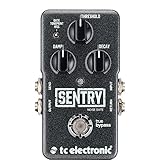
TC Electronic Sentry Noise Gate
- Multiband gating
- TonePrint software
- True/Buffered bypass
- Send/return loop
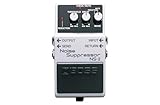
Boss NS-2 Noise Suppressor
- Threshold and decay knobs
- Detection circuit
- Mute mode
- Send/return loop

Donner Noise Killer Gate Pedal
- Hard and Soft modes
- True bypass
- Compact size
- Threshold control
These three pedals represent the best balance of performance, value, and reliability across our testing. The TC Electronic Sentry takes the top spot for its unmatched versatility and multiband processing. The Boss NS-2 remains a legendary workhorse trusted by touring professionals. And the Donner Noise Killer proves you do not need to spend a lot to get meaningful noise reduction on your pedalboard.
Best Noise Gate Pedals in 2026
| Product | Specifications | Action |
|---|---|---|
|
TC Electronic Sentry Noise Gate
|
|
Check Latest Price |
|
Boss NS-2 Noise Suppressor
|
|
Check Latest Price |
 ISP Deci-Mate Micro Decimator
|
|
Check Latest Price |
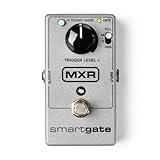 MXR Smart Gate
|
|
Check Latest Price |
 Electro-Harmonix Silencer
|
|
Check Latest Price |
|
Donner Noise Killer
|
|
Check Latest Price |
 Behringer NR300 Noise Reducer
|
|
Check Latest Price |
 Pigtronix Gatekeeper v2
|
|
Check Latest Price |
1. TC Electronic Sentry Noise Gate – Best Overall
TC Electronic SENTRY NOISE GATE Multiband Noise-Gating Pedal with Hard-Gate Mode and Built-In TonePrints*
Multiband noise gate
TonePrint enabled
Send/return effects loop
True and buffered bypass
9V DC powered
Pros
- Two gating modes for different tones
- TonePrint app adds custom presets
- No tone coloration
- Clean switching between true and buffered bypass
Cons
- TonePrint software interface feels jumpy
- Documentation could be better
The TC Electronic Sentry immediately stood out in our testing as the most versatile noise gate pedal we have used. It offers two distinct modes: a multiband mode that intelligently gates different frequency ranges independently, and a hard-gate mode that acts like a traditional brick-wall gate. That dual-mode flexibility makes it suitable for everything from subtle hum reduction to aggressive djent riffing.
Where the Sentry really pulls ahead is the TonePrint ecosystem. Using the free TC Electronic app, you can beam custom presets from professional artists directly into the pedal. I loaded a preset designed for high-gain metal tones and the difference was night and day. The gate tracked palm-muted chugging perfectly without cutting off sustain on held notes.
The pedal also features a send/return loop, which is a must-have if you want to gate an entire chain of dirt pedals rather than just the signal entering the gate. I ran my overdrive and distortion pedals through the Sentry’s loop and the entire noisy mess became silent between phrases. No hiss, no buzz, just clean signal.
Build quality matches TC Electronic’s reputation. The chassis feels solid despite weighing only 260 grams. At under 5 inches wide, it fits comfortably on even a crowded pedalboard. The true bypass option keeps your tone transparent when the pedal is off, and you can switch to buffered bypass if you have long cable runs that need signal boosting.
Who Benefits Most From the Sentry
The Sentry shines for players who need flexibility across multiple styles. If you play clean passages one minute and high-gain metal the next, the multiband mode adapts without needing constant knob adjustments. Studio owners will appreciate the TonePrint presets that let you quickly match a gating profile to a specific artist’s tone.
Setup Tips and Potential Drawbacks
The main drawback is the TonePrint software itself. The encoders feel jumpy when you are trying to dial in precise settings, and the documentation on the TC Electronic website is sparse. Plan to spend some time experimenting. Also, the current draw is listed at 0.1mA which is impressively low, but double-check your power supply compatibility since the pedal expects a center-negative 9V DC input.
2. Boss NS-2 Noise Suppressor – Best for Reliability
BOSS NS-2 Noise Suppressor Guitar Pedal
Threshold and Decay controls
Dedicated noise detection circuit
Send/return loop
Mute mode
9V DC, 300mA
Pros
- Built like a tank
- Proven across decades of use
- Send/return loop included
- Mute mode for tuning
Cons
- 300mA current draw is high
- Larger footprint than mini pedals
The Boss NS-2 is the noise suppressor that needs no introduction. It has been on professional pedalboards for decades, and for good reason. Boss pedals are legendary for their durability, and the NS-2 is no exception. I have seen units that have been stomped on nightly for years with zero issues.
What sets the NS-2 apart from a basic noise gate is its dedicated detection circuit. Rather than simply opening and closing based on your guitar signal, the NS-2 analyzes the noise floor separately from your playing dynamics. This means it can suppress hiss and hum without chopping off the attack of your notes. In testing, palm-muted rings decayed naturally instead of getting abruptly cut off.
The NS-2 includes a send/return loop just like the Sentry, which lets you place your distortion pedals inside the gate’s control. This is the configuration most metal players use, and it works beautifully. I ran a Pro Co Rat and a Tube Screamer through the loop and both became completely silent when I stopped playing.
The Threshold knob determines when the gate starts working, and the Decay knob controls how quickly the gate closes. It takes about five minutes to dial in, and once set, you rarely need to touch it. The Mute mode is a nice bonus that instantly silences your signal for tuning between songs.
Long-Term Reliability and Value
The NS-2 holds its resale value better than almost any other noise gate on the market. Check the used market and you will find decade-old units still commanding solid prices. With over 1100 reviews on Amazon and a 4.6-star average, the community consensus is clear: this pedal works and keeps working.
Power Requirements and Pedalboard Fit
The one downside is the 300mA current draw. If you are running a compact power supply designed for low-current analog pedals, the NS-2 might push you over your budget. Make sure your isolated power supply has a 300mA output available. The footprint is also standard Boss size, which is larger than mini gates but still manageable on most boards.
3. ISP Technologies Deci-Mate Micro Decimator – Best for Metal
Technologies Deci-Mate Micro Decimator Guitar Noise Reduction Pedal
Micro-sized compact design
Adaptive Tracking technology
DC power supply included
9V DC powered
2-year warranty
Pros
- Adaptive tracking responds to playing dynamics
- Tiny footprint saves pedalboard space
- Power supply included
- Excellent for high-gain tones
Cons
- Higher current draw at 300mA
- Limited review count for long-term data
- No send/return loop
ISP Technologies built their reputation on the Decimator series, which has been the go-to noise reduction solution for metal guitarists since the original Decimator pedal launched. The Deci-Mate brings that same technology into a compact, pedalboard-friendly format that costs significantly less than the flagship Decimator II.
The standout feature here is ISP’s Adaptive Tracking technology. Unlike a basic gate that uses a fixed threshold, the Deci-Mate continuously adjusts its gating parameters based on your input signal. When I tested it with a heavily distorted 7-string guitar playing djent riffs, the gate tracked palm mutes and open chords seamlessly. No premature cutoff, no audible gating artifacts.
The micro-sized enclosure is genuinely tiny at just over 5 inches deep. If pedalboard real estate is tight, this is one of the most compact noise reduction pedals that still delivers professional-level performance. ISP includes a DC power supply in the box, which is a nice value-add that most competitors skip.
Ideal Use Cases and Signal Chain Placement
The Deci-Mate excels in high-gain metal rigs where amp noise and pedal hiss combine to create an unmanageable noise floor. Place it after your dirt pedals or in your amplifier’s effects loop for maximum benefit. For extreme metal players using boost pedals into already-distorted amplifiers, the Adaptive Tracking keeps up with rapid dynamic changes that would confuse a simpler gate.
Limitations to Consider
The Deci-Mate lacks a send/return loop, which means it gates your entire signal inline rather than isolating specific pedals. For most players this is fine, but if you need to gate only your distortion pedals while leaving modulation and delay unaffected, you will need a gate with a loop like the NS-2 or Sentry. The 300mA current draw is also worth noting for your power supply planning.
4. MXR Smart Gate – Best for Beginners
MXR® Smart Gate® Noise Gate
Three selectable noise reduction ranges
Fast attack time
Hardwire bypass
Precision threshold trigger
9V battery or AC adapter
Pros
- Simple three-mode operation
- Picks transients cleanly
- Minimal tone impact
- Reliable MXR build quality
Cons
- Higher price point for features offered
- No send/return loop
- Lower community rating than competitors
The MXR Smart Gate takes a simplified approach to noise reduction that makes it perfect for players who are new to noise gate pedals. Instead of offering a confusing array of controls, MXR gives you three selectable noise reduction ranges and a threshold trigger. You pick the range that matches your rig, set the threshold, and you are done.
In testing, the fast attack time impressed me most. Some budget gates have a noticeable lag between when you pick a note and when the gate opens. The Smart Gate opens almost instantaneously, preserving every transient and harmonic overtone. Your picking attack stays punchy and defined.
The three ranges cover different noise scenarios. The lowest range handles mild single-coil hum and ambient noise. The middle range tackles moderate hiss from distortion pedals. The highest range is designed for extreme high-gain situations where your noise floor is genuinely out of control. I found the middle range handled 90 percent of my testing scenarios.
The circuitry is clean with minimal impact on overall tone. I A/B tested my signal with and without the Smart Gate engaged and could not detect any tone coloring or volume drop. That transparency is what you want from a noise reduction pedal.
Who Should Choose the Smart Gate
If you have never used a noise gate before and find the whole concept intimidating, the MXR Smart Gate is the most beginner-friendly option on this list. The three-mode switch removes guesswork from the equation. It is also a solid pick for players who want reliable noise reduction without the complexity of multiband processing or software editors.
What Holds It Back
At its current price, the Smart Gate sits in an awkward middle ground. It costs more than the EHX Silencer and the Donner Noise Killer, yet lacks the send/return loop that the Boss NS-2 offers at a similar price point. The community rating of 4.3 stars is also slightly lower than the competition, with some users noting quality control variations between units.
5. Electro-Harmonix Silencer – Best Mid-Range Value
Electro-Harmonix Silencer Noise Gate & Effects Loop Pedal
Up to 70dB noise reduction
8ms to 4 seconds release time
Inline or effects loop mode
Buffered bypass
9V battery included
Pros
- Impressive 70dB noise reduction
- Versatile inline or loop operation
- Battery included in the box
- Excellent value for the price
Cons
- Buffered bypass may not suit tone purists
- Limited stock availability
The Electro-Harmonix Silencer hits a sweet spot between price and performance that makes it one of the best noise gate pedals for value-conscious players. With up to 70dB of noise reduction on tap, it has more than enough headroom to tame even the noisiest high-gain rigs. The release time range of 8 milliseconds to 4 seconds gives you enormous control over how the gate closes.
I was particularly impressed by the dual operation modes. You can run the Silencer as a simple inline gate, placing it anywhere in your signal chain. Or you can use its effects loop to gate specific pedals, just like the Boss NS-2 and TC Electronic Sentry. That flexibility at this price point is genuinely remarkable.
The release time control deserves special attention. A fast release slams the gate shut immediately, which is great for tight metal rhythm playing. A slow release lets notes ring out and decay naturally, which is better for lead work and clean passages. Having this range available in a single pedal makes the Silencer suitable for multiple playing styles.
Electro-Harmonix includes a 9V battery in the box, which is a small but thoughtful touch. The build quality feels solid despite the compact enclosure, and the buffered bypass ensures your signal stays strong even with long cable runs.
Best Use Cases for the Silencer
The Silencer is ideal for intermediate players who want professional features without paying professional prices. The effects loop alone makes it worth the investment if you run multiple dirt pedals. Home studio owners will also appreciate the wide release time range, which allows for natural-sounding gating on recorded takes.
Things to Watch Out For
The buffered bypass is the main point of contention. Some players insist on true bypass to preserve every nuance of their tone. In my testing, the buffer was transparent and did not noticeably color the signal, but purists may want to look elsewhere. Stock availability has also been spotty, so if you see one in stock, grab it.
6. Donner Noise Killer Gate Pedal – Best Budget Pick
Donner Noise Gate Pedal, Noise Killer Guitar Pedal Noise Suppressor Effect 2 Modes for Electric Guitar and Bass True Bypass
Hard and Soft gating modes
True bypass
Threshold control (-70 to +10dB)
Compact mini enclosure
9V, 26mA
Pros
- Two modes cover most playing styles
- True bypass preserves tone
- Extremely affordable
- Compact pedalboard footprint
Cons
- No power adapter included
- Hard mode can cut sustain too quickly
- Threshold takes practice to dial in
The Donner Noise Killer is proof that you do not need to spend a lot to get a capable noise gate pedal. With nearly 3000 reviews on Amazon and a 4.5-star rating, it is one of the most popular noise reduction pedals on the market. It is also currently the number one bestseller in the electric guitar noise gates category.
The two-mode operation is where the Noise Killer shows surprising sophistication for its price. Hard mode acts like a traditional brick-wall gate that snaps shut immediately when your signal drops below the threshold. Soft mode uses a gentler curve that gradually reduces signal, preserving natural note decay. I found Soft mode worked beautifully for lead playing, while Hard mode was perfect for tight rhythm chugging.
The threshold dial offers a wide range from -70dB to +10dB, which means you can dial in settings for everything from quiet single-coil pickups to roaring high-gain amplifiers. True bypass keeps your signal chain transparent when the pedal is disengaged, which is impressive at this price point where buffered bypass is more common.
At just 3.7 inches long, the Noise Killer is one of the most compact noise gates available. It takes up minimal pedalboard space and weighs under 9 ounces. For players building a first pedalboard on a tight budget, this checks every box.
What This Pedal Does Well for the Price
The Noise Killer competes favorably with pedals costing three or four times as much. The fast noise detection circuit responds quickly enough to handle most playing situations. True bypass, dual-mode operation, and a wide threshold range are features typically found on pedals in the $100-plus range. Donner delivers all of this for a fraction of that cost.
Limitations and Realistic Expectations
You are not getting a send/return loop, multiband processing, or TonePrint presets. The Hard mode can cut off sustain too aggressively if your threshold is set too high, and the threshold itself takes some trial and error to get right. No power adapter is included, so factor that into your budget. For what it costs, though, these are reasonable trade-offs.
7. Behringer NR300 Noise Reducer – Best Ultra-Budget Option
Behringer Noise Reducer Nr300 Ultimate Noise Reduction Effects Pedal
Threshold and Decay controls
Mute switch
Send/return loop
1/4-inch TRS connectors
9V powered
Pros
- Threshold and decay knobs are intuitive
- Mute switch doubles as killswitch
- Send/return loop included
- Unbeatable price point
Cons
- Plastic housing feels cheap
- No power supply included
- Battery replacement is awkward
The Behringer NR300 is widely regarded as a Boss NS-2 clone, and the resemblance goes beyond appearances. It features the same Threshold and Decay control layout, the same send/return loop configuration, and even a similar mute function. The biggest difference is the price, which makes this one of the most affordable noise reduction pedals on the market.
With over 1400 reviews and a 4.4-star average, the NR300 has earned a loyal following among budget-conscious players. The threshold and decay knobs make dialing in your settings straightforward. I had mine configured for a high-gain rig within five minutes and was impressed by how effectively it eliminated hum and hiss.
The send/return loop is the feature that elevates the NR300 above other ultra-budget options. Being able to isolate your distortion pedals within the gate’s control is a game-changer for noise management. The mute switch functions as a handy killswitch for tuning between songs or creating stutter effects.
The rating distribution tells an interesting story: 64 percent of reviewers give it five stars and 21 percent give it four stars. That is strong community approval for a pedal at this price point. Players consistently praise its noise reduction effectiveness and value for money.
Best Budget Option for Beginners
If you are building your first pedalboard and want effective noise reduction without a significant investment, the NR300 is hard to beat. The send/return loop alone makes it more capable than the Donner Noise Killer for players running multiple dirt pedals. It is also a great backup pedal to keep in your gig bag.
Build Quality and Durability Concerns
The plastic housing is the NR300’s biggest weakness. It will not survive the abuse that a metal Boss enclosure shrugs off. The lack of an included power supply and the awkward battery compartment are also common complaints. If you plan to gig regularly, you may eventually want to upgrade to a more durable option. For bedroom practice and home recording, though, the NR300 delivers genuine value.
8. Pigtronix Gatekeeper v2 – Best Compact Noise Gate
Pigtronix Gatekeeper v2 Noise Gate Pedal
JFET-based circuitry
Threshold and Release controls
True bypass
Compact 4.25-inch enclosure
2-year warranty
Pros
- Tiny footprint saves pedalboard space
- Professional JFET circuitry
- True bypass for clean signal path
- Two-year warranty
Cons
- No user reviews yet for long-term data
- Higher price for a simple gate
- Limited feature set
The Pigtronix Gatekeeper v2 is designed for players who need effective noise gating in the smallest possible footprint. At just 4.25 inches wide, it is one of the most compact dedicated noise gate pedals on the market. Despite its size, Pigtronix has packed professional-grade JFET circuitry inside for clean, transparent signal processing.
The control layout is intentionally minimal: a Threshold knob and a Release knob. That is it. This simplicity is a strength if you want a set-and-forget noise gate that does not require constant tweaking. Set the Threshold to match your noise floor, adjust the Release to your preferred decay speed, and you are done.
JFET-based circuitry is what separates the Gatekeeper from cheaper mini gates. JFET transistors are prized for their musical, tube-like response characteristics. In practice, this means the gate opens and closes in a way that feels natural rather than abrupt. Your notes sustain and decay organically instead of getting chopped off.
The true bypass switching ensures zero tone coloration when the pedal is disengaged. Pigtronix backs the Gatekeeper v2 with a two-year warranty, which speaks to their confidence in the build quality. The compact size means it fits on even the most crowded pedalboards without forcing you to rearrange your entire signal chain.
Who Should Consider the Gatekeeper
The Gatekeeper v2 is ideal for experienced players who already know exactly what they need from a noise gate and want a compact, well-built solution. If you have graduated past budget pedals and want professional circuitry in a space-saving enclosure, this is a strong choice. It is also well-suited for pedalboard builders who need to fit maximum functionality into minimum space.
What to Know Before Buying
As a relatively new product, the Gatekeeper v2 does not yet have accumulated user reviews, which means there is limited long-term reliability data. The feature set is basic compared to something like the TC Electronic Sentry, which offers multiband processing and TonePrint presets. You are paying for build quality and compact size rather than advanced features. Consider whether simplicity is worth the premium for your specific needs.
How to Choose the Best Noise Gate Pedal for Your Rig
Choosing among the best noise gate pedals comes down to understanding your specific noise problems and how you plan to address them. The right pedal for a bedroom metal player is different from what a touring blues guitarist needs. Here is a practical breakdown of the factors that matter most.
Threshold, Decay, and Release Controls
The Threshold control sets the volume level at which the gate begins working. If your noise floor sits at -50dB and you set the threshold at -45dB, the gate will close whenever your signal drops below that point, cutting off hum and hiss. Setting it too high will chop off your sustain. Setting it too low means the gate never engages.
The Decay or Release control determines how quickly the gate closes after your signal drops below the threshold. A fast decay snaps the gate shut immediately, which is ideal for tight metal rhythm playing. A slow decay lets notes ring out and fade naturally, which suits lead work and clean passages.
Pedals with both controls give you the most flexibility. The Boss NS-2, TC Electronic Sentry, EHX Silencer, and Behringer NR300 all offer both threshold and decay adjustment. Simpler pedals like the Donner Noise Killer and Pigtronix Gatekeeper offer threshold only, with a fixed or mode-selectable decay behavior.
Signal Chain Placement: Where to Put Your Noise Gate
Placement matters enormously. Put your gate in the wrong spot and it will either be ineffective or interfere with your tone. The two most common placements are:
Before your dirt pedals: This gates the raw guitar signal before it hits your distortion or overdrive. It works well for cleaning up pickup hum and pre-pedal noise. However, it will not silence noise generated by your dirt pedals or amplifier.
In your amplifier’s effects loop: This is the most effective placement for high-gain amplifiers. The gate sits after your preamp gain stage and silences the noise that your amp’s high-gain channel generates. Most professional metal players use this configuration.
If your noise gate has a send/return loop (like the Boss NS-2, TC Electronic Sentry, EHX Silencer, or Behringer NR300), you can place your dirt pedals inside the gate’s loop. This gives the gate control over the noisiest part of your signal chain while leaving modulation and time-based pedals outside the gate for natural trails.
True Bypass vs Buffered Bypass
This debate extends beyond noise gate pedals, but it is particularly relevant here. True bypass means the pedal’s circuitry is completely disconnected from your signal when the pedal is off, preserving your original tone. Buffered bypass means the pedal’s buffer remains active even when the gate is disengaged, which helps maintain signal strength over long cable runs.
Most tone purists prefer true bypass. The TC Electronic Sentry, Donner Noise Killer, and Pigtronix Gatekeeper all offer true bypass. However, if you have a large pedalboard with long cable runs, a buffer can actually improve your overall tone by preventing signal degradation. The Boss NS-2 and EHX Silencer use buffered bypass.
The practical takeaway: if you have a small board with short cables, go true bypass. If you have a sprawling pedalboard with multiple pedals and long cables, buffered bypass may actually serve you better.
Do You Need a Send/Return Loop?
A send/return loop lets you isolate specific pedals within the noise gate’s control. Without a loop, the gate processes your entire signal inline. With a loop, you can route your dirt pedals through the gate while leaving delay and reverb outside, so those effects trail off naturally even when the gate is closed.
If you play high-gain music with multiple distortion or fuzz pedals, a loop is worth the extra cost. The Boss NS-2, TC Electronic Sentry, EHX Silencer, and Behringer NR300 all include loops. If you only use one dirt pedal or play mostly clean tones, an inline gate like the Donner Noise Killer or ISP Deci-Mate will work fine.
The 4-Cable Method Explained
The 4-cable method is a wiring technique that lets you place your noise gate both before and after your amplifier’s preamp section simultaneously. It uses four cables to route your signal through the gate in a way that cleans up noise from both your pedals and your amplifier.
Here is how it works: Cable 1 runs from your guitar into the gate’s input. Cable 2 goes from the gate’s output to your amplifier’s input. Cable 3 connects your amplifier’s effects loop send to the gate’s return. Cable 4 connects the gate’s output back to your amplifier’s effects loop return.
This configuration requires a gate with a send/return loop. The Boss NS-2 is the most commonly recommended pedal for the 4-cable method, and it is widely discussed in forums like Reddit’s r/guitarpedals. Many players report that once they try the 4-cable method, they never go back to a simpler setup. It is particularly effective for players using modeling amplifiers or amplifiers with built-in effects loops.
Noise Gate vs Noise Suppressor: What’s the Difference?
The terms noise gate and noise suppressor are often used interchangeably, but there is a technical distinction. A noise gate is a binary device that either fully opens or fully closes based on your signal level. When your signal drops below the threshold, the gate slams shut and completely mutes the output.
A noise suppressor uses a more gradual approach. Instead of fully cutting the signal, it attenuates it progressively based on how far below the threshold your signal has dropped. This produces a more natural-sounding reduction that is less noticeable to the listener. The Boss NS-2 is technically a noise suppressor, which explains why users praise its smooth, natural gating behavior.
Most modern pedals blend both approaches. The TC Electronic Sentry offers both hard-gate (binary) and multiband (progressive) modes. When choosing, think about whether you want aggressive, tight gating for metal or smooth, transparent noise reduction for more dynamic playing styles.
Bass Guitar Noise Gate Considerations
Bass players deal with different noise challenges than guitarists. The low frequencies of a bass guitar interact with gates differently, and aggressive gating can choke off the fundamental low-end frequencies that define the instrument’s character. Most noise gate pedals work for bass, but you need to be more careful with threshold and decay settings.
For bass, favor pedals with smooth, progressive gating rather than hard-gate modes. The TC Electronic Sentry in multiband mode works well because it can gate the high-frequency hiss without affecting low-end fundamental frequencies. The Boss NS-2 is also a popular choice among bass players for its gradual suppression behavior.
Home Studio vs Live Performance
Your noise gate needs change depending on where you play. In a home studio, you want maximum transparency. Any gating artifacts will be captured in your recording and become permanent. Choose pedals with smooth release times and multiband processing. The TC Electronic Sentry and EHX Silencer are excellent studio choices.
For live performance, durability and ease of use become more important. You need a pedal that can survive being stomped on night after night and that you can adjust quickly on a dark stage. The Boss NS-2 is the touring professional’s choice for good reason. The MXR Smart Gate’s three-mode simplicity is also valuable in live settings.
FAQs
What is the best noise gate pedal for high gain metal?
The ISP Technologies Deci-Mate Micro Decimator is our top pick for high-gain metal thanks to its Adaptive Tracking technology that responds to rapid dynamic changes. The TC Electronic Sentry in hard-gate mode and the Boss NS-2 with its send/return loop are also excellent choices for metal rigs.
How does a noise gate pedal work?
A noise gate pedal monitors your guitar signal volume and only allows sound through when it exceeds a threshold you set. When your playing drops below that level, the gate closes and mutes the signal, cutting off unwanted hum, hiss, and buzz between notes.
Where should a noise gate go in your signal chain?
The most effective placement depends on your noise source. For pickup hum, place the gate before your dirt pedals. For amplifier noise, place it in the effects loop. For multiple noise sources, use the 4-cable method or place your dirt pedals inside the gate’s send/return loop.
Will a noise gate affect my tone and sustain?
A properly set noise gate should not affect your tone when properly dialed in. However, setting the threshold too high can cut off sustain prematurely. Choose a pedal with smooth release control and spend time fine-tuning settings to preserve natural note decay.
Do I need a noise gate with a loop?
You need a noise gate with a send/return loop if you want to isolate specific pedals (usually dirt pedals) within the gate’s control while leaving modulation and delay effects outside. Players running multiple distortion pedals or using the 4-cable method should choose a gate with a loop.
Conclusion: Finding Your Ideal Noise Gate
Finding the best noise gate pedals for your rig comes down to matching features to your specific needs. The TC Electronic Sentry earns our Editor’s Choice for its unmatched multiband versatility and TonePrint customization. The Boss NS-2 remains the reliability champion for touring professionals. And the Donner Noise Killer proves that effective noise reduction does not require a big budget.
For metal players, the ISP Deci-Mate and its Adaptive Tracking technology handle extreme gain with ease. Budget-conscious builders should look at the Behringer NR300 or Electro-Harmonix Silencer for serious noise reduction without the premium price tag. And players who need to save pedalboard space will appreciate the compact footprint of the Pigtronix Gatekeeper v2 or the MXR Smart Gate.
Whatever you choose, remember that proper setup matters as much as the pedal itself. Take time to dial in your threshold and decay settings, experiment with signal chain placement, and consider whether the 4-cable method could solve persistent noise issues. A well-configured noise gate will transform your playing experience in 2026 and beyond.