
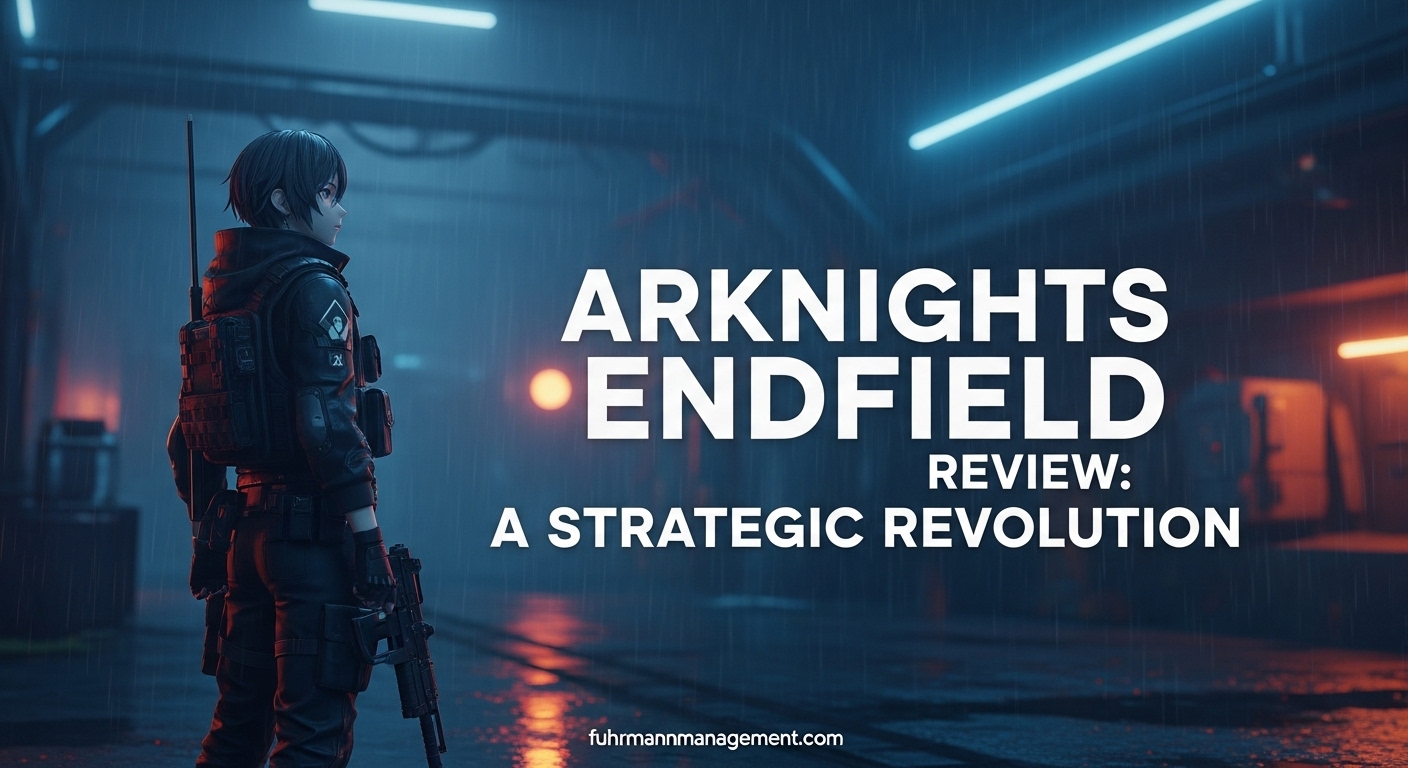
When Arknights first launched, it didn’t just enter the market; it disrupted it. It combined dystopian sci-fi storytelling, stunning anime-inspired 2D art, and a genuinely challenging tower defense gameplay loop that captivated millions. Naturally, the announcement of a full-fledged sequel had the community buzzing with a mix of excitement and trepidation. Could Hypergryph capture lightning in a bottle twice? More importantly, could the transition from 2D tower defense to 3D real-time strategy actually work? In this Arknights Endfield Review, we’re going to dissect everything we know from the recent technical tests to see if this ambitious title lives up to its monumental legacy.
A Visual Masterpiece: Reimagining Terra in 3D
The first thing that strikes you about Endfield is the sheer visual fidelity. We’ve moved away from the chibi-style 2D sprites of the original game into a full 3D environment. Don’t worry, the aesthetic DNA remains intact. The transition feels less like a betrayal of the source material and more like a high-budget anime adaptation coming to life.
Character models are incredibly detailed, maintaining the sharp, cool fashion sense the operators are known for while adding fluid animations that bring their skills to life. But the real star of the show is the environment. The game is set on the planet Talia-II, a distinct location from the original Terra, yet it carries that same melancholic, industrial vibe.
The lighting engine deserves a special shoutout. Whether you are trudging through a rain-swept wasteland or navigating the neon-lit corridors of an automated facility, the atmosphere is palpable. It creates a sense of immersion that a 2D plane simply couldn’t achieve. However, this graphical jump comes with a caveat—performance. On lower-end devices, the game can chug, so optimization is definitely something to keep an eye on as we move closer to full release.
Arknights Endfield Review – The Gameplay Shift
If you are walking into this expecting the exact same tower defense formula as the first game, you need to recalibrate your expectations. The core loop here is Real-Time Strategy (RTS) with heavy auto-battler elements, but it retains the strategic depth fans crave.
In Endfield, you don’t just place units on a grid and watch them shoot. You control “Ends”—units that can be actively moved around the battlefield. You are constructing a base in real-time, managing resources, and directing your squad to hold points against waves of enemies.
It’s complex. In fact, it’s arguably more complex than the original. You have to manage:
- Energy: Your resource for summoning and skills.
- Zone Control: Holding specific areas to gain buffs.
- Active Skills: While there is automation, the higher difficulty content requires you to manually trigger ultimates and reposition units.
The “Auto-play” function exists, and it’s competent for farming fodder stages, but it falls apart in boss fights or high-level challenges. This is a good thing; it rewards engagement rather than passivity. For players looking for more deep gaming strategies, our Advanced Gaming Tactics Guide covers similar RTS concepts that apply here.
The Learning Curve: Accessibility vs. Depth
One of the biggest concerns regarding the game is its barrier to entry. The UI is sleek, futuristic, and frankly, a bit intimidating. There are a lot of buttons, meters, and sub-menus to navigate. New players might feel overwhelmed by the sheer amount of information thrown at them during the tutorial.
However, once you get over the initial hump, the systems click into place beautifully. The base-building aspect feels like a mix of StarCraft and They Are Billions, but simplified for a mobile interface. You’re building turrets, barricades, and production facilities while your heroes roam the map.
The control scheme is a triumph of mobile design. Moving a camera and selecting units on a touch screen is usually a nightmare, but Hypergryph has implemented intuitive gestures and smart-casting that makes controlling a full squad manageable, even on a smaller phone screen.
Narrative and Lore: A New Frontier
Storytelling has always been Hypergryph’s strong suit, and Endfield seems poised to continue that tradition. The writing style is dense, atmospheric, and filled with the kind of obscure lore terms that fans love to theorize about.
You play as the “Administrator” of the Endfield Industries, a research and manufacturing company. Instead of the black-and-white morality often found in gacha games, the narrative here is painted in shades of gray. You are dealing with corporate politics, environmental disasters, and the mysteries of the “Seaborn”—or in this case, similar anomalous entities on Talia-II.
It’s not just a retelling of the same story. The stakes feel different. It feels more about survival and expansion in a hostile world, rather than a resistance against a specific infection. This fresh perspective is exactly what the franchise needed to avoid stagnation.
Gacha and Progression: The Economy
Let’s talk business. It is a gacha game, after all. The monetization model feels familiar—pulling for characters on banners with a pity system.
What is interesting is how the characters function in the meta. Because the game relies heavily on base building and strategy, a low-rarity unit with the right utility can be just as valuable as a high-rarity DPS dealer. This is a refreshing design choice that promotes team composition over raw power.
However, the progression system is layered. You have the standard leveling, skill upgrading, and equipment crafting. It’s a “cookie clicker” enthusiast’s dream, but for those who just want to get to the action, it might feel like a lot of menu tinkering. If you enjoy managing complex economies in simulation games, check out our list of Top Management Games for similar vibes.
The Soundtrack
We can’t talk about Arknights without the music. The soundtrack shifts from the somber, orchestral pieces of the original to a more synth-heavy, industrial, cyberpunk sound. It fits the setting perfectly—futuristic, slightly alien, and incredibly driving during combat. The voice acting is top-tier as well, adding significant weight to the visual novel-style cutscenes.
Is It Worth the Hype?
After spending significant time with the technical test, the verdict is positive. Endfield is not just a reskin; it is a genuine evolution. It takes the soul of the original and transplants it into a genre that is notoriously difficult to master on mobile.
Does it have flaws? Sure. The UI needs streamlining for new players, and the hardware requirements are steep. But the ambition on display here is undeniable. It respects the intelligence of its players, offering a level of strategic complexity that is rare in the current mobile landscape.
Conclusion
The transition from 2D to 3D is rarely smooth, but Hypergryph has navigated it with the precision of a veteran operator. The game offers a robust, challenging, and visually spectacular experience that stands tall on its own merits. Whether you are a veteran doctor from Rhodes Island or a newcomer looking for your next mobile obsession, this title demands your attention.
This concludes our Arknights Endfield Review. As the game approaches its global launch, it’s clear that this isn’t just trying to be “Arknights 2.” It’s trying to be the next big benchmark for mobile strategy games. If the developers can polish the rough edges and optimize the performance, we might be looking at the new king of the genre.