
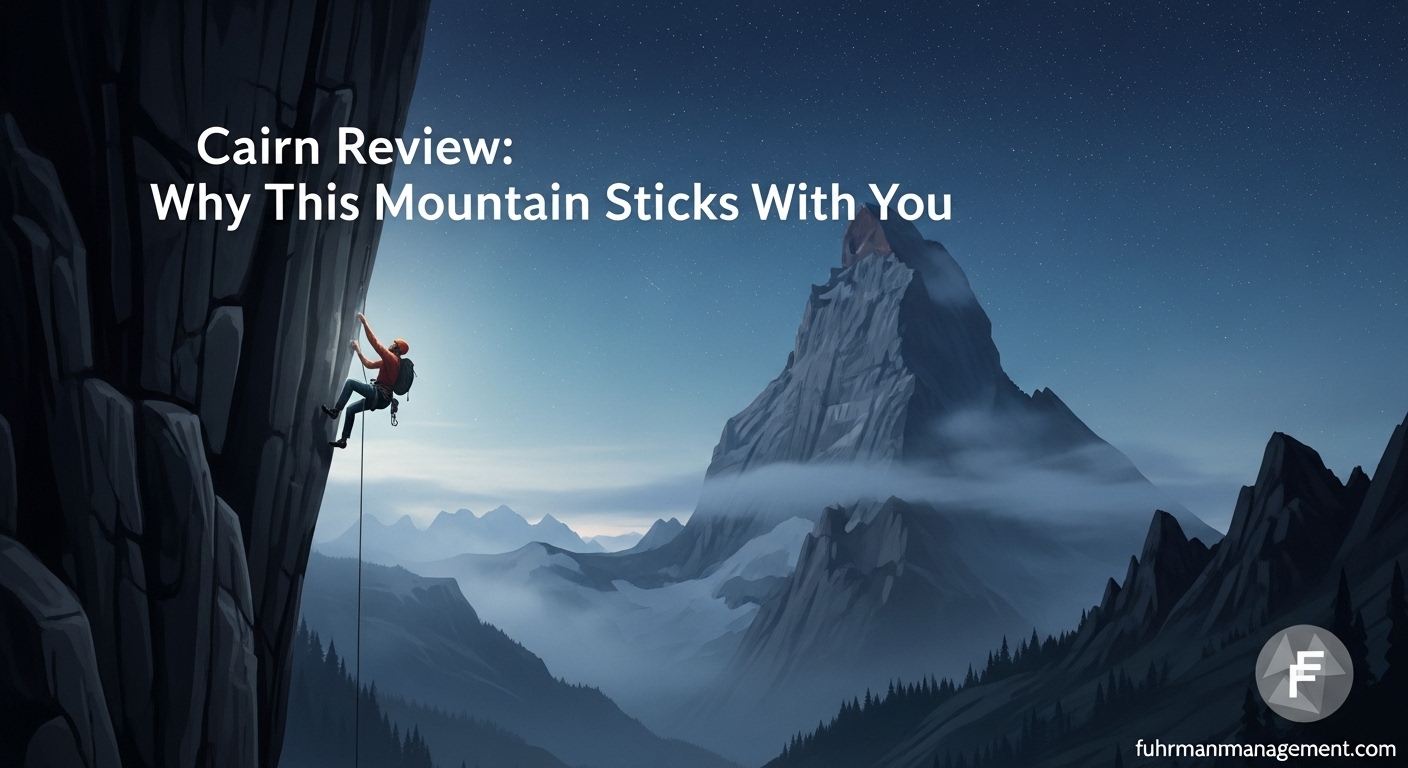
If you’ve been anywhere near gaming conversations in early 2026, you’ve probably heard the buzz around Cairn. It’s being called a “survival climber,” a meditative endurance test, and even a love letter to mountaineering obsession—all in one. In this Cairn review, I’ll explain why it’s resonating so strongly, what it actually feels like to play, and whether this climb is worth your time.
Quick answer: yes, if you’re okay with slow, deliberate tension and a game that asks as much patience as it does skill. If you want fast-paced action or clear “right” answers, though, Cairn might feel more like a slog than a summit.
What Kind of Game Is Cairn?
Cairn is a third-person rock-climbing adventure from The Game Bakers, the studio behind Furi and Haven. You play as Aava, a professional climber attempting to become the first person to summit Mount Kami, a huge, fictional peak that’s equal parts beautiful and terrifying. The game has you plan routes, manage resources like pitons and food, and slowly inch your way up rock faces in a mix of survival mechanics and environmental storytelling.【turn4search0】【turn4search3】
It’s less about “beating levels” and more about the rhythm of:
- Reading the rock
- Choosing handholds and footholds
- Managing your body temperature, hunger, and hydration
- Deciding when to push and when to rest at a bivouac
Those survival meters are real: IGN notes that you’re tracking temperature, hunger, hydration, and overall health, and the game makes sure poor choices have consequences, though it rarely feels outright punitive.【turn1fetch1】
You’re also deciding how Aava’s personal story unfolds. The climbing and narrative are tightly interwoven—this isn’t a story layered on top of generic gameplay; the climb is the story.
How Climbing Actually Feels in Cairn?
The centerpiece of this Cairn review has to be the climbing system. You don’t just hold “up” to climb—you control each of Aava’s limbs independently. Left hand, right hand, left foot, right foot: you choose every placement on the rock face.【turn1fetch1】
At first, that can feel overwhelming. But what emerges is a strangely intimate connection with Aava. You start noticing:
- How her arms tremble when a grip is poor
- The way her breathing quickens when she’s nearing her limit
- Small winces and whimpers that signal you’re about to slip【turn1fetch1】
There’s no stamina bar on screen for grip; instead, you read her body. It’s a clever, tactile design that forces you to pay attention to the model’s animations and posture, not just UI elements.
The rock itself is full of micro-details:
- Tiny divots you can barely see until you’re close
- Thin ledges where only toes fit
- Cracks to wedge fingers into
- Smooth stretches where you have to take a risk
IGN’s review emphasizes that progress is found in those small features—tiny divots, ledges, cracks—and in risky moves like bracing a leg against a flat surface and hoping it holds while you reach.【turn1fetch1】 That sense of “is this going to hold?” is the game’s main emotional hook.
If you’ve played games that prioritize movement (Spider-Man, Sunset Overdrive, even the gliding in Zelda), Cairn is on the opposite end of the spectrum: slower, heavier, and more deliberate. But that deliberateness is exactly what makes it special.
Survival, Bivouacs, and Managing Your Limits
Survival in Cairn is less about hardcore resource misery and more about self-care: keeping Aava in a state where she can climb safely.
- Hunger and hydration: Eat and drink regularly, or she becomes weaker and more vulnerable.
- Temperature: Watch conditions and dress or rest appropriately.
- Health and injuries: Mistakes hurt, and ignoring them compounds the problem.【turn1fetch1】
Bivouacs—tents positioned at key points on the mountain—are your lifelines. When you reach one, you can:
- Sleep and recover
- Retape your fingers
- Cook food
- Repair damaged pitons【turn1fetch1】
These moments are where Cairn breathes. You’re not just “saving”; you’re pausing in a hostile environment that still feels alive—wind howling, temperature shifting, maybe some wildlife or distant movement on the cliffs.
The survival spine is surprisingly solid, as The Game Slayer’s review puts it, giving the simple A-to-B structure real weight.【turn0search0】 You never feel completely safe, even at a bivouac, and that makes each push upward feel meaningful.
A Story About Obsession, Not Just Triumph
Cairn doesn’t hit you with long cutscenes or walls of dialogue. Instead, the story comes through:
- Aava’s internal thoughts and occasional mutterings
- Messages from her “climb bot” that she mostly ignores
- Encounters with other climbers, like Marco, a fan who knows more about her than she’s comfortable with【turn1fetch1】【turn2fetch1】
There are also environmental details—abandoned settlements, traces of Troglodyte culture and the people who once lived on Kami—that you only really notice if you explore and slow down. The Game Slayer calls out this environmental storytelling, noting that if you only stare at the summit, you’ll miss most of it.【turn1fetch0】
The themes here are more nuanced than the usual “never give up” hero story. Game Informer highlights that Cairn questions the trope of endless perseverance and paints a fuller picture of obsession, selfishness, and the cost of chasing a singular goal at any cost.【turn4search2】 Aava is not a straightforward hero; she’s complex, sometimes distant, even harsh, but always human.
By the end, you face a choice about who Aava is and what she’s willing to sacrifice—and that choice feels earned by every slip, every storm, and every freezing night you’ve survived on Kami.【turn2fetch1】
Difficulty and Accessibility: How Hard Is Cairn Really?
This is the part most people want from a Cairn review: how punishing is it, really?
Cairn is difficult, but not in the cheap “memorize this frame-perfect sequence” way. Its difficulty is:
- Physical and atmospheric
- About planning and discipline
- About respecting the mountain
That said, there are a few friction points:
- Some falls can feel abrupt, especially when feedback about grip isn’t perfectly clear
- Occasionally, a slip that seemed “unfair” can break your rhythm
Community discussions note that while the game is tense, it rarely feels unfair overall—most failures come from misreading the route, pushing too hard, or ignoring Aava’s condition.【turn4search4】
On accessibility:
- The game includes optional assistance (for example, with limb control or route hints) by default【turn1fetch1】
- You can tweak some of these settings to soften or deepen the challenge
If you’re worried about pure reflex demands, it’s worth knowing that Cairn rewards careful observation more than raw button-mashing skill. It’s about pacing and reading the environment, not twitch combat.
If you enjoy:
- Slow, atmospheric climbs (Journey, Outer Wilds’ exploratory side, or even the deliberate hiking segments in some open-world games)
- Mechanics that force you to slow down and pay attention
- Stories that leave space for interpretation
…then Cairn’s difficulty is part of the appeal.
Who Cairn Is For (And Who Might Skip It)
To make this Cairn review as practical as possible, here’s a rough guide.
Cairn is a great fit if:
- You love meditative, exploration-driven games where atmosphere is central
- You’re okay with failing, sliding back down, and re-attempting routes
- You like mechanics that demand focus and observation rather than fast reactions
- Narratives about obsession, solitude, and complex characters appeal to you
You might want to skip Cairn if:
- You prefer constant action, combat, or clear progression systems (levels, skill trees, etc.)
- Slow pacing and repetition frustrate you quickly
- You’re sensitive to heights or vertigo in games (the third-person climbing can feel very intense)
- You want lots of overt guidance and objectives; Cairn often leaves you to figure out your own way
For more on similar experiences, you might enjoy our breakdown of meditative exploration games or our take on narrative-driven adventures.
Comparisons: Jusant, Other Climbing Games, and Where Cairn Fits
A common point in other reviews is the comparison to Jusant, another recent mountaineering-focused game. The Game Slayer points out that both games care deeply about climbing as an activity, not just as a traversal metaphor, but Cairn distinguishes itself by weaving in the Troglodyte culture and Aava’s personal story more tightly.【turn1fetch0】
If you’ve played Jusant:
- Cairn is more survival-focused, with meters for temperature, hunger, and hydration, and more “daily life on the mountain” mechanics at bivouacs.
- Jusant leans more into puzzle-platforming and environmental mystery; Cairn leans into physical endurance and emotional introspection.
Against broader “walking sim” or traversal-heavy games:
- Journey is more abstract and purely atmospheric; Cairn is more grounded, tactile, and personal.
- Outer Wilds is about knowledge loops over time; Cairn is about incremental physical progress over the course of one climb.
Each of these games uses traversal to tell its story, but Cairn’s story is very specifically about climbing—and about the person who refuses to stop climbing.
Audiovisual Design: A Mountain That Feels Alive
You don’t need photorealism to make a mountain feel real, and Cairn understands that. The stylized art still conveys:
- Scale and vertigo-inducing heights
- Changing weather patterns that shift visibility and mood
- Quiet, serene moments when the clouds break and the view opens up【turn1fetch0】
Audio is a big part of why Kami feels alive:
- The wind, distant rockfalls, wildlife, and the creak of your gear
- A subtle score that swells during key moments but otherwise stays out of the way【turn1fetch0】
Together, these elements make the mountain feel like a character in its own right—indifferent, occasionally beautiful, and often brutal.
A Quick Cairn Review: Pros and Cons
Pros:
- Incredibly tactile, satisfying climbing system that makes every inch of progress feel earned
- Survival mechanics that enhance the theme instead of just adding busywork
- Strong, nuanced storytelling about obsession, identity, and the cost of ambition【turn4search2】【turn2fetch1】
- Beautiful audiovisual design that makes Kami feel imposing but alive【turn1fetch0】【turn1fetch1】
Cons:
- Deliberate pacing will feel too slow to some players
- A few abrupt falls or feedback issues can occasionally frustrate
- Not much in the way of traditional progression systems or side content for those who want more “gamey” structure
Overall, our Cairn review lands it as a standout experience for players who value atmosphere, storytelling, and deliberate mechanics over constant stimulation.
Final Thoughts: Is the Ascent Worth It?
By the end of Cairn, you’ve done more than climb a mountain. You’ve spent hours in Aava’s head, learning how she reads rock, how she deals with fear, and what she’s willing to sacrifice just to stand—however briefly—at the top. IGN’s verdict captures it well: Cairn would mean nothing without the journey; everything that makes it remarkable is baked into the climb itself and the story that unfolds along the way.【turn2fetch1】
If you’re on the fence, think about what you want from your next game. If it’s a rich, demanding climb that respects your persistence and gives you space to think, feel, and sometimes struggle, this Cairn review comes down firmly in favor of taking the ascent.
And if you do decide to tackle Kami, keep an eye on our upcoming guides; once you’ve fallen in love with the mountain, you’ll want all the help you can get reaching the top.